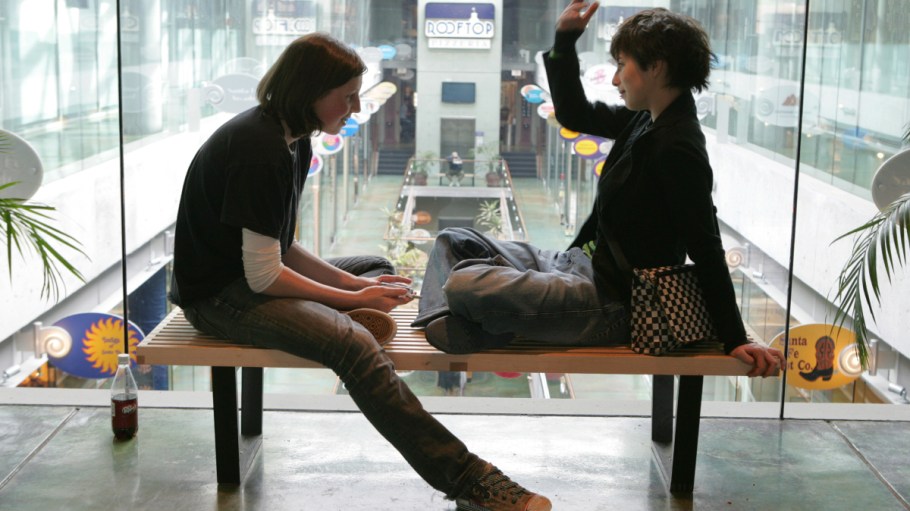
A pair of recent studies investigates what first “digital native” generation really thinks about shopping malls.
A study performed by IPX, a Chicago-based financial services firm, found that 61 percent of all Americans longed for shopping malls to make a comeback. Broken down by generation, Gen Z respondents, encompassing those born between 1997-2012, expressed the highest nostalgia for malls at 66 percent. Overall, half of all survey takers said they miss the familiar ritual of going to the mall.
Related Stories
Another study by the International Council of Shopping Centers found that 60 percent of Gen Z-ers report going to malls to socialize, even if they don’t have anything in mind to buy. Many say they would rather spend their money on experiences rather than material items, and 70 percent say brick-and-mortar stores have done a good job of creating those experiences.
A year ago, the Berns Communications Group formed the Z Suite, a group of college students and influencers, to form a band of “reverse mentors” addressing Gen Z spending habits. BCG vice-president Carly Berns said the company started the group because so many brands and marketing firms were speaking about the consumer traits of Gen Zers but no one was asking them what they think.
Sourcing Journal spoke with three of the roughly 50-person Z Suite to get their thoughts on the role of shopping malls in their lives.
“I think the tactile experience is still important, especially with regards to finding the fit,” said Naomi Barrales, a recent Drexel University grad.
James Turco, a 22-year-old college student from New York, said the immediate gratification gotten from mall shopping trumps buying stuff online.
“I like the feeling of walking out of the store with a bag,” Turco said. “I do a lot of shopping online but if I had it my way, like if the store was around the block, and I could do that as opposed to online shopping, I would like trying it on.”
Finding a thriving mall, as opposed to a “dead mall,” which is defined in the IPX survey as “a high vacancy rate, low consumer traffic or closed altogether,” nearby is getting increasingly difficult. Sixty-eight percent of people in the U.S. live within an hour’s drive of a dead mall and 40 percent live within an hour of two dead malls. Twenty-eight percent have had abandoned malls torn down in their vicinity and 62 percent believe mall closures have negatively impacted the local economy.
The No. 1 reason given for why malls have closed is the rise of e-commerce, according to 78 percent of survey takers.
But Jennine Abramsky, a Z Suite member and recent Northeastern University graduate, said the mall has become an integral part of what she calls a “hybrid system” of shopping since the end of the pandemic. Sometimes she shops at the mall to find something she later orders online, but she also might research something online and then purchase it at the mall to avoid potential returns. She usually returns anything in a physical setting to dodge shipping fees.
“It’s honestly more convenient to have it shipped to your home after having a good experience at a fun place,” Abramsky said. “You associate whatever item you’ve purchased with the experience and not so much just the instant gratification you get from buying something on the spot.”
Digital stores that sell fashion online have experimented with technologies like augmented reality to mimic the in-store experience. Abramsky said doesn’t know anyone who has used that kind of tech.
“I think that it doesn’t replace trying things on because everyone is so different and to sort of mold people into a certain dimensional mold is not a bespoke experience in any way,” she said. “It doesn’t address the nuances of what you want things to look like on your body or the tactile nature of the item.”
Abramsky lives in Edison, N.J. and works across the street from the Menlo Park Mall. New Jersey is home to the No. 2 and No. 16 biggest malls in America and ranks ninth in malls per capita, with Florida at No. 1. She calls her home state the “mecca of shopping malls,” and recalls when she was a child the mall being the premier social gathering space, a distinction that is fading fast, she says, with more people preferring restaurants and parks.
“It’s always the smaller, lesser-known stores that are leaving, but those big-box retailers are always there and they’re always packed with people my age,” Abramsky said. “The Apple Store, a Uniqlo, Victoria’s Secret, Sephora, those are the types of stores you know are going to be there.”
Location also matters. Whereas city dwellers have different shopping options, for Gen Zers who “live in suburbia,” said New York City-based Barrales, “the mall is still that place for them.”
Much of the analysis about Gen Z spending habits focuses on how outspoken this demographic is about sustainability. Whether malls are more sustainable than e-commerce is debatable, but most of the big-name anchor stores found in shopping malls publish sustainability reports and goals.
“I do associate shopping online with fast fashion and those big clothing dumps,” Turco said. “I don’t know if it’s an unconscious bias, but I’ve always viewed it that way.”
Barrales suspects brick and mortar is more sustainable than e-commerce because of the excess packaging and emissions involved with home deliveries, while Abramsky countered the mall might be the least sustainable option.
“People my age never really thought of the mall as anything sustainable,” Abramsky said. “Just looking around, there’s so much inventory on sale that isn’t going to get sold and it’s going to get discarded… So if we’re looking for something sustainable it’s usually from a small local business, or from an online retailer whose values align with ours.”