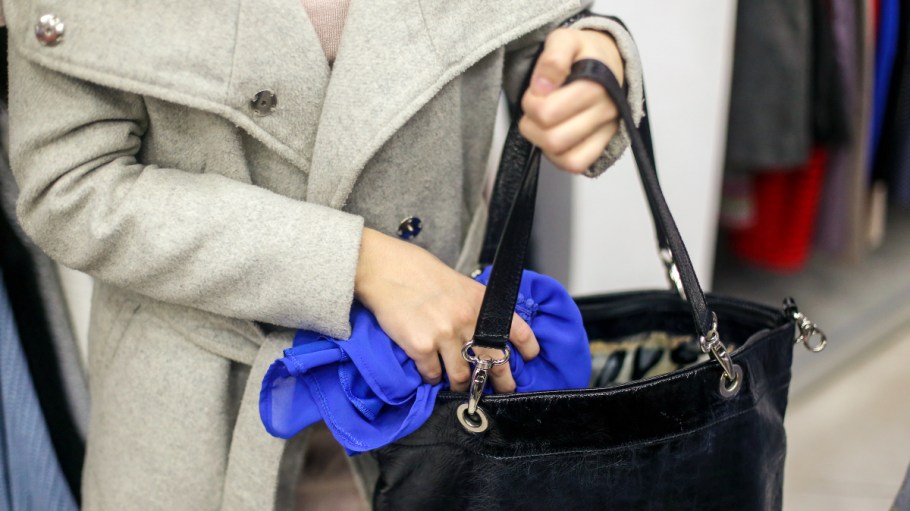
Florida Attorney General James Uthmeier announced late last week that officials throughout the state arrested 44 people on retail crime charges and recovered $207,000 worth of merchandise. The state participated in a nationwide blitz on retail crime, the attorney general said.
Police said those arrested stole “a range of merchandise, including personal grooming products, clothing, sporting goods and home repair tools.”
Uthmeier said his office collaborated with the Florida Department of Law Enforcement and the Florida Organized Retail Crime Exchange (FORCE) on the crackdown, and noted that he was pleased with the results of the partnership.
Related Stories
“Due to great coordination among our state law enforcement and Florida Organized Retail Crime Exchange, 44 criminals were arrested as part of a nationwide organized retail theft blitz,” Uthmeier said in a statement. “The rule of law means something in Florida; this is another example of our state working with law enforcement to stop criminals.”
FDLE Commissioner Mark Glass said the blitz further evidences Florida’s status as “a law-and-order state,” a reputation the Sunshine State has taken measures to uphold relative to retail crime.
Last year, Florida Governor Ron DeSantis signed a law tightening the penalties for retail crime in the state, after criticizing blue states like California and New York for leniency on theft. According to Capital One Shopping data, Florida retailers lost more than $5.4 billion in revenue to theft in 2022, and retail theft per capita in the state is 12.2 percent lower than the nationwide average. That same data set shows that the instances of retail theft per capita in New York and California are 18.4 percent and 17 percent lower than the national average, respectively.
The law stipulates that anyone who participates in a retail crime operation inclusive of five or more people can be charged with a third-degree felony, with a punishment of up to five years in prison and added harsher punishment for those who perpetuate organized crime rings via social media.
Perhaps most significantly, the law also enables officials to charge anyone who has committed multiple instances of retail theft in Florida within a 120-day window with a felony; prior to DeSantis signing the law, only repeat offenders inside a 30-day window could be charged with a felony.
Uthmeier’s office did not provide details about the number of felonies the arrested retail crime suspects have been charged with, nor did the attorney general disclose the retailers that were impacted by the alleged thieves’ operations.
R. Scott Shalley, president of the Florida Retail Federation, said the work the trade organization has done with various state agencies has helped curtail the effect of crime on retailers’ bottom lines in the state.
“Florida’s retailers deeply value our strong partnership with law enforcement—our most important ally in the fight against organized retail crime,” Shalley said in a statement. “The success of this nationwide blitz, and Florida’s significant role in it, underscores the impact of collaboration through FORCE. We commend Attorney General Uthmeier, FDLE, and all participating agencies for their continued commitment to safeguarding Florida’s businesses, employees, and customers from these criminal networks.”