American producers are celebrating a win for domestic industry within a government defense spending bill that advanced this week.
Language from the Better Outfitting Our Troops (BOOTS) Act was included in the National Defense Authorization Act (NDAA) for 2026, which was voted through by the House Armed Services Committee (HASC) on Tuesday evening. It now faces a full vote in the House of Representatives.
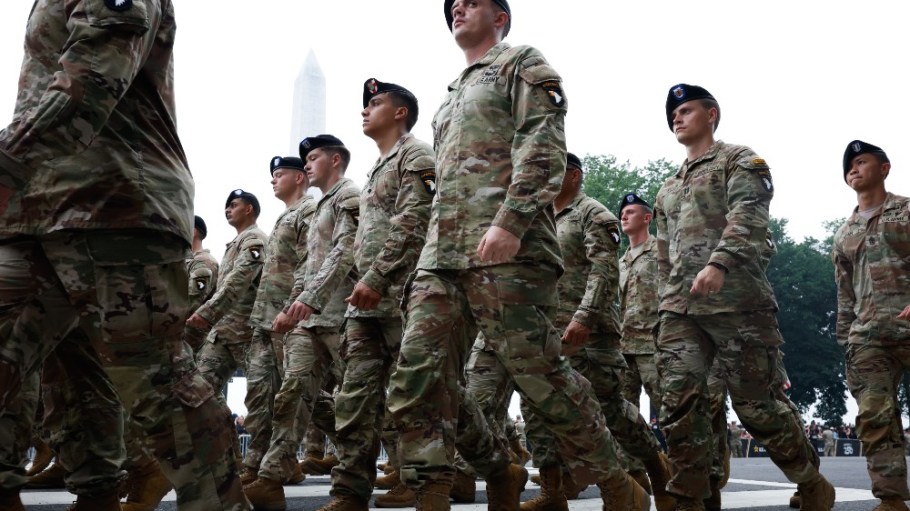
The inclusion will require the Secretary of Defense to issue regulations for the armed forces within the next two years that prevent servicemembers from purchasing optional combat boots as a part of their required uniforms that are made overseas. Instead, they’ll be largely required to buy American-made boots with few exceptions.
Related Stories
The NDAA’s text also includes a provision would eliminate a loophole in the Berry Amendment that allows the American armed forces to purchase textile products from foreign makers under the threshold of $150,000.
The National Council of Textile Organizations (NCTO), which represents the country’s textile and apparel supply chain, has long supported the BOOTS Act and other measures that would give U.S. manufacturers greater access to government contracts and patronage, especially outfitting the military.
“We applaud the HASC for passing the FY 2026 NDAA and including provisions that would help boost domestic manufacturing, strengthen American economic competitiveness, and meet the mission-critical needs of our Armed Forces,” the group’s president and CEO, Kim Glas, said following the vote.
Glas praised the leadership of Congressman Don Davis (D-N.C.) and Congressman Pat Harrigan (R-N.C.), who spearheaded bipartisan efforts to amend the NDAA with measures that favor of onshore industries. The lawmakers have also led efforts to close the small-purchase exemption within the Berry Amendment that has allowed the military to purchase textiles made overseas—a loophole that Glas said “has led to U.S. military purchases of foreign-made textile articles largely at the expense of American textile manufacturers who have potentially lost several million dollars per year in U.S. government sales.”
“Eliminating this exemption will lead to the military procurement of more American-made military textile products as well as oversight of Berry Amendment compliance,” she said.
Currently, American producers create more than 8,000 products a year, including over $1.8 billion in uniforms and equipment, for the armed forces.
Also lobbying strongly on behalf of the BOOTS Act is the U.S. Footwear Manufacturing Association (USFMA), which took to Washington with a coalition of members from across the country to encourage lawmakers to include the bill within the defense spending legislation.
According to the trade group, the Army and other branches of the military have been able to skirt the Berry Amendment—which was designed to ensure that soldiers were outfitted with American-made products—due to the longstanding loophole. Over the years, personnel have instead turned to cheaper combat boots, often made in China.
American makers have been vying for a true shot at the defense industry, USFMA said—because bolstering their capabilities in that realm will also allow them to grow and scale their commercial capabilities, strengthening the overall U.S. footwear supply chain.
There are also national security risks to the country’s current inability to fully outfit its own troops. The trade organization pointed to a recent war game conducted for the Defense Logistics Agency, which revealed that in a wartime situation, the domestic supply chain would need at least a year and a half to ramp up to a point where it could meet the military’s needs for footwear and other gear.
The group said in a statement Wednesday that it was pleased with the inclusion of the BOOTS Act in the NDAA, characterizing it as a pivotal and encouraging step toward ensuring that combat boots worn by servicemembers are American-made. USFMA will continue its advocacy in the Senate, where the NDAA faces final passage.
Also included in the NDAA were surprise provisions related to per- and polyfluoroalkyl substances (PFAS), otherwise known as “forever chemicals.” Used across sectors and product categories, the substances are often found in cookware, firefighting foams, food packaging and apparel and footwear for waterproofing and oil repellency. They’ve also been linked to numerous health conditions, including cancers.
While the NDAA doesn’t take on the presence of PFAS in military garments or shoes, it does mandate that the Pentagon create a strategy to speed up the cleanup of PFAS contamination at military and National Guard installations to protect servicemembers from the potential dangers. Under the provisions included in the spending bill, the Department of Defense will be required to publish a public-facing dashboard that spells out cleanup efforts and timelines.