By 2030, climate change will push another 158 million women and girls into poverty, a recent report from the United Nations warned.
“In cotton, it’s women who sow the seed, weed, pick and segregate the fibers for a premium,” Alison Ward, chief executive officer of CottonConnect, said. “Yet they’re not even recognized as farmers.”
Moored by the mission of helping textile producers and farmers enjoy better livelihoods, the farmer-focused organization emphasizes a partnership approach to tackle global challenges in the textile industry.
Related Stories
Take the London-based global nonprofit’s success story of Kaumudiben Satishbhai Tadavi, for example. She’s a regenerative farmer in Gujarat, India.
“Before, women were mainly involved in tasks like sowing, harvesting, weeding or gathering fodder, with little or no awareness of climate change or how to address it. They often followed the instructions given by men without question,” Tadavi said. “But now, women participate in all aspects of farming, working alongside men and contributing to decisions.”
After training as a climate-change ambassador, she now makes farm decisions alongside her husband, using mulching and smarter irrigation—and “is standing taller in her community for it,” Ward said. “That social equity—giving women real voice and agency—is at the heart of what we do.”
Ward then flagged four pain points—tightening budgets, U.S. tariff uncertainty, volatile markets and unpredictable policymaking—as the layers of instability that make it nearly impossible for brands to commit to long-term sustainability investments.
“If we don’t keep investing in women, the next generation of cotton farmers won’t have the skills or tools they need,” Ward said. “Those women are not just worried about today’s harvest but about their families’ futures. Erratic weather and extreme heat put their livelihoods—and their mental well-being—squarely at risk.”
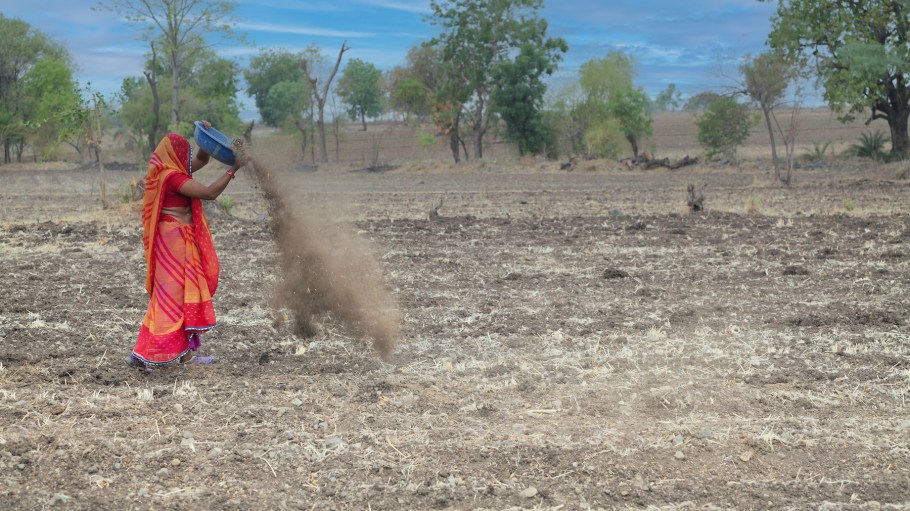
Front-line farmers in India, Pakistan, Bangladesh and Egypt are facing severe climate impacts, she emphasized, but they’re not waiting around for high-tech fixes. Instead, these women are using what’s already in their ecosystems, making vermicompost to hold moisture and crushing neem leaves into a natural pesticide. And while these farmers are already innovating with simple, locally sourced solutions, most lack even basic climate and health knowledge.
“They’re making vermicompost to hold moisture and crushing neem leaves into a natural pesticide,” she said. “Yet many didn’t even know the term ‘climate change’ or how to wash their hands properly because that knowledge never reached them.”
True sustainability, per Ward, depends on respecting indigenous knowledge and empowering local experts with business accountability and supply-chain support. She argued that a genuine, just transition needs knowledge sharing. Real climate resilience comes from empowering women with the information and skills they’ve never had—not expensive gadgets—to decide how best to protect their families and farms.
To that end, CottonConnect favors a co-creative, back-to-basics approach.
“I was recently on a roundtable about business ethics, and I don’t think there’s anyone in this industry who doesn’t want to run an ethical operation,” Ward said. “It’s about social justice and responsibility in your supply chain; planning for the future instead of getting stuck in quarterly reporting cycles.”
With shifting EU legislation, Ward suggested holding fast to those consistent ethical threads.
“That’s what this is all about,” she said. “That’s why we’re doubling down on solutions that embed ethical business and corporate citizenship at every stage.”
But she won’t be frozen by the scale of the challenge.
“There are huge issues—gender equality, climate change—and sometimes you can be paralyzed into doing nothing because they’re so big,” she said. “But if we changed one woman’s life in one village in India—or prevented a child marriage in Pakistan—that’s one girl. If those women multiply like raindrops, then it becomes something significant.”
She added that CottonConnect has worked with more than 800,000 farmers (of which 270,000 are women)—up from around 1,500 a decade ago, transforming a quarter-million lives through steady, incremental gains.
“It goes back to ethics: what is the right thing to be doing,” Ward asked. “You have to be laser focused on keeping going, because we will see shifts over time, even if sometimes you slip back a bit.”
Her message? Don’t let the enormity freeze you. Facing climate as a distant issue breeds complacency—real change demands, making it undeniably local.
To that end: Consider TraceBale.
CottonConnect’s digital traceability platform tracks cotton and raw materials at key stages to enhance supply chain transparency. The social enterprise’s tool works on a segregation model to support the textile supply chain’s more opaque goals concerning transparency.
More specifically, TraceBale pulls data from every link in the cotton chain—farmers, ginners, spinners and beyond—capturing demographics, agronomic inputs (water, fertilizer), procurement details and transactions. Through its web interface, users get a consistent, near-real-time view of each stage, making cotton fully traceable from field to finished product.
CottonConnect later introduced a new portal for the system, supporting the virtual chain of custody via improvements in the physical chain of custody. That included the roll-out of a DNA marker to provide further assurance from gin-to-garment as well as a QR code system to speed up the process of capturing seed cotton procurement in TraceBale, reducing delays associated with manual verification processes.
“I still remember our first demo at the gin for a French retailer—it felt like a hamster running the show,” Ward said. “It isn’t perfect, but today we process a huge number of garments through TraceBale every year, with full visibility from farm to garment.”
As it stands, CottonConnect has now traced the equivalent of 1.77 billion T-shirts via TraceBale.