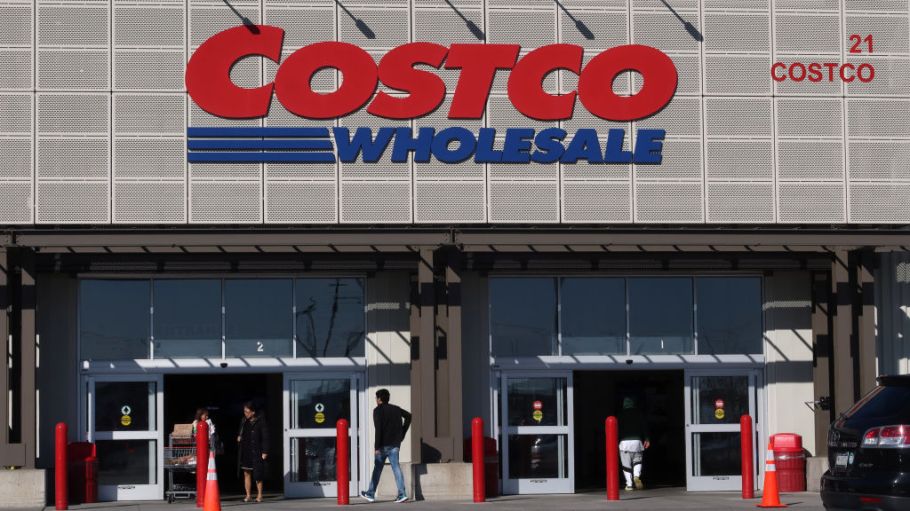
Costco was among the first American corporations to sue the Trump administration for tariff refunds. Now, the warehouse club is facing a lawsuit demanding that those refunds be funneled back into shoppers’ pocketbooks.
This week, plaintiff Matthew Stockov filed a lawsuit in a United States District Court of the Northern District of Illinois alleging that Costco inflated its prices due to the tariff shock. If the big-box retailer is issued refunds on the International Emergency Economic Powers Act (IEEPA) tariffs and doesn’t pass along the paybacks, it would essentially be receiving “double recovery,” the suit said.
Related Stories
“While the importer of record is the only party that may recover a refund from the government for an improperly assessed tariff, the importer is often nothing more than a pass-through vehicle,” the suit said. “Frequently, the importer simply fronts the cost of the tariff, and is made whole by imposing higher prices on consumers. The consumer, for all intents and purposes, pays the tariff.”
Now that the Supreme Court has struck down the IEEPA duties, “the truly injured parties possess no direct avenue for redress,” it continued. Shoppers that have shouldered the economic burden of the tariffs have no statutory course of action in the Court of International Trade (CIT) to get their money back. Only the importer of record—in this case, Costco—has the right to seek a refund from the federal government.
At the same time, Costco was made whole simply by raising prices, the suit said.
“Costco was able to expand margins during the peak of the IEEPA tariff regime by selectively raising prices on tariffed goods,” the filing reads. “The higher prices consumers paid were a consequence of Costco’s increased cost of importation. Absent the imposition of the unlawful IEEPA tariffs, Costco would not have needed to raise prices on consumers in this way.”
Thus far, Costco has indicated that any tariff refunds received would be leveraged to provide its members with “lower prices and better values.” The vague commitment stops far short of a promise to compensate specific shoppers who paid higher prices while the IEEPA tariffs were in place, however.
The lawsuit said a proposed class action could include more than 100 Costco customers who, in aggregate, believe they are owed more than $5 million in tariff refunds. The suit includes anyone in the U.S. that purchased any good subject to IEEPA tariffs from Costco between Feb. 1, 2025 and Feb. 24, 2026.
December saw the Washington-based warehouse chain file a complaint with the CIT arising from concerns about whether businesses that paid the IEEPA tariffs would be guaranteed repayments. The suit was filed well before the bulk of Trump’s duties were invalidated by the Supreme Court on Feb. 20.
Lawyers for Costco wrote that the separate suit was necessary “because even if the IEEPA duties and underlying executive orders are held unlawful by the Supreme Court, importers that have paid IEEPA duties, including Plaintiff, are not guaranteed a refund for those unlawfully collected tariffs in the absence of their own judgment and judicial relief.”
At the time, Costco was seeking to stop the liquidation of the entries for which IEEPA tariffs were paid to ensure that its refunds weren’t put at risk. It then sought a declaration from the CIT that the IEEPA tariffs were illegal, and an injunction preventing the federal government from imposing more duties through the executive orders being challenged. It also sought a full refund of all IEEPA duties it paid.
A federal appeals court earlier this month denied the federal government’s request to delay IEEPA tariff refunds, and the CIT stipulated that Customs and Border Protection must begin the process of paying back impacted importers.
CBP, which is now “facing an unprecedented volume of refunds,” according to Brandon Lord, executive director of the Trade Programs Directorate at Customs and Border Protection, said it’s working on augmenting its electronic system for assessing and issuing the refunds—a process that will take about 45 days. On Thursday, the agency gave an update, saying that it plans to roll out a new digital tool that will streamline the refund process for some 53 million distinct entries.