Late last week, the U.S. Copyright Office released guidance around the copyrightability of work created in whole or in part by artificial intelligence systems.
Effectively, the office determined that existing legislation is sufficient in putting forth guidance for AI-generated work and decreed that works created wholly by AI are not eligible for copyright, while work with some human creativity is eligible for copyright registration.
Moish Peltz, partner and chair of IP Practice Group for Falcon Rappaport & Berkman LLP, said that guidance is par for the course when considering the Copyright Office’s previous course of action. This time, the government body solicited feedback from scholars, practitioners and industry alike—and ultimately came to the conclusion that using AI to develop text, art or designs doesn’t immediately preclude it from being copyrightable.
Related Stories
“The report really maintains the status quo, in that works that are entirely AI generated do not benefit from copyright protection, and that there is a maintained human authorship requirement,” Peltz said. “For the fashion industry, that would mean that if you use AI as a stand-alone tool to entirely create new [designs] or trends…that work itself would not be protected by copyright. You could still create it, sell it and find a market for it, but you wouldn’t be able to protect the copyright itself unless there’s some human authorship.”
Kirk Sigmon, partner at Banner & Witcoff Ltd., said, even with the now-distributed guidance, the bar for obtaining a copyright registration remains relatively low. In the fashion and apparel industries, though, the office’s publication could stop or slow the pace of novice sellers using AI to generate and sell designs in rapid-fire mode.
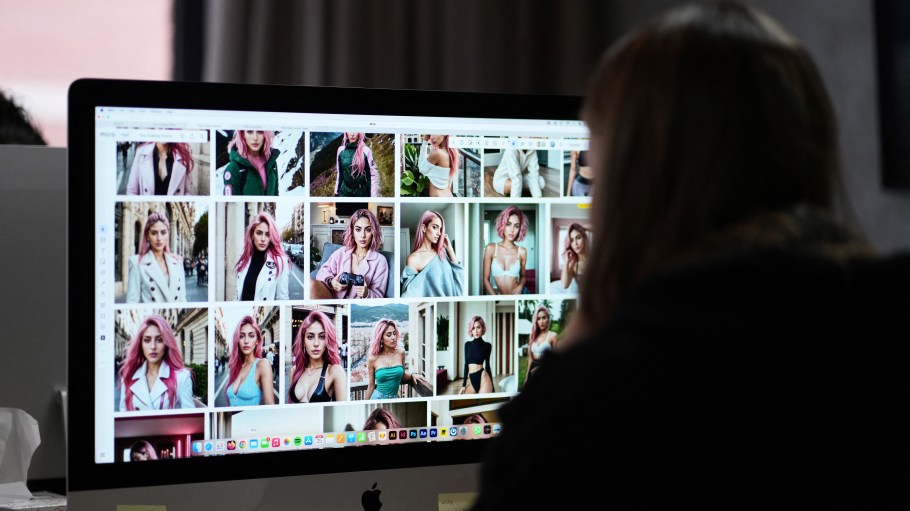
“The likely effect of the Copyright Office’s guidance would be to discourage folks from trying to use AI to mass-generate fashion designs and purport to copyright them,” he explained. “For example, I probably wouldn’t be able to tell ChatGPT to come up with 100 handbag designs and immediately send those designs to the Copyright Office, as I wouldn’t have had any creative involvement in the process.”
Experts have previously told Sourcing Journal that how Congress, courts and agencies choose to govern on and regulate copyright issues arising because of AI could change the way developers create the technology and how the industry uses it.
Sigmon said that, while industry players may still be holding out hope for definitive, AI-focused copyright law, that would have to come through Congress; in this publication, the Copyright Office is simply creating guidelines to enforce existing legislation.
“The Copyright Office’s report isn’t binding like a legal case is, but it certainly is a reasonable interpretation of certain cases, and will probably be relied upon by courts and commentators,” he said.
Despite having a more formal sense of clarity on one piece of the issue, Sigmon noted that a major piece of the copyright issue—arguably a bigger deal than anything that’s been published to date—is still at play: training material for the largest models, especially those that are publicly available.
“It is still unclear whether, when you use output from a machine learning model trained using copyrighted works, you infringe those copyrighted works. In some cases, such as for models designed to mimic a specific artist, there’s a pretty decent possibility that courts will find infringement,” he explained. “That said, for larger models trained using billions of different pieces of content, the case is less clear. That’s particularly the case because it can be very difficult to prove that a particular work was used to train an artificial intelligence model.”
There are a variety of cases pending in courts around the country related to using copyrighted or trademarked material to train generative AI models and machine learning tools. While some are being settled outside of court, Sigmon noted that it’s likely that those that are fully litigated in court will determine precedent that could impact different industries.
And, when it comes to the United States Patent and Trademark Office (USPTO), the Copyright Office’s guidance doesn’t apply. Peltz said the two offices have different goals and thus, different tolerance for AI use.
“I think the take of the USPTO on trademarks is going to be that AI doesn’t really matter,” he said, noting that, unlike copyright registration, trademarks require commercial use to be fully protectable. Thus, they’re less focused on the creative process associated with developing a logo or brand mark; instead, they focus on use—and whether something distinctly similar already exists.
That in mind, he said, it’s more likely that the USPTO determines that brands and retailers can use AI to develop marks, though the office has not said as much to date.
“As long as you can clear that trademark and show that no one else is using something that’s confusingly similar to it, you’re going to be able to use that trademark in commerce and develop protectable trademark rights by virtue of your use in commerce,” Peltz told Sourcing Journal.
Sigmon said that the guidance from the Copyright Office might incentivize brands previously hesitant about bringing AI into the design process to do so. But, as brands adopt AI for new use cases, he warned, they should ensure their employees understand the best practices around using the technology—and should consider protecting creations in innovative ways.
According to Sigmon, design patents can be used to protect the visual aspects of an item, like an ornamental sole on a pair of sneakers that makes it materially different than what’s been done before. He further noted that, as AI becomes a more prevalent piece of design in the fashion and apparel world, brands looking for extra protection could file for that type of patent.
“In my view, brands concerned about protecting their designs in the world of AI should definitely rely more heavily on design patents, rather than copyright or trademark. While design patents can be a bit pricier and require formal examination, they can be a valuable weapon against knock-offs, whether AI-generated or otherwise,” Sigmon said.