
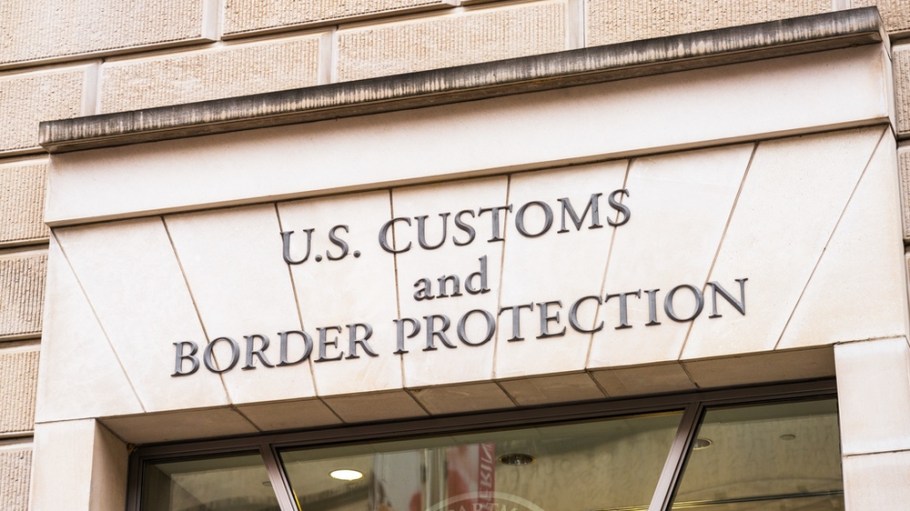
U.S. customs officials issued on Tuesday a withhold release order against apparel and textiles produced in Mauritius by Firemount Group, citing information that “reasonably indicates forced labor use” in violation of U.S. trade statute.
Customs and Border Protection said that it analyzed supporting evidence, including interview recordings and transcripts, civil society reports, news media and academic research. Together, it said, they suggested that workers at Firemount Group were subjected to four International Labour Organization indicators for forced labor: abuse of vulnerability, debt bondage, deception and intimidation and threats. According to the ILO, even the presence of a single indicator in a given situation can point to the presence of forced labor.
Related Stories
“Not only is forced labor inhumane, but it also creates unfair competition that harms American businesses and consumers,” Susan S. Thomas, acting executive assistant commissioner at CBP’s Office of Trade, said in a statement. “As America’s frontline for border and economic security, CBP stands ready to enforce our laws and ensure a level playing field.”
The WRO, which directs authorities to detain shipments until the importer can prove that the goods were manufactured through legitimate means, is CBP’s fourth of the year and its first for fiscal year 2026. It‘s also the 54th under Section 307 of the 1930 Tariff Act, which prohibits any product that was mined, produced or manufactured wholly or in part by forced, indentured or child labor from entering the United States.
While the agency didn’t lay out the specifics of Firemount Group’s infractions, the denim-focused supplier and three others like it were the subjects of a 2024 exposé into exploitative working and living conditions faced by migrant workers in Mauritius.
Transparentem, a New York-based nonprofit that investigates environmental and human rights abuses in global supply chains, said it found extensive evidence that foreign nationals, predominantly from South Asia, had been deceived by recruitment agents who promised them decent jobs with well-paying salaries that ultimately didn’t manifest. Worse, they were left on the hook for exorbitant recruitment fees.
But the problems didn’t stop there, it said: Factories additionally deducted workers’ already dismal wages for food and accommodation—often unappetizing in the first instance and frequently bug-infested in the second—while subjecting them to punishing hours riddled with intimidation and abuse. Production quotas, too, were characterized as bordering on inhumane.
Of the manufacturers Transparentem examined, Firemount Group, Denim de l’Ile, R.E.A.L. Garments and Aquarelle Clothing presented “among the worst conditions we’d ever seen” despite their brandishment of clean bills of health by audit firms like Worldwide Responsible Accredited Production, a.k.a. WRAP; LRQA; QIMA; and Verité, its founder and president Ben Skinner previously told Sourcing Journal.
Social audits, for the most part, are not built to be “victim-oriented investigative efforts,” he added.
Among the buyers that were implicated in the research, only Calvin Klein and Tommy Hilfiger owner PVH Corp., Barbour and Second Clothing, which produced jeans at R.E.A.L. Garments, repaid more than $420,000 in workers’ recruitment fees. PVH Corp. shelled out the largest share of $390,456, which it said was calculated based on its production capacity. A representative from the retailer, which also sourced from Aquarelle Clothing, said that an independent audit it commissioned found no evidence of high recruitment fees for migrant workers at that facility.
Last September, the U.S. Department of Labor added Mauritius to its list of goods made with forced labor for the first time, indicating Transparentem’s research as one of its reasons.
Syed, a Bangladeshi national who spoke on the condition of anonymity, said last year that he signed a three-year agreement with Firemount Group after paying $3,500 in recruitment fees that required him to borrow money. The agent had promised him a monthly salary of $470 to $580, but the contract, which he couldn’t read because it was in English rather than his native Bangla, showed $128. Syed’s “No. 1 problem,” however, was the food, which he regularly skipped altogether.
“The condition of food at this factory is so poor that it is beyond imagination,” he said. “Many of us have spoken about it. And those who spoke about it all got [sent home]…if anyone tries to complain about the food, the owner himself says, ‘Either eat or go back to Bangladesh. Go back to India.”
Firemount Group and its buyers, including Billabong parent Boardriders, Boden, The Forschini Group, John Lewis Partnership, Kontoor Brands, Rodd & Gunn, WE Fashion and Woolworths in South Africa, responded to requests for comment. Neither did WRAP, whose principles the supplier told Transparentem it was “in compliance” with. A spokesperson for WRAP previously told Sourcing Journal that it was aware of the issues involved in Mauritius but operates “on the belief that it is far more productive to encourage continuous substantive progress in facilities than to just walk away.”
Responsible recruitment is an issue that the likes of the American Apparel & Footwear Association, a prominent trade group, and the Fair Labor Association, a multi-stakeholder organization, have been working to address through their combined corporate membership.
As of May, 103 brands, retailers and organizations, including American Eagle Outfitters, Asics, Levi Strauss & Co., Nike and PVH Corp., have signed the AAFA/FLA Industry Commitment to Responsible Recruitment, which requires signatories to pledge to promote conditions where no workers pay for their job, are denied access to their travel documents or are misinformed about the terms of their employment. They must also regularly report on how they’re embedding elements of this commitment in their policies and processes, such as through their sustainability reporting or modern slavery disclosures.
Writing on LinkedIn, Transparentem said it believes that WROs should be applied only as a “last resort” when voluntary efforts to remedy conditions have failed.
“Unfortunately, this appears to be the case at Firemount Group,” it said. “We have yet to receive information from Firemount Group or their buyers that they reimbursed workers for the recruitment fees that workers paid to secure their jobs.”


