President Donald Trump’s tariffs have generated far less revenue than the $2 billion per day he’s been touting, according to new data from Customs and Border Protection (CBP).
In fact, the agency has collected over $500 million under the president’s new reciprocal tariff scheme rolled out on April 5, and $21 billion in in total duty revenue from his 15 presidential trade actions since he was inaugurated, according to a CBP statement viewed by CNBC. The agency said average daily tariff revenue rings in at $250 million.
Related Stories
These figures take into account the results of a 10-hour glitch in CBP’s system on Friday that halted U.S. importers from inputting a code that would have exempted freight that was already in transit from overseas manufacturers from paying the heightened tariffs.
According to CBP’s website, updated earlier this week, 3 million entry summaries valued at over $352 billion were processed during the month of March, resulting in estimated duties of about $15 billion. These duties were collected before Trump’s reciprocal tariffs were formally announced.
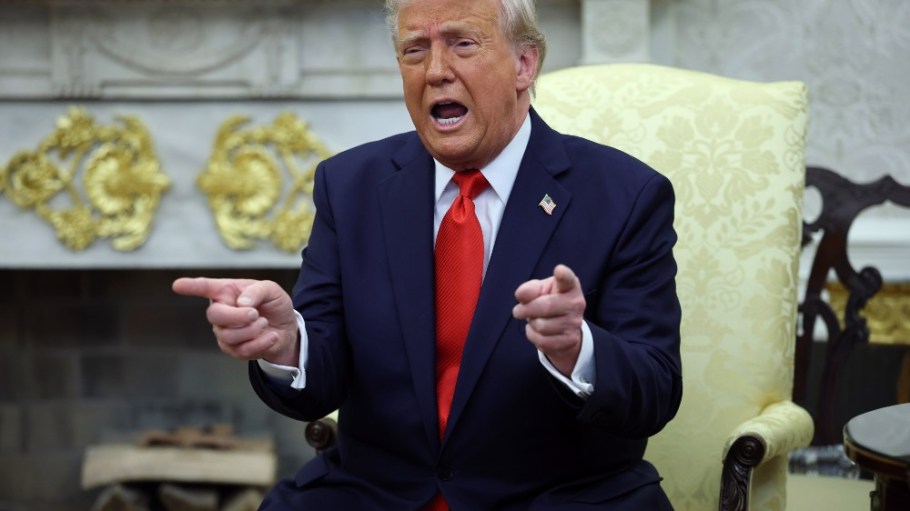
The president has held fast to a far bigger figure in his recent statements. “We’re taking in almost $2 billion a day in tariffs,” he told reporters on April 8—“$2 billion a day and we’re doing very well.”
Trump levied 10-percent universal tariffs on U.S. trading partners, along with far higher reciprocal duties on more than 60 nations, on April 2, which he termed “Liberation Day.” Amid wild market fluctuations and outcry from consumers and businesses, the president paused the implementation of the reciprocal duties for 90 days, saying people had been getting “yippy.”
Experts have warned that tariffs—especially the hefty 145-percent duties levied on China—will prompt suppliers and importers to engage in duty evasion tactics like under-invoicing that allow them to curb their tariff burden. According to CBP, 71 audits were completed in March that identified $310 million in duties and fees owed to the federal government as a result of goods that had been improperly declared. But the agency was only able to collect somewhere around $49 million of this identified revenue, along with revenue from previous fiscal years’ assignments.
The rhetoric lobbed by the administration in the direction of Beijing has no doubt contributed to enmity between the two nations, though Chinese officials have indicated that the government has stopped taking Trump’s tariff escalation seriously. Last week, China’s Ministry of Finance described the rapidly inflating duties as “a joke,” saying they no longer have “any economic significance.”
Those sentiments were echoed this week after the White House announced that certain China-made products could face tariffs of up to 245 percent because of the country’s retaliatory trade actions against the U.S. China’s Foreign Ministry said in a statement that it would no longer engage in a “tariff numbers game.” The country filed a complaint with the World Trade Organization (WTO) last week, calling out the U.S. for violating its rules and standards.
American leaders, too, are calling the wisdom of the president’s trade policy into question. Federal Reserve Chairman Jerome Powell called the level of tariff increases announced by the administration “significantly larger than anticipated.”
“The same is likely to be true of the economic effects, which will include higher inflation and slower growth,” he added. “Surveys of households and businesses report a sharp decline in sentiment and elevated uncertainty about the outlook, largely reflecting trade policy concerns.”
Surveyed consumers and market-based analysis revealed that near-term inflation expectations have increased markedly, he added—with respondents pointing chiefly to tariffs as the reason.
Trump went on the offensive Thursday, lambasting Powell for holding off on interest rate cuts. “Jerome Powell of the Fed, who is always TOO LATE AND WRONG, yesterday issued a report which was another, and typical, complete ‘mess!’ Oil prices are down, groceries (even eggs!) are down, and the USA is getting RICH ON TARIFFS,” he Truthed. “Too Late should have lowered Interest Rates, like the [European Central Bank], long ago, but he should certainly lower them now. Powell’s termination cannot come fast enough!]
Trump also indicated that he has been speaking with foreign heads of state about the status of the duties, saying he had a “very productive” call with Mexican President Claudia Sheinbaum on Wednesday and met with Japanese trade representatives in Washington.
On Thursday, he met with Italian Prime Minister Georgia Meloni—the first European official to visit Washington since the reciprocal duties (now deferred) were announced earlier this month. “We’re going to have very little problem making a deal with Europe or anybody else because we have something that everybody wants,” Trump said during the public portion of the meeting.
“Every Nation, including China, wants to meet!” he wrote on his platform of choice.