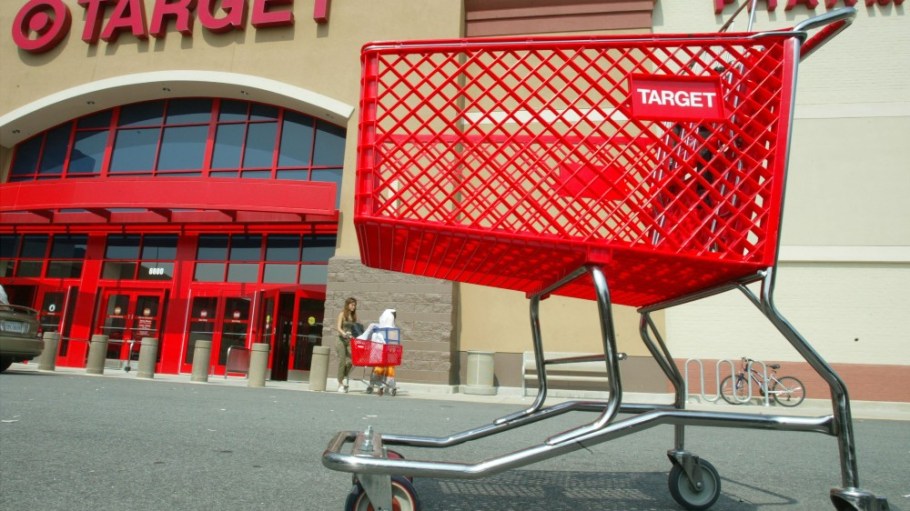
A broadening coalition of disaffected shoppers is pushing back against the nation’s biggest corporations through an “economic blackout” slated to take place Friday.
Retailers like Target, Amazon and Walmart have found themselves at the center of grassroots calls on social media (now in the tens of thousands) to boycott spending on Feb. 28.
Led by The People’s Union, a group dedicated to promoting corporate reform through economic resistance, the day-long retail boycott will protest retail price hikes and changes to corporate policies that it calls exploitative and unfair.
Related Stories
The organization, led by founder John Schwarz, argues that with Americans struggling to make ends meet, stores shouldn’t be jacking up prices—nor should they be walking back commitments to promoting equity and diversity. Thus, it’s encouraging consumers to forgo all unnecessary spending both in stores and online for a full 24 hours.
“They raise prices because they can. They squeeze every dollar out of us because they can. They pay their workers less, they cut corners on quality and charge you more because they can,” Schwarz said in a video posted to Instagram.
“Companies like Target, who continuously want a price gouge and play with equality. Companies like Amazon, who built their empire by exploiting labor and crushing small businesses and paying nothing in taxes… We’re coming for all of them, and the boycotts will get longer and longer, and we will not stop until these corporations are forced to beg the government to pay their fair share, until they lower their prices, and until they stop treating the American people like we are a disposable income,” he added.
Schwarz characterized Friday’s 24-hour shopper spending frieze as “the first boulder into the pond.”
“We’re going to pull our dollars out of the system and let that ripple spread, because ripples become waves and waves become storms… this blackout is just the beginning.”
Could tariffs be the last straw?
While social-media-driven trends and stunts are nothing new, the concept of an “economic blackout” has resonated with consumers who have watched prices on essential items continue to climb. January saw inflation increase to 3 percent—the highest rate in a six-month period—outpacing the 2.9-percent projected by economists.
The Consumer Price Index (CPI) also rose 0.5 percent in January, and experts warned that number could go up again if President Donald Trump’s tariffs on goods from Canada and Mexico take effect next week as scheduled. Should the duties remain in place throughout 2025, the pressure could cause a one-time rise in consumer prices of up to 0.7 percent, they said.
The Federal Reserve, too, is concerned about new duties worsening inflation; at a meeting last month, committee members reported that “Business contacts in a number of districts had indicated that firms would attempt to pass on to consumers higher input costs arising from potential tariffs.”
Meanwhile, consumers are already catching onto the ties between policy and prices—82 percent of shoppers across the political spectrum now believe that tariffs will drive up prices at stores like Walmart, Costco, Target and Amazon—and they appear to be bracing for the worst.
The Conference Board Consumer Confidence Index declined 7 points in February to 98.3, and the Expectations Index, which measures shoppers’ short-term outlook for income, business and the labor market, dropped 9.3 points to 72.9. According to analysts, a drop below 80 (which hasn’t happened since June 2024) is usually a harbinger of an upcoming recession.
The Conference Board’s senior economist of global indicators, Stephanie Guichard, said Tuesday that February’s consumer confidence numbers represent the biggest monthly decline since August 2021.
“This is the third consecutive month on month decline, bringing the Index to the bottom of the range that has prevailed since 2022,” she added. “Consumers became pessimistic about future business conditions and less optimistic about future income. Pessimism about future employment prospects worsened and reached a ten-month high.”
Impact? Unknown.
Anxieties about the economy have been percolating for some time, and as market conditions worsen, consumers appear to be reaching their limit. With pessimism about incomes and inflation becoming rawer and more widespread, it’s no wonder that they’re eager to voice their displeasure by closing their pocketbooks.
Searches for the term “economic blackout” spiked on Tuesday, hitting 100 on Google trends—an indicator of peak popularity for the past seven days. But economic experts have questioned the efficacy of brief boycotts like the one to come on Friday, with some saying they’re unlikely to move the needle with policymakers or corporations.
“Very often, boycotts do not actually lower the sales of the boycotted organization substantially,” Koen Pauwels, professor of Marketing and Associate Dean of Research at Northeastern University’s D’Amore McKim School of Business, told CBS News affiliate WBZ on Tuesday.
Public outcry and withholding of support have been used to force change in the past, however. Pauwels pointed to the more than 1,000 corporations that stopped doing business in Russia after activists sympathetic to Ukraine posted their names online, and to the #grabyourwallet campaign, launched by brand strategist Shannon Coulter in 2018, which encouraged shoppers to boycott Trump-affiliated businesses. The backlash generated by the social media movement is widely credited with tanking Ivanka Trump’s eponymous brand.
While shoppers know they can make their voices heard through elections, they can also vote effectively with their money, and that may be a tool that’s been heretofore “underused,” Pauwels told WBZ.
This week’s “economic blackout” isn’t the first—or the last—boycott to take shape within the current economic and political landscape. The People’s Union has already planned targeted boycotts of Amazon and Nestle for the month of March.
And last month, Until Freedom, a non-profit organization for community activism, urged shoppers to boycott Target throughout the month of February following the big-box retailer’s announcement that it would roll back diversity and inclusion (DEI) initiatives. The call to action took hold across social media, engendering support from social justice groups and shopper backlash against the big-box behemoth.
Unfortunately for Target, that fervor is being reignited again as the “economic blackout” chatter ramps up and spawns offshoot movements. For example, Pastor Dr. Jamal Bryant of Georgia’s New Birth Missionary Baptist Church called for a 40-day fast from retailers like Target during the Lent season, telling parishioners (and watchers of the sermon on social media) that the action will be a stand against racism and sexism. Another Black faith leader, Bishop Reginald T. Jackson of Washington, D.C.’s Metropolitan African Methodist Episcopal Church, encouraged his congregation to do the same. “If corporate America can’t stand with us, we’re not going to stand with corporate America,” he said.
Running parallel to issue-based brand and retailer boycotts are movements to reduce consumption. “No Buy 2025” has become a popular refrain across social platforms, especially Gen Z favored Tik Tok, with users saying they want to take control of their finances, pay down debt, and stop buying things they don’t need as the cost of living rises.
Whether cooling attitudes toward retail are based on politics or values, consumers’ disenchantment is deepening.
“It probably wouldn’t have an impact on the economy but that’s not the point. The point is to begin mobilizing mass public action,” one Reddit user said of Friday’s boycott. “A one day blackout is the easiest thing to do, imo, and will get attention. People will realize we can work together to make things happen.”