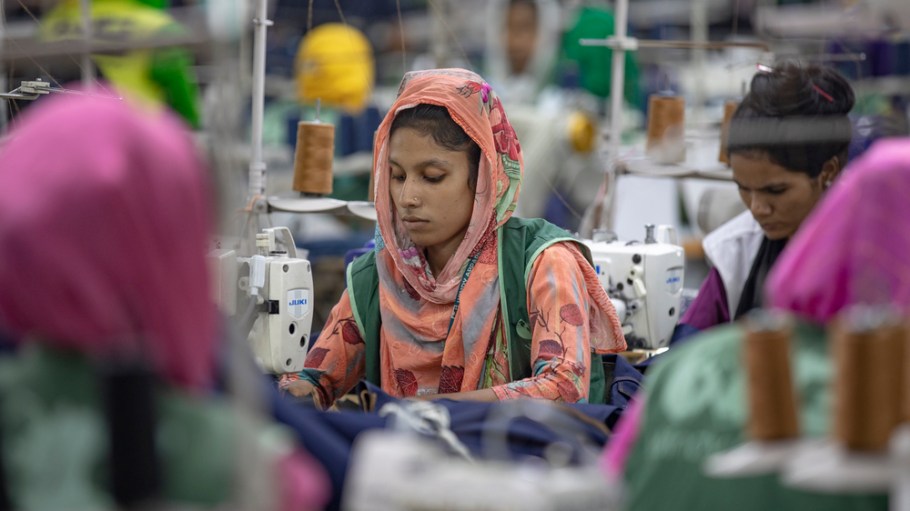
The Bangladesh Garment Manufacturers and Exporters Association (BGMEA) wants factories to participate in a more transparent supply chain by digging deeper on data.
The trade association announced this week that it has partnered with technology company Digital Bridge Partners to create an AI-powered ESG compliance reporting tool it calls the Digital Factory Passport (DFP).
The BGMEA wants the DFP to enable stronger transparency and foster competitiveness in the ready-made garment (RMG) industry. The tool will ingest and streamline data from specific factories, then will create reports on the insights generated, which the BGMEA contends will “reduce audit fatigue” and offer stronger efficiency as factories work to track their sustainability metrics against goals and compliance requirements.
Related Stories
According to the BGMEA, Mahmud Hasan Khan, the organization’s president, said that AI and digital transformation remain core pieces of how the RMG industry in Bangladesh should progress, particularly as it relates to sustainability progress. Simultaneously, Inamul Khan-Bablu, senior vice president at the BGMEA, and Vidiya Amrit Khan, vice president at the organization, said the DFP is slated to “position Bangladesh as a leader in responsible manufacturing.”
Digital Bridge Partners said the initiative is targeted at helping the RMG industry bring stronger transparency to the fore.
The RMG sector in Bangladesh accounts for most of the country’s global exports; BGMEA data shows that, between 2024 and 2025, about 81.5 percent of all goods exported from Bangladesh fell into the RMG category. In that time frame, RMG factories in Bangladesh shipped nearly $40 billion worth of merchandise to other nations around the globe.
Part of the allure of the DFP is that, as Bangladesh continues to provide apparel to brands and retailers across the globe, having a more centralized data approach, aided by AI, can help factory owners and operators position their practices to align with what international buyers have come to expect and request.
That could be particularly useful as brands and retailers operating businesses in different regions find that they have different mandates. For instance, a brand that sells products in Europe may have specific data needs to meet the European Union’s Ecodesign for Sustainable Products Regulation’s (ESPR) incoming rules for digital product passport (DPP) implementation. Meanwhile, a California-based brand selling exclusively in the U.S. might have different needs as it prepares to meet Extended Producer Responsibility (EPR) requirements in the state.
Having a more robust mechanism in place to collect product data—then share it externally—could be key for manufacturers worldwide as companies race to meet their sustainability goals and determine how to comply with regulations. The BGMEA said the newly announced DFP could, for that reason, “future-proof Bangladesh’s position as a global sourcing hub.”