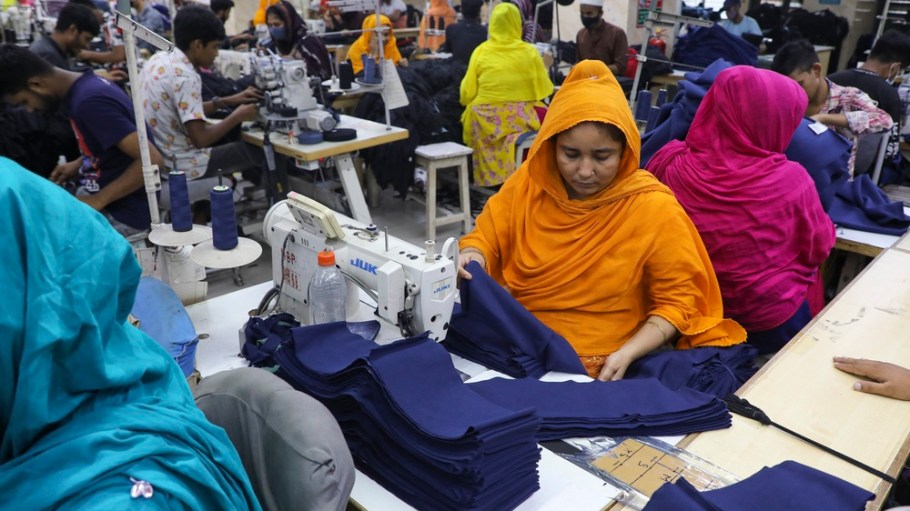
In what appears to be another war of wills in the industry, the issue of monitoring labor rights has taken center stage in Dhaka.
Manufacturers have expressed both ire and an intent to withhold cooperation, even as one of the largest initiatives for factory safety—the RMG Sustainability Council (RSC), which has continued the work of the Bangladesh Accord on Fire and Building Safety since June 1, 2020— plans to expand its mandate to include the monitoring of labor issues.
These will extend beyond occupational and safety hazards (OSH) to cover broader violations including wages, worker discrimination, forced labor, and other issues under a comprehensive complaints mechanism, which the RSC has announced will begin at the end of this week.
Related Stories
The RSC is a powerful organization with more than 230 global brand signatories, covering more than 1,800 factories in Bangladesh. RSC was established through a joint initiative of the Bangladesh Garment Manufacturers and Exporters Association (BGMEA), global brands, and unions to sustain workplace safety in the ready-made garment industry.
Manufacturers have reacted strongly.
The BGMEA sent letters to its members on Sunday asking them to hold off on responding to RSC instructions, stating that the matter was “under review” and that “further dialogue would ascertain the process ahead after the next RSC board meeting.” It further requested “all member factories not to respond to any communications, letters or circulars from RSC on the matter.”
The BGMEA letter stated: “It has come to our attention that the Managing Director of the RMG Sustainability Council (RSC) has recently circulated a letter to factories concerning a non-OSH (Occupational Safety and Health) complaints mechanism. We would like to inform you that the matter is currently under review and BGMEA management is in close communication with the RSC through constructive dialogue.”
Faisal Samad, director, BGMEA, told Sourcing Journal in no uncertain terms that the pilot would not start on Nov. 16.
“The industry never agreed to this, and we don’t accept the statement sent to our members. We’re not letting them into our factories,” he said. “They have to bring it to the table and we have to see how we negotiate. They are not in a position to dictate—they must understand we are all stakeholders. It is not 2013.”
However, a letter from the RSC, also sent out on Sunday, announced in no uncertain terms that the expanded Complaints Mechanism—a “major milestone in advancing worker protection and workplace fairness” would begin November 16.
“The RSC will expand its Complaints Mechanism beyond OSH to cover a broader range of workplace-related issues, effective 16 November 2025, to enact the decision made by the RSC Board of Directors in their meeting on 20 October 2025. This expansion marks the introduction of a unified, credible, and trusted platform for addressing workplace grievances through a process jointly endorsed by RSC’s tripartite partners—Industry, Brands, and Workers,” the organization said in a statement.
It added that the RSC had recently launched a digital complaint system with IVR, allowing workers to lodge complaints using a toll-free number to make the process more accessible.
Abdul Haque, Managing Director, RMG Sustainability Council (RSC) noted: “This decision, adopted at the RSC Board of Directors meeting…represents a major step toward ensuring fairness, safety, and transparency in the workplace. With equal representation from international brands and retailers, trade unions, and the local industry, this collective decision reflects our shared commitment to making grievance redress more credible, efficient, and accessible for all workers.”
The complaints mechanism itself was originally established under the 2013 Accord on Fire and Building Safety in Bangladesh, and has been implemented by the RSC since June 2020, with more than 4,000 OSH complaints filed to date—giving workers a platform to raise concerns confidentially or anonymously.
The implementation would be carried out in two phases, starting with over 50 signatory brands and 1,000 factories to ensure a smooth and effective rollout, with the second phase, covering all signatory brands and factories, is expected to begin in May.
Joris Oldenziel, executive director, International Accord told Sourcing Journal that consideration of the potential expansion of the complaints mechanism had already been built into the framework two years prior.
“In the International Accord Agreement that was signed in November 2023, the signatories committed to piloting the expansion which was a long-standing wish from many signatories both unions and many brands. The signatories considered that the very effective complaints mechanism of the Accord could also be of added value to effectively address other labor standards, not just occupational health and safety issues,” he said.
“In the International Accord agreement a pilot was planned to see how we would best be able to deal with these cases, and what kind of resources and expertise is necessary. The Accord program in Bangladesh is implemented through RSC, and they conducted the pilot program last year. A survey was also done among brands and a vast majority of them were in favor of expanding the complaints mechanism beyond OSH. As part of the tripartite framework of RSC it needed discussions with the industry within its decision-making body. At the RSC board meeting on October 20, it was agreed to expand the complaints mechanism beyond OSH,” Oldenziel said.
However, given that the RSC has largely been focused on fire and building safety issues in its inspections, and other OSH issues through its complaints mechanism, this appears to be a large new mandate. Oldenziel explained that the RSC has already been receiving many complaints that were out of scope — more than 70 percent of complaints concerned issues like overtime pay, severance benefits, wages, unfair dismissals, etc. The fact that RSC already had a track record of successfully resolving cases and providing effective remedies made this a logical next step, he observed.
“There are few complaints mechanisms e as effective as the complaints mechanism of the RSC and the Accord, with a competent team of RSC complaints handling specialists in Bangladesh who are conducting independence investigations and working with the factories and the complainants to resolve cases,” he said. “Lots of these complaints are very effectively being resolved, and that is also why the brands are supportive. They also realize that there are increasing human rights due diligence expectations and obligations and having an effective grievance mechanism in their supply chain helps them comply with these,” he said, marking out the urgency to make this happen.
Yet, there are multiple initiatives to monitor, and manufacturers have long complained about the different parameters and requirements of each.
Oldenziel said that this concern was being looked at closely. “Although there are a lot of different complaint mechanisms, the Accord has more than 230 brand signatories to the Bangladesh Safety Agreement. So, bringing this under the Accord actually contributes to harmonizing the efforts in the industry.”
He admitted that there was no guarantee that the multiple mechanisms could be eliminated. “Some brands have contracts with other complaints mechanisms,” he admitted, “but there will be a good faith effort from the Accord brands to look into that and to see which initiatives may basically hand over or discontinue their own complaints mechanism. We are making efforts to see to what extent this can happen, but ultimately that’s an individual brand decision.”
Even as manufacturers continued voicing their concerns about this additional mechanism, the question about whether RSC is the right organization to handle such issues is far from unanimous.
BGMEA director Faisal Samad emphasized: “RSC is already behind in its primary task, which is structural. There are factories waiting in line, and there are constant complaints from members that inspections still need to be completed. If they’re not doing their primary task, how can they take on anything more?”