With new tariffs, shifting brand strategies and a fragile financial system, the stakes could not be higher for Bangladesh in 2025. The country, which has climbed to the to of the heap to become the No. 3 garment exporter in the world, is also undergoing challenges to its economy that threatens to disrupt its progress.
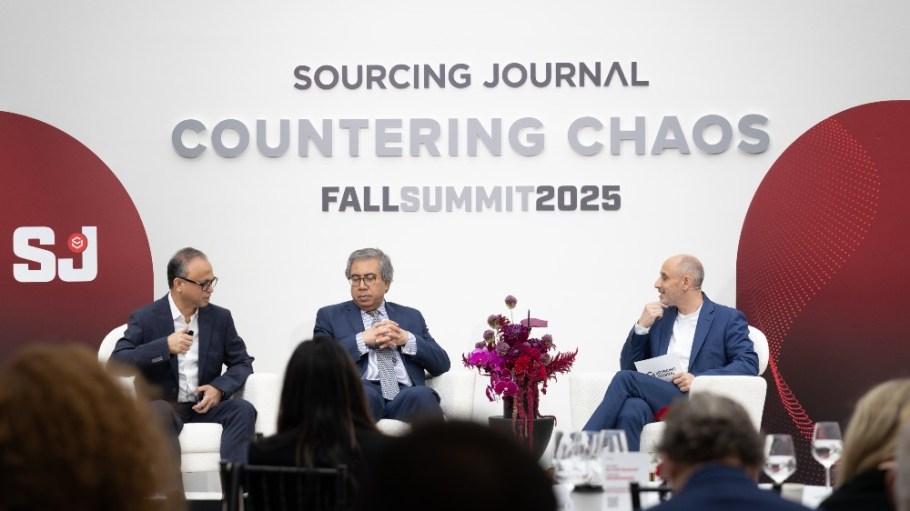
With these issues as a backdrop, Mahmud Hasan Khan, the recently instated president of the Bangladesh Garment Manufacturers and Exporters Association (BGMEA), took to the stage at Sourcing Journal’s annual summit to speak to how the country is weathering the storm.
Related Stories
Khan told Sourcing Journal editor in chief Peter Sadera that Bangladesh has “been concerned from the very beginning” of President Donald Trump’s second term that the country would be heavily targeted with new duties as a part of his tariff-driven trade agenda. On April 2, an occasion the president dubbed “Liberation Day,” Trump imposed 37 percent duties on Bangladesh.
“We tried to motivate and encourage our negotiator, who was to talk to the [U.S. Trade Representative] from our government, that the tariffs imposed on Bangladesh should not be higher than our competitive countries like India, Vietnam, Pakistan and Indonesia,” he said. “Otherwise, this industry will be collapsed.”
Fortunately, the tariff rate has since been revised downward to 20 percent, a number Khan called “quite bearable” by comparison. “It is similar to Pakistan and Vietnam, and lower than India and China.”
But the burden will be significant for all countries trading with the U.S. Bangladesh’s ready-made garment sector exports nearly $8 billion to the U.S. each year, and will incur about $1.4 billion in tariffs under the new plan. “The billion-dollar question is: who is going to bear this extra tariff?” Khan said.
Retailers, importers and manufacturers have already attempted to spread out the cost. “We are worried and concerned that if the customer cannot absorb this extra cost, that may reduce consumption,” he added. Currently, about 180 factories in Bangladesh are totally dependent on the American market and U.S. brands as customers.
Now, the BGMEA is lobbying the Bangladeshi government to push the U.S. for protocols and provisions that will provide some relief. “We are trying to find some mechanism where using U.S. content more than 20 percent would be tariff free,” he said by way of example. The organization is also hoping that the tariffs will not be stacked on top of existing duties.
“I think what is important at this moment to bring in efficiency the cost structure, so that this tariff impact can be absorbed both by the buyer, seller, as well as the consumer,” added Md Mahbub ur Rahman, chief executive officer of HSBC Bangladesh. “Of course, the tariff parity is making things very tolerable from an competitive advantage.”
Ur Rahman said that HSBC, the largest international trade bank in Bangladesh, manages about 10 percent of the country’s export business. Asked about the overall economic picture of Bangladesh, he said, “It has become better than what it was, and it should be better than what it is today.”
The country’s gross domestic product (GDP) is about $450 billion—on par with Vietnam, “if not a little bit more.”
“The consumption, infrastructure and supply chain reconfigurations are the three factors that are working towards the trajectory of the Bangladesh economy,” he said, adding that he believes advancement in these areas should make the country’s economic structure “more stabilized and more modern.”
While the country’s advantages as a sourcing locale for apparel are “longstanding and time-tested,” the CEO said Bangladesh is now building a future based on investment in workers—“be it their productivity, be it their understanding and knowledge.”
“What got us here will not take us there,” he added.