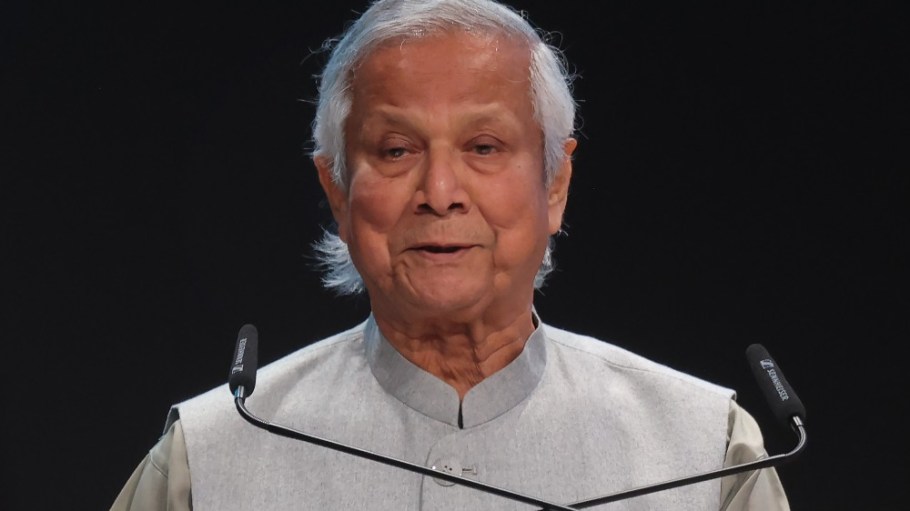
Interim Bangladesh leader Muhammad Yunus made the long-anticipated announcement late Friday that general elections will be held in the first half of April 2026. The declaration has sparked a wave of reactions and fresh deliberations across the country.
Political parties had hoped—and many had negotiated—for elections to be held within the current year. The extended timeline has caused concern among several factions, given that it has already been 10 months since the political upheaval that led to the unexpected ouster of former Prime Minister Sheikh Hasina following student-led protests in August.
Related Stories
While numerous political parties continue to demand elections before the end of 2025, business leaders are increasingly voicing apprehensions about how the delay could affect their operations and strategic planning. This is particularly true in the apparel sector, which accounts for approximately 80 percent of the country’s total exports. International buyers are seeking reassurances about policy continuity and clarity on issues such as tax volatility, geopolitical shifts, and rising gas and electricity prices.
In his address to the nation, Yunus stated: “After reviewing the ongoing reform activities, I am announcing to the people today that the next national election will be held on any day in the first half of April 2026.” He added that a detailed “roadmap for the voting” would be shared “at an appropriate time.”
Manufacturers have been urging the government to hold elections sooner to ensure stability and continuity in policymaking. With critical developments underway—including U.S. trade deadlines, the initiation of free trade agreement talks with Washington, ongoing financing from the International Monetary Fund, and rapid global geopolitical changes—industry leaders argue that firm and credible political leadership is essential.
Yunus’s announcement follows a major political crisis triggered by former Prime Minister Sheikh Hasina’s ouster. Since August, the country has operated under an interim government tasked with implementing reforms and preparing for elections. The Awami League, led by Hasina, remains banned from contesting future polls. Meanwhile, the opposition BNP—which boycotted the January 2024 election—is now widely expected to return to power. Its leader, Khaleda Zia, recently acquitted in a long-standing corruption case, appears poised for a political comeback.
Some manufacturers told Sourcing Journal that the delayed election timeline could create a prolonged period of uncertainty. Investors and buyers are increasingly concerned about the risk of sudden policy reversals, they noted. They also pointed to the steep 37-percent tariff recently imposed on Bangladeshi exports by U.S. President Donald Trump in April—a rate second only to one other South Asian nation and the 15th highest globally—as a worrying sign.
In comparison, India faces a 26 percent tariff, and Pakistan, 29 percent. Industry leaders stressed that Bangladesh needs a strong, stable political mandate to manage such external pressures. They also emphasized that recent tensions with India could be viewed as more “personal” than “political,” and an elected government could help reset relations with a broader geopolitical vision.
Still, many manufacturers expressed cautious optimism following the recent conclusion of elections at the Bangladesh Garment Manufacturers and Exporters Association (BGMEA), the powerful industry body that represents and negotiates on behalf of the country’s key export sector. The new leadership, set to assume office on June 16, will be led by president-elect Mahmud Hasan Khan Babu.
Speaking to Sourcing Journal after his victory, Babu said his team would act swiftly to address what he called the “long-standing challenges faced by the industry.”
“Among the main proposals are the formation of a dedicated ministry for the garment sector, ensuring fair pricing from international buyers, and establishing specialized cells to explore new markets and manage regional crises,” he said. These objectives were central to his Forum Panel’s election manifesto.
Other industry leaders noted that, despite the political uncertainty, Bangladesh’s apparel sector has continued to grow. According to data released last week by the Export Promotion Bureau, apparel exports in May 2025 totaled $3.91 billion—up 11.85 percent from $3.50 billion in May 2024—out of a total of $4.25 billion in exports for the month.
Vidiya Khan, deputy managing director of Desh Garments Ltd. and one of the recently elected BGMEA board members, described the BGMEA election as a positive signal: “This was perhaps the most free and fair election seen by BGMEA in recent times. It gives us confidence that the national elections will also follow in a similar spirit.”
She acknowledged that the political upheaval of last year had initially left a vacuum—resulting in factory closures and buyer confusion—but praised the industry’s resilience. “Our turnaround time in the face of tragedy or political upheaval has been very short. This has been a transitional period for the country. Even without an elected government, the industry is showing growth,” she said.
“We need more diversification, but for now, apparel exports are our biggest industry. The entire forward and backward linkage ecosystem depends on this—it brings in over 80 percent of our foreign exchange. So, regardless of who is in government, this sector must be prioritized and protected.”
“We have our own set of challenges, but at the end of the day, we have a large, flexible workforce that must be sustained,” she added. “Things do need to be cleaned up—but they could have been a lot worse during this transition.”
“It’s an opportunity to hit the reset button.”
However, even amid hopes for renewal, the industry was struck by tragedy this week. On Monday, manufacturers in Dhaka were reeling from the unexpected death of Abdullah Hil Rakib, managing director of Teams Group and former senior vice president of BGMEA, who died in a boating accident in Canada.
Speaking to Sourcing Journal just days earlier, Rakib had stressed the urgency of resolving the political situation.
“A quicker resolution would help settle important issues for the industry,” he said, noting the need to maintain trust with international partners—particularly the U.S. and global buyers.
“The domestic tariff and procurement policies must be considered as we negotiate a bilateral agreement,” he added, referring to the early stages of free trade agreement discussions between Bangladesh and the United States.