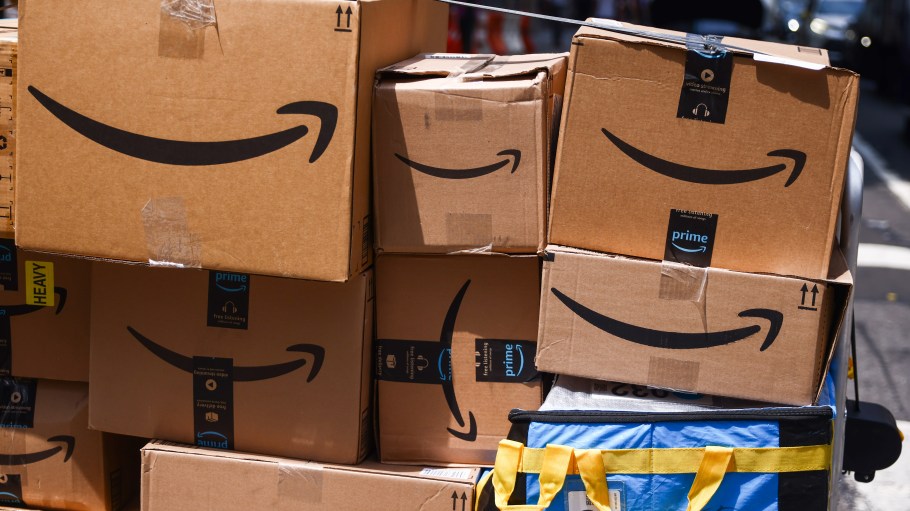
A judge in the Western District of Washington has ruled that Amazon must face a class-action lawsuit alleging that it uses its leading position in the market to force sellers’ hand on price, in turn driving up the prices of consumer goods on its marketplace.
Judge John Chun filed the order on Aug. 6 under seal and unsealed the order on Sept. 2.
The case, originally filed by plaintiff Elizabeth De Coster in 2021, has been a years-long ordeal for both the plaintiffs and the company. The plaintiffs allege that Amazon artificially drove up the cost of goods third-party sellers offer on its platform by using what’s called a platform most-favored-nation (PMFN) clause.
Related Stories
A PFMN typically stipulates that sellers cannot offer their products at a lower price on another platform. In the context of the plaintiffs’ accusations, that is to suggest that an Amazon seller wouldn’t be allowed to list the same item for sale at a lower price on Walmart Marketplace or another competing marketplace.
The lead plaintiffs argued that Amazon uses its status “to impose significant fees on customers and on third-party merchants for the use of its marketplace,” and prevents its sellers “from offering lower prices off of Amazon, and punish[es] them for violations, which in turn insulates Amazon from low-cost, alternative platforms.” They further alleged that if Amazon sellers offer a better price by even one cent on another platform, the company uses that as a reason to “disqualify a seller’s offer from winning the ‘Buy Box.’” Amazon’s Buy Box has been the cause of other legal and regulatory scrutiny, domestically and internationally.
The Federal Trade Commission (FTC) is also litigating an antitrust case against Amazon, which Chun partially greenlit last year. Upon filing its complaint in 2023, the agency called Amazon “a monopolist that uses a set of interlocking anticompetitive and unfair strategies to illegally maintain its monopoly power,” and said that “Amazon’s actions allow it to stop rivals and sellers from lowering prices, degrade quality for shoppers, overcharge sellers, stifle innovation and prevent rivals from fairly competing against Amazon.”
The arguments in the FTC case are similar in nature to those in the De Coster case.
Amazon argued in its motion to dismiss the De Coster case altogether that the plaintiffs had not gone far enough to prove the existence of a PFMN, nor other mechanisms they alleged Amazon uses to pigeonhole its sellers into offering the e-tail giant’s customers the lowest prices on the market.
But, in his order certifying the class, Chun disagreed with Amazon’s claims and allowed the class to move forward with its claims that the company is violating the Sherman Antitrust Act.
“After reviewing the evidence, the court concludes that plaintiffs have presented common proof, by a preponderance of the evidence, that Amazon has implemented certain policies and practices concerning third-party sellers that function as a PMFN policy,” Chun wrote.
The certified class includes “all persons in the United States who on or after May 26, 2017, purchased five or more new, physical goods from third-party sellers on Amazon’s marketplace,” which co-counsel Hagens Berman touted as “the largest class in U.S. history.” The firm estimates that the class includes about 288 million people in the U.S.
Amazon did not return Sourcing Journal’s request for comment on the lawsuit.
Steve Berman, managing partner and co-founder of Hagens Berman, one of the firms working on behalf of the plaintiff, said Chun’s certification is a step toward rectifying consumers’ issues.
“When Amazon sought to fight this class certification, its argument amounted to ‘we’re too big to fail,’ and we hope this consumer win sends a wake-up call that the world’s largest retailer is not above the law,” Berman said in a statement. “This is a victory for millions of U.S. consumers and a historic day for consumer-protection law and class actions.”