Can “Made in PR” compete with global manufacturing powerhouses like Italy and Mexico?
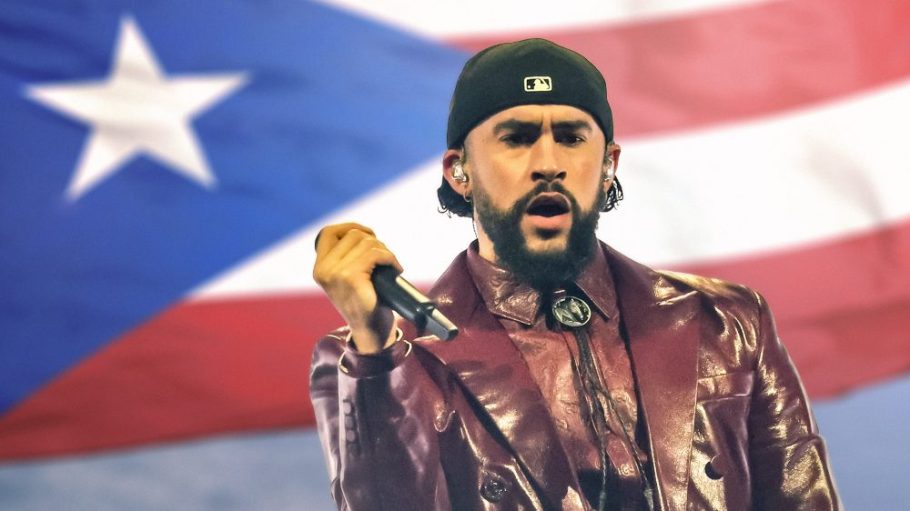
Last month, Amazon Music unveiled a multi-layered collaboration with global Puerto Rican superstar—and outspoken political voice—Bad Bunny, designed to spotlight Puerto Rico on a “global stage while delivering lasting community impact.”
Through the partnership, Amazon’s music division streamed Bad Bunny’s Puerto Rico residency—which generated an estimated $200 million in direct economic impact from its 31-show run, according to Discover Puerto Rico—across Amazon Music, Prime Video and Twitch. While exact figures have yet to be released, Amazon said the show marked its most-watched single-artist performance to date.
Related Stories
The two forces also curated a range of initiatives spanning education, disaster relief and cultural empowerment. These include programs to expand access to technology and STEM education for students and teachers, as well as efforts to support farmers and improve access to fresh produce across the island.
“Bad Bunny embodies the spirit and ambition of Puerto Rico. His vision for uplifting Puerto Rican entrepreneurs aligns perfectly with Amazon’s mission to enable small businesses to reach global markets while maintaining their local identity,” Rocío Guerrero, director of music, Latin-Iberia, Amazon Music, told Sourcing Journal. “From the beginning, our goal was to elevate the artist’s mission, and Benito’s desire to take Puerto Rico to the world resonated deeply with us.”

One of the most notable elements of the partnership, though, is its focus on economic development.
Through a curated storefront on Amazon.com called “comPRa Local,” (Buy Local) Amazon and Bad Bunny are spotlighting Puerto Rican products, authors, musicians and everyday goods under a new “Hecho en PR” (Made in PR) badge—an initiative designed to give Puerto Rican-owned businesses global visibility.
“Our [‘comPRa Local’] initiative [which will be fully functional by Christmas] extends far beyond the initial launch,” Guerrero said. “We’re creating a sustainable platform for Puerto Rican businesses to thrive on the global stage. Success for us means seeing Puerto Rican products reaching new audiences, local businesses growing and the ‘Hecho en PR’ badge becoming a recognized symbol of quality and cultural richness. This initiative is about building lasting economic infrastructure that benefits Puerto Rican communities while sharing their unique products with the world.”
Although the world’s largest e-commerce platform and one of Puerto Rico’s most influential cultural figures are now backing “Made in PR,” can the initiative actually move beyond symbolism and translate into sustainable supply chain growth for the island?
According to Robert Khachatryan, CEO and founder of global freight forwarding and technology company Freight Right, Puerto Rico does have the foundation to become a regional manufacturing hub—but it will require strategic expansion beyond its existing industrial strengths.
Today, Puerto Rico is already a major hub for pharmaceuticals and medical research, serving as a cornerstone of U.S. imports and exports in the sector. In fact, for more than 50 years, the island—often referred to as the “Medicine Cabinet of the U.S.”—has been home to four of the world’s top 10 pharmaceutical companies. Adding to its impact, it contributes more than $50 billion in annual pharmaceutical exports, supplying critical medications to both domestic and international markets, according to PharmaBoardroom.
Khachatryan noted that because the infrastructure to move goods in, out of and around Puerto Rico is already in place, scaling that success into other industries would primarily require targeted adjustments and modernization.
However, he said there are “three key challenges” Puerto Rico must address if it hopes to sustainably expand its manufacturing capabilities.
The first challenge stems from the Jones Act, a 1920 maritime law intended to protect U.S. shipping interests but one that still limits Puerto Rico’s freedom to trade efficiently. Under the act, all goods moving between U.S. ports must be transported on vessels that are U.S.-built, U.S.-flagged and U.S.-crewed—conditions that make logistics costlier and less flexible for the island.
“Coastwise shipments must use U.S.-built, flagged and crewed vessels—a long-standing constraint that many economists say raises costs for the island,” Khachatryan said. “In other words, while Puerto Rico is geographically close to the U.S., the cost of moving goods between the two is, for now, higher than most people realize.”
The second hurdle lies in the island’s power grid, where years of hurricane damage have shaped lingering doubts about reliability, perceptions that Khachatryan says continue to weigh on investor confidence.
“While the grid is actually more resilient today than it’s ever been since the major storms of recent years, the belief remains that it’s fragile,” Khachatryan noted.
Lastly, outside of regulated sectors like pharmaceuticals, smaller producers often struggle to meet the operational standards required to scale. Issues like quality assurance, packaging, barcoding and retailer compliance mirror the growing pains many micro- and small-sized businesses face when entering major marketplaces.
“Energy is expensive, shipping options are limited and the island relies heavily on air and sea freight, making delivery times slow and unpredictable,” said Marty Bauer, director of partnerships and e-commerce expert at marketing automation platform Omnisend, echoing Khachatryan’s sentiment.
Despite these challenges, Khachatryan said that because the “Made in PR” initiative is being championed by Amazon, the company has the ability to leverage its own logistics infrastructure to help offset many of these barriers for Puerto Rican sellers—like it does for vendors around the world.
“Amazon’s Fulfillment by Amazon (FBA), Buy with Prime and Seller programs standardize everything from labeling and advance shipment notices (ASN) to returns and service level agreement (SLA) expectations,” Khachatryan said. “Puerto Rico–based sellers can tap into Amazon’s global network. That said, a localized last-mile investment could improve delivery speed on the island, though it’s not yet a full FBA node.”
While both Bauer and Khachatryan acknowledged that “Made in PR” has a long way to go before it can rival manufacturing powerhouses like Mexico or Italy, they noted that Puerto Rico’s unique status as a U.S. territory gives it a distinct advantage—and the potential to scale more quickly than many emerging markets.
“Legally, products made in U.S. territories may qualify for ‘Made in USA’ labeling if they meet the Federal Trade Commission’s (FTC) ‘all or virtually all’ standard, which includes U.S. territories,” Khachatryan said. “That gives ‘Hecho en PR’ substance beyond a marketing tagline when used alongside compliant ‘Made in USA’ claims. Over time, consistent product quality and strong seller reviews could help the badge carry the same credibility as other respected origin marks like ‘Made in Italy’.”
Stance against Donald Trump
Since Donald Trump took office earlier this year, Bad Bunny has been outspoken in his criticism of the president’s immigration policies and his administration’s failure to adequately support Puerto Rico (echoing frustrations that date back to the federal government’s delayed hurricane relief efforts following Hurricane Maria in 2017, one of the deadliest U.S. natural disasters in more than a century, according to the U.S. Department of Housing and Urban Development).
That criticism recently resurfaced in the music video for “NUEVAYoL,” a track from his sixth solo studio album, DeBÍ TiRAR MáS FOToS (“I Should Have Taken More Photos”).
In one scene, a group of men stand around a radio as a voice mimicking Trump says, “I made a mistake. I want to apologize to the immigrants in America. I mean, the United States. I know America is the whole continent.”
The voice continues: “I want to say that this country is nothing without the immigrants. This country is nothing without Mexicans, Dominicans, Puerto Ricans, Colombians, Venezuelans, Cubans.”
The video closes with archival-style shots of the Puerto Rican diaspora in New York—some in black and white, all maintaining a retro tone—before ending on the message: “Juntos somos más fuertes,” aka “Together we are stronger.”
The three-time Grammy winner has also cited frustrations with Trump’s deportation policies as one reason he excluded the mainland U.S. from his current world tour in support of the album.
Given his vocal opposition to Trump and deliberate avoidance of U.S. tour stops, Bad Bunny’s partnership with Amazon—a major American corporation—marks a striking turn.
“This partnership is notable precisely because it bridges a polarizing moment,” said Khachatryan. “You have a private-sector giant, Amazon, joining forces with a globally influential artist who’s clashed rhetorically with Trump—yet together they’re aligning around a domestic-production goal centered on a U.S. territory. It reframes what ‘domestic sourcing’ means, through culture rather than policy, while pointing to tangible economic tools like marketplace access, storefront visibility and the ‘Hecho en PR’ badge.”