American multinational technology firm Nvidia and the Loss Prevention Research Council (LPRC) have teamed up to take on organized retail crime using artificial intelligence (AI).
The groups have recruited several AI developers to bring to market solutions that give retailers real-time insights about suspicious behavior inside and outside of their stores. Smash-and-grabs, flash mobs and everyday incidences of shoplifting are a growing concern for the industry, resulting in billions of dollars in losses each year. Organized retail crime syndicates are also becoming more sophisticated, engaging in multi-layered operations to boost and fence stolen products.
Related Stories
LPRC’s membership includes asset-protection executives from more than 85 major retail chains with hundreds of thousands of stores worldwide, along with law enforcement, consumer packaged goods companies and technology providers. The trade group’s goal is to reduce retail shrink and make shopping malls and stores safer for consumers.
The new AI solution aims to help retailers get ahead of fast-moving, constantly evolving criminal collectives that often evade detection. The technology pulls together features from a few leading AI firms, integrating their advanced applications on Nvidia’s Metropolis framework. More than 500 software firms have created retail safety and security applications based in AI using the platform, the group said.
Product recognition, tracking and anomaly detection are among the capabilities from AiFi. Based in Silicon Valley, the company makes computer vision solutions that recognize anomalies in shopper behavior, track items removed from shelves and notify retailers if consumers bypass checkout and leave the store without paying. Meanwhile, Newton, Mass.-based BriefCam develops deep learning-based video analytics technology that can enable a forensic search, alerting on objects in video like car license plates. The visualization capabilities and cross-camera object tracking support asset protection and quick responses to theft attempts.
Tampa, Fla.-based SureView’s software platform helps retailers manage multiple security systems at once, consolidating them into a single view. The security management system integrates with AiFi and BriefCam, using their signals to provide notifications to store staff, store security and law enforcement based on the retailer’s preference.
“The proposed AI-based ORC solution combines LPRC’s deep expertise in loss prevention from more than 23 years of collaboration with asset protection executives with NVIDIA’s deep AI expertise,” LPRC lead and University of Florida research scientist and criminologist Read Hayes said. “We believe this type of cross-industry collaboration will help retailers fight back against organized retail crime.”
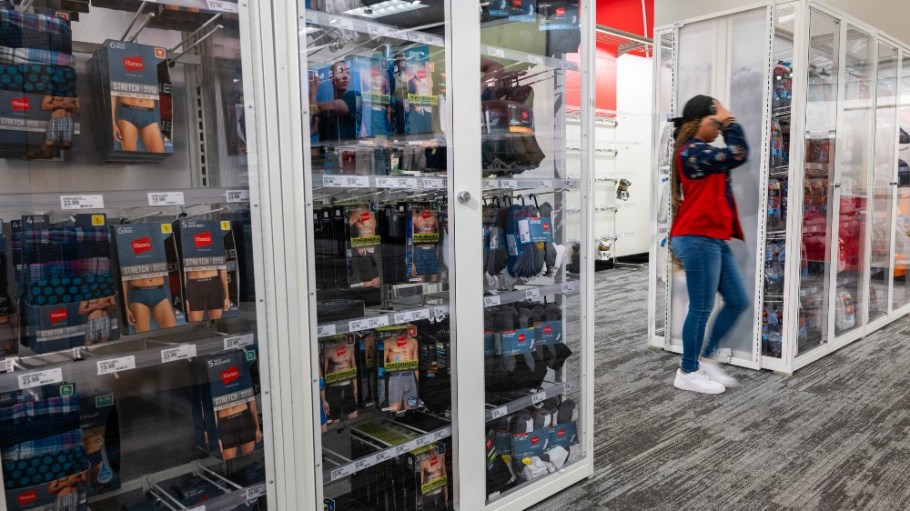
Whether retail can adopt tech-driven solutions fast enough is yet to be seen. Retailers like Target and Nordstrom have pulled out of problematic markets entirely. Target and Walmart stores in the San Francisco Bay Area have begun locking up socks and underwear, in addition to oft-stolen goods like deodorant and hair products, in a low-tech, last-ditch effort to deter thieves.
By contrast, law enforcement is getting more serious about digitalizing operations. After California Governor Gavin Newsom pledged $267 million to combatting organized retail crime across the state last fall, the Los Angeles Police Department (LAPD) decided to use some of its $15.6 million grant to install fixed and mobile Automated License Plate Reading (ALPR) cameras across the city, blanketing major retail corridors and problem areas with a new layer of visibility. Each bureau and precinct will be equipped with a real-time crime center where officers monitor the dozens of feeds.
New York Governor Kathy Hochul announced new crime-fighting and public-safety initiatives during her State of the State address last week, including cracking down on retail theft through the expansion of the tech-enabled Crime Analysis Center (CAC) network. New York’s 11 CACs provide “a centralized intelligence gathering and evidence collection strategy,” compiling data from retailers impacted by organized retail crime, license plate readers, municipal cameras and records-management systems. The platform and its insights are used to provide hot-spot analysis, crime pattern identification and real-time investigative support to law enforcement to help them solve crimes in actual time.