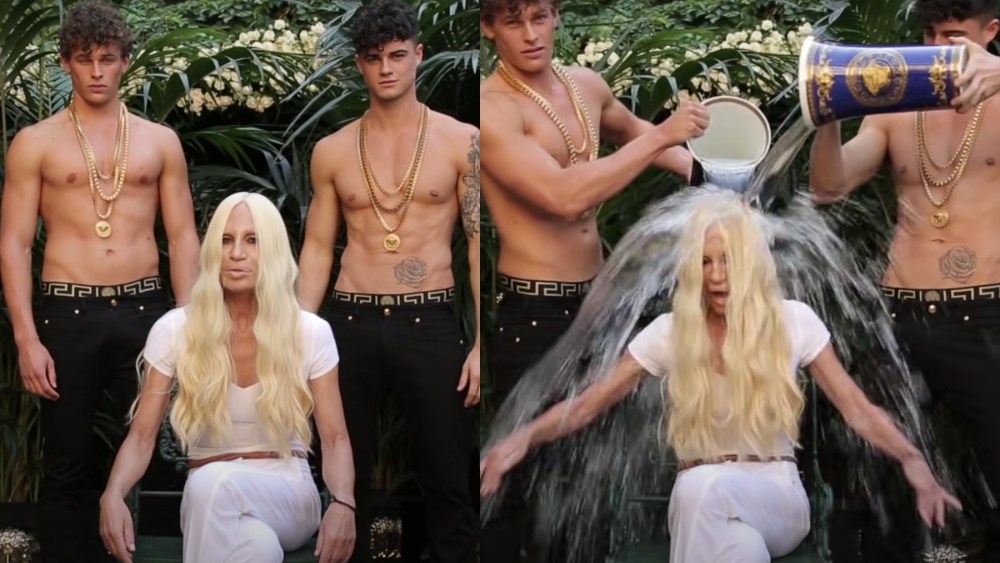
In 2014, a casually dressed Donatella Versace sat in a backyard, surrounded by plants and two topless men, to get her long blond tresses drowned in freezing water. The Italian designer was among the first in the fashion industry to partake in the Ice Bucket Challenge, a viral sensation that raised more than $115 million for amyotrophic lateral sclerosis research. Versace’s video garnered more than 6 million views on YouTube. Diane von Furstenberg, Donna Karan and the staff of Burberry also faced the icy dump to support the cause.
Intentionally or not, they welcomed the beginning of a new era in fashion marketing.
You May Also Like
Related Articles
The Ice Bucket Challenge was part of the rise of viral challenges online. One year before, social media was dominated by videos of celebrities and spectators recreating the “Harlem Shake” chaotic dance and Psy’s “Gangnam Style” choreography. Since then, fashion brands and designers sought to capitalize on online trends to boost their own popularity.
According to Jonah A. Berger, author of “Contagious: Why Things Catch On,” viral challenges are an extension of an old marketing tactic: word of mouth. “These challenges have made it easier for companies and organizations to see the power of word of mouth, it’s made it easier for them to see how many people are talking about or sharing something,” he told WWD.
Over the past decade, a group of fashion brands have flourished within the realm of viral marketing. In 2014, Calvin Klein started its #MyCalvins campaign on Instagram, which was embraced by celebrities and influencers, exceeding more than 100,000 posts under the campaign’s hashtag in the first year. To date, #MyCalvins has accumulated more than 870,000 posts.

In 2018, Guess celebrated diverse types of bodies with the #InMyDenim challenge, which was the first promoted hashtag challenge on TikTok in the U.S. During the six-day campaign period, #InMyDenim gathered 10.5 million video views and a 14.3 percent engagement rate, according to the social media platform.
The other side of going viral
The attempt to go viral doesn’t equal guaranteed success. “By entering the viral challenge universe, fashion brands implicitly accept the risk for fans, followers, influencers, clients or detractors to misrepresent or/and to misinterpret their voice/messages,” said public relations expert Stéphanie Labeille, who has worked with Dior, Chopard, Cartier, Valentino and other luxury brands. “They [viral challenges] affect a fashion house positively when the brand is tastefully celebrated.…They can be a disaster, generating a backlash, if the way the brand is portrayed by the external world mainly deconstructs its dream factor.”
Dolce & Gabbana faced a PR crisis after its #DGLovesChina campaign reached social media in 2018. One video released by the brand featured a Chinese model attempting to eat Italian food with chopsticks. The campaign went viral for its controversy, as the label was accused of being insensitive and racist. Dolce & Gabbana has since apologized.
Zara also received backlash for its #Loveyourcurves campaign, which was released in 2017. “It received criticism as it failed to represent a diverse range of body types, failing at featuring an inclusive representation,” Labeille said.
The algorithm era
The advent of TikTok, its massification of online challenges and the tailored algorithm of social media platforms have made it harder for brands to reach viral status. “At the time of Ice Bucket Challenge and ‘Gangnam Style,’ social media and mainstream media were much more aligned so that the world could come together to learn about something interesting. However, the past decade has brought extreme polarization in several ways,” said David Meerman Scott, marketing strategist and bestselling author of “The New Rules of Marketing and PR.”
Social networks turned into “walled gardens,” Scott said. “If something catches on with TikTok users (for example), people not on TikTok may never know about it,” he said. The other reason why brands might find it difficult to go viral is the algorithm. “With each social network, the algorithms are tuned to extreme polarization so that it is way more difficult for something to catch on with people outside of something they have previously consumed.”
In “Contagious: Why Things Catch On,” Berger presents the science behind going viral. “It’s not random, it’s not luck, it’s not chance,” he said. According to him, it all comes to six factors: social currency, triggers, emotion, public, practical value and stories. “In terms of fashion, these things aren’t different, right? They’re not about one vertical versus another. They’re about the psychology of why people talk and share,” he explained.
Viral fashion moments that worked
Tommy Hilfiger: In 2017, the Tommy Hilfiger headquarters recorded a video for the #MannequinChallenge, where they had to stay still in action while a moving camera filmed them. The video was viewed more than 300,000 times on YouTube and Facebook.
Burberry: In 2019, the brand launched the #TBChallenge, inviting users on TikTok to recreate the new Thomas Burberry Monogram motif with their hands. In 2021, the brand invited TikTok creators to develop short videos in nature documentaries style to promote its fall 2022 collection.
JW Anderson: A crocheted JW Anderson cardigan worn by Harry Styles on NBC’s “Today” show in 2020 started a spontaneous TikTok challenge with fans knitting their own version of the apparel. Jonathan Anderson embraced the movement and posted the cardigan’s measurements for fans to knit themselves.
Gucci: Fans of the Italian brand started the Gucci Model Challenge in 2020 on TikTok, where participants were showing their DIY Gucci-inspired outfits. Videos under the #GucciModelChallenge umbrella now amass more than 940 million views.
Moncler: The luxury brand enlisted Charli D’Amelio to promote its #MonclerBubbleUp challenge in 2020, inviting users to recreate Moncler’s padded coat with items found at home. The hashtag has gathered more than 7 billion views on TikTok since then.