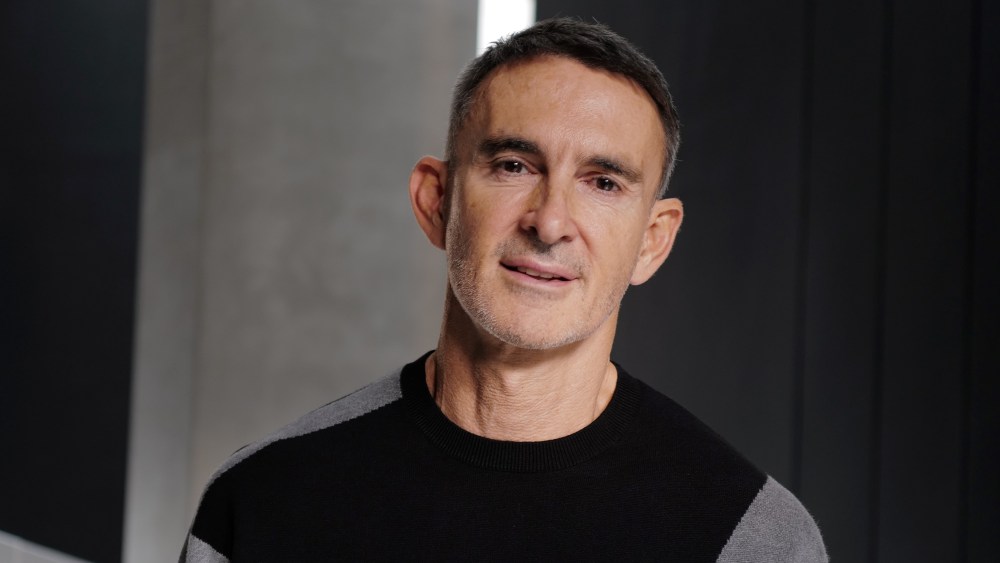
Neil Barrett is the consummate ’90s guy, fond of minimalism and a “geek of fashion,” as he likes to put it.
A few days ahead of his official return to the catwalk after a few years hiatus, Barrett was both energized and excited as he pondered this milestone for his independent brand.
“This collection is something of a homecoming. It is the first show we will stage since the pandemic and while we had eased ourselves back into the official calendar with a mix of physical events over the last few years, this season felt like the right time to make a full return to the calendar to be part of Milan Fashion Week with my peers,” he said.
You May Also Like
Related Articles
The show, which will take place on Saturday at the British designer’s headquarters in Milan, will finally put the space — originally conceived to host runway shows on the ground floor — to the test.
Although fashion shows can be the most demanding, he didn’t skimp on production over the past few seasons either, filming videos set on sandy dunes installed indoors in an industrial space or inside a pink-colored box with digitized eyes moving to follow walking models.
However, watching clothing moving in real life is a different experience, he contended, stressing how men are now increasingly keen on silhouettes, fabrics and proportions — the very essence of fashion design to him.
“It’s wonderful, because finally people are appreciating true clothes. And it’s not just about sweats and Ts, which you know they work for many people and also worked for myself over the years. But it’s nothing to do with why I’m a designer, and why I get up every day and why I enjoy going into work,” Barrett said.
“More than anything, minimal clothing’s about the beauty of the cut, the fit, the form of the garment and being able to see that in a 3D way,” he added.
Late last year Barrett inked a production agreement with HIM Co. SpA, previously known as Onward Luxury Group, for the production of his namesake collections, marking a new step in his company’s retooling that started in 2021.
“In the first two decades my business was based on the traditional license agreements. Currently we work with one production service,” he said. “They manage all our existing suppliers, suppliers we’ve worked with over the last 20 years. We have always been controlled about distribution, that’s always been chosen from our team internally. And, you know, key for the following seasons for me is to be able to stabilize the production deliveries. And to find the right balance,” he said.
“We independent [brands] had a tougher time than the big groups, but what I create and design as garments has longevity,” he said.
The spring collection hinges on the ’90s clothing Barrett has been personally stockpiling in his wardrobe which, he contended, looks to be in tune with today’s quest for quiet luxury.
“That’s kind of my number-one inspiration — it’s how to inspire myself to want to wear something which is never too much, but it’s pushing the limits sufficiently to be interesting. And it’s because I design to make the wearer happy,” the designer said.

His style has long been anchored in a sort of uniform, or several of them, and ditto for the spring lineup. Take, for example, the white T-shirt layered under a shrunken yet cozy knit ensemble; the short pant suit; the occasional print, subdued and only slightly decorative, and the offbeat color combinations as in the brown tailoring and canary yellow short-sleeved shirts.
“I don’t want to be that showy,” he said about himself and his fashion.
“When I’m looking back I think that some of my super successful commercial [pieces] and graphic elements in some collections like my thunderbolts that I’ve created over the years, sometimes overshadowed the rest of the collection, the minimal part of it, which is like sort of my 1990s roots,” Barrett said.
“With this collection, I’ve totally taken away all of that. It’s not even 1 percent of the collection. And I’m looking forward to be able to go back to my roots really and show a continuation of what I truly believe in and what I love,” he added.
The ’90s were Barrett’s formative years while designing menswear at Prada, and seeing their comeback at the forefront of the fashion conversation has been a boon to him.
“Times and tastes have changed since the 1990s, but the identity and the philosophy is the same. The ideas I present here are the same as they were 30 years ago. The clothes have changed just as the men have, as this younger generation has never experienced [the decade] and is a completely different clientele,” he said. “But having established that blueprint personally, I’m able to add new perspectives, new ideas, new applications in a product, while being 100 percent true to the original.”