MILAN — Amping up its presence in the contract sector with special projects for luxury and hotels is at the top of the list for Rubelli’s joint chief executive officers.
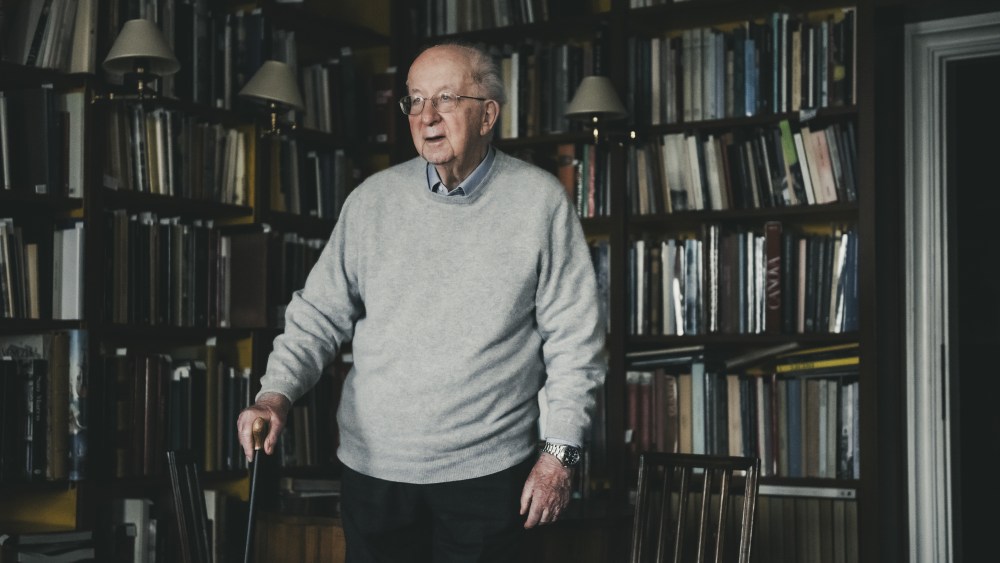
On Monday, the Venice-based firm known for its hand-loomed soprarizzo, or chiseled, silk velvet, said 94-year-old textile heir and entrepreneur Alessandro Favaretto Rubelli, a lawyer who has led his family’s company into a modern era and into markets worldwide since 1955, passed control of the firm to his two sons, Nicolò and Andrea Favaretto Rubelli.
Related Articles
Alessandro, the great-grandson of the company’s founder Lorenzo, who started the company in 1889, remains honorary president of the firm. The two brothers will serve as joint co-CEOs. Nicolò, who has served alone as CEO for 20 years, will have direct oversight of sales, marketing and collection development, while Andrea will work alongside him and be responsible for production, purchasing, logistics and IT.
You May Also Like
“We’re really passionate about our legacy and we feel like it’s our duty to continue this mission,” Nicolò told WWD, adding that the sixth generation of the Rubelli family includes three grandsons who are still too young to join the company and have been encouraged to succeed in other fields. The company is currently on the lookout for external independent board members.
His son-in-law Marco Frizziero is now chairman of the board and has joined the firm’s new five-member board. Alessandro’s son Lorenzo Favaretto Rubelli and Paolo Zanatta, an accountant and non-family member, are also on the board.

Management is currently working on finalizing its 2026 to 2028 strategic plan of which creation, production and distribution of high-quality furnishing fabrics and wall coverings remains at the core. Milan- and Rotterdam-based design studio Formafantasma is currently the creative director of the two main brands, Rubelli and niche brand Kieffer, which are primarily produced at the company’s weaving mill in Como. Formafantasma, which was founded by Andrea Trimarchi and Simone Farresin, has worked with design brands such as Flos and Bitossi and fashion and jewelry brands like Max Mara and Bulgari.
“With the addition to residential, the plan envisions a significant strengthening of the contract sector, particularly in luxury and hotels; as well as the addition of new roles to support the CEOs to ensure strong governance,” the company stated.
Rubelli’s home division was launched in 2015, and has built a rapport with Italian designers over the decades under the elder Rubelli’s direction. In more recent years, the house has worked with the likes of interior designer Marco Piva, architectural designer Cristina Celestino, photographer Brigitte Niedermair, and American architect Peter Marino. The latter created three-silk damask fabrics in 2019 that echoed the work of 16th-century painter Titian. The late Gio Ponti designed the house’s Punteggiato velvet, which remains a successful component of its fabric lineup.
In an interview with WWD in October, Alessandro told WWD that he studied law and never expected to enter the family business, but shortly after entering the firm, he “fell in love with fabric.” He would find that his law degree was crucial in propelling the fabled firm into a modern era. “It was very important because with this I was able to lead the company and do many things so, yes, so being a lawyer was definitely very interesting for me.”
The plan all along, he said, was to pass the baton to the next generation and keep its legacy in the family. “We absolutely want to keep the company in the family. We’ve had a lot of offers to buy at least a part of the company but we decided that the company is good as is.”
Nicolò echoed this, saying the firm is open but not actively looking for outside investors.