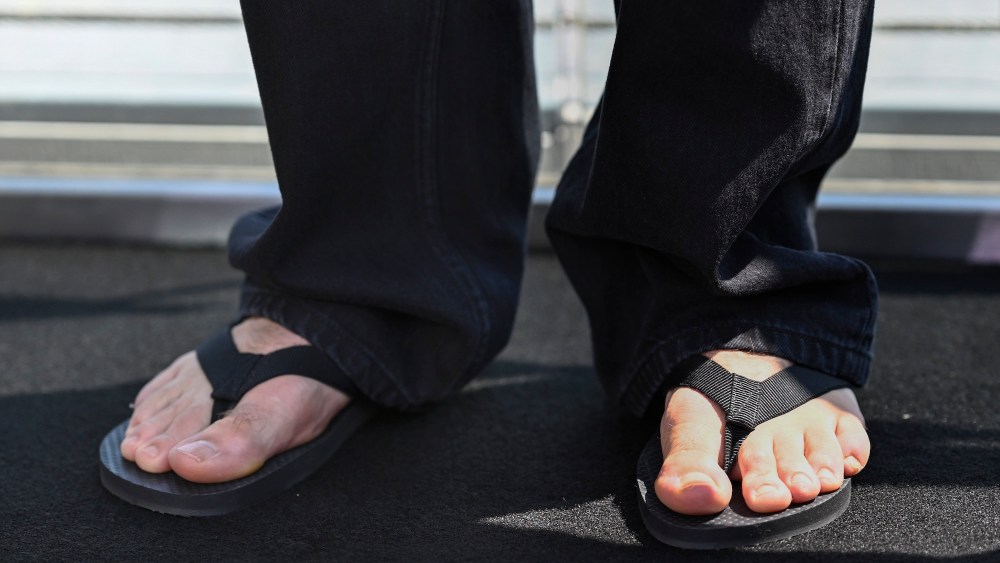
Flip-flops are a longtime summer staple, but this year thong sandals have become especially trendy as people wear the style not just to the beach but to all kinds of events — even to a red carpet, if you’re Jonathan Bailey, who slid on a buzzy set by The Row to attend a photo call for “Jurassic World Rebirth.”
It really seems like flip-flops are everywhere you look, and they’ve transcended their traditionally casual connotation. Pharrell Williams showcased the luxury LV Flip on the Louis Vuitton runway; Rosé of Blackpink recently wore flip-flops as part of a nighttime look including jeans and a lacy top.
Related Stories
The style is certainly easygoing, warm weather-friendly and potentially very fashionable — but what are the costs of living your summer in flip-flops?
You May Also Like
Most people who’ve walked a step too far in a pair know they’re not actually the most comfortable shoes, from the thin sole to the dreaded thong strap, causing toe blisters.
“From a podiatry perspective, they are one of the least supportive types of shoe gear,” double board-certified podiatrist Dr. Anne Sharkey told FN. “The majority of traditional flip-flops are thin, flimsy and offer minimal arch support, cushioning or shock absorption. In an effort to provide the best support and protect from injury, a sandal that has arch support and cushioning is ideal.”

Wearing flip-flops can lead to an increased chance of plantar fasciitis, a foot issue which Dr. Sharkey explained.
“Plantar fasciitis is one of the most common pathologies bringing patients into podiatry offices,” she said. “Plantar fasciitis is a common cause of heel pain, and it is the result of inflammation of the ligament that supports your arch. This inflammation occurs as a result of a lack of support or repetitive stress and strain to the plantar fascia. Wearing shoes that lack structural support and cushioning increases the risk of developing plantar fasciitis.”
Dr. Sharkey recommends a few brands offering flip-flop styles blending function and fashion, including Vionic (naming the Tide, Shore and Bella styles); Waco Shoe Company (naming the Revitalign Yumi style); and Olukai.
If you’re going to have an active day, it’s in your best interest to avoid flip-flops altogether.
“When looking for alternatives to flip flops, I recommend sandals that have straps that come further on to the midfoot. This design feature will add stability. Birkenstocks are a great example here. I also love the trend of platform sandals,” Dr. Sharkey said, naming the Vionic Strappy Platform Sandal and the Waco Remi Wedge. “The addition of a heel strap makes these models more secure and stable, which allows for more even pressure distribution.”
So, how should one approach wearing flip-flops?
Try to find brands that craft them with support in mind, and avoid selecting the style for long walks or other sustained physical activity. Even thin-soled sneakers are problematic, as podiatrist Dr. Zach Thomas discussed with FN earlier this year.
Dr. Sharkey offered, “My suggestion would be to choose flip-flops that are going to give you the best support and to avoid wearing them for long periods of standing or a lot of walking. Stick to the flimsy flip-flops for the beach, pool deck and locker rooms. Bottom line is that flip-flops were never intended to be all-day walking shoes.”