MILAN — Ferragamo’s three-pillar strategy is showing signs of progress and will continue to be a path the company will follow throughout 2026.
During a conference call with analysts and the press on Thursday evening to comment on first-quarter results, Ferragamo’s executive board member Ernesto Greco highlighted “value building,” or the investments in brand identity and product innovation; “elevating route to market,” or the focus on high-potential markets and channels, namely the Americas and the direct-to-consumer channel, and “operational efficiency,” or costs of governance and capital discipline.
Related Stories
“The group will continue to prioritize top-line and distribution quality, while maintaining a strong focus on operational discipline and financial sustainability,” said Greco, underscoring a solid start to the year despite the global instability. Asked to comment on current trading, he said that “April and the beginning of May are confirming the trends seen in the first quarter.”
You May Also Like
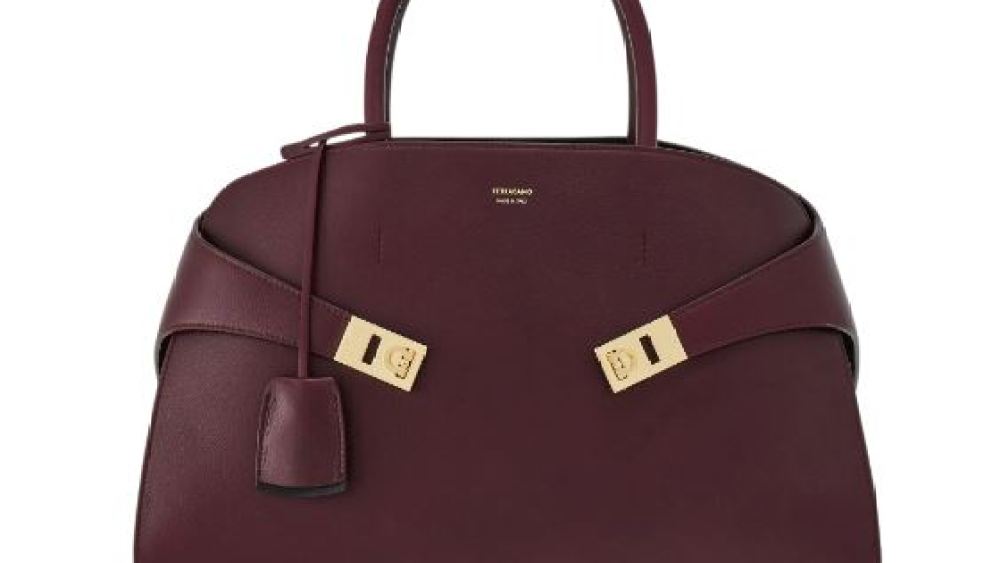
Ferragamo continued to focus on its core shoes and leather goods category, and Greco said the Hug bag remains the brand’s best seller.
In the three months ended March 31, revenues at the Florence-based luxury company were down 5.5 percent to 209 million euros, compared with 221 million euros in the same period last year. At constant currency sales decreased 1.2 percent.
Building on the growth trend established since the fourth quarter of last year, the DTC channel continued to deliver positive results at constant exchange rates, while the overall performance was impacted by lower volumes in the wholesale channel, said Greco.
Peformance by Channel
The direct-to-consumer channel was down 1.9 percent to 161 million euros, compared with 164 million euros, but at constant currency it rose 5.5. percent, driven by double-digit growth in North and Latin America and positive results in Europe and Asia-Pacific, with Japan as the only region recording a decline. April and May continued to show “a very nice performance in the U.S. and Latin America, Korea was quite good and Europe was still positive despite a bit of a lack of tourists,” said Greco, adding that China has not recovered yet.
As of March 31, Ferragamo counted 350 directly operated stores in the world, compared with 358 at the end of December last year.
In the first quarter, the wholesale channel declined 21.8 percent to 42 million euros, but at constant currency it was down 19 percent. This reflected the company’s decision to focus on DTC and key accounts, in alignment with the brand’s positioning, said Greco. “There are two added issues, a very tough comparison base and the very severe cleaning activities, as we want to be available only in [the highest] quality stores, especially in the Chinese market. We have canceled transhipment activities from the last portion of last year and we are more aggressive, [which will lead to] seeing good results in 2026.”
He also emphasized the performance of Ferragamo’s online sales, showing double-digit growth for the second consecutive year, supported by higher traffic and increased order value on the Ferragamo platform. “This is not only a commercial indicator and strategic tool but it also reassures us that we are going in the right direction, and we believe it will be reflected in brick-and-mortar,” he said.

Performance by Market
In the Europe, Middle East and Africa region, sales fell 17.6 percent to 44.7 million euros, representing 22.1 percent of the total. The DTC channel posted a positive performance, despite a challenging comparison base and lower tourist flows, supported by local consumer engagement activities.
In North America, sales rose 7.3 percent to 66.8 million euros, representing 32.9 percent of the total. At constant currency, revenues in the region climbed 18.8 percent, lifted by both channels, which grew double-digit.
Ferragamo is prioritizing this market, said Greco, with targeted customer engagement and product offer initiatives, and reinforcing its presence by renovating its key flagships on New York’s Fifth Avenue and in Beverly Hills, alongside the opening of two temporary stores.
In Central and South America, sales rose 7.6 percent to 17.8 million euros in the quarter.
In Asia-Pacific, sales were down 12 percent to 56.1 million euros, accounting for 27.7 percent of the total. At constant currency, the region was down 5.4 percent.
In Japan, sales declined 16.5 percent to 17.3 million euros. At constant currency, they were down 4.4 percent, also impacted by the significant reduction in tourist flows from of China.
Sales by Product Category
Sales of footwear were down 3.4 percent to 89 million euros; leather goods fell 11.5 percent to 85.1 million euros but they were down 5.8 percent at constant currency, and apparel totaled 12.6 million euros, down 3.1 percent but up 3 percent at constant currency. Silk inched down 1.1 percent to 16 million euros, but rose 6.4 percent at constant currency.
Greco also spoke of the changes in the organization, in product assortment and display, “with more localized products” and changes in the managerial team.
No New CEO Yet
No mention was made during the call of the potential arrival of a chief executive officer.
In April, as reported, Fabrizio Freda, the former longtime CEO of The Estée Lauder Companies, was appointed special strategic adviser by Ferragamo Finanziaria SpA, the holding company of the Ferragamo family and the controlling shareholder of the fashion group.
Freda is tasked with contributing to strategic decisions, including the selection of the future CEO of the Florence-based fashion brand, and the strengthening of the structure and operations of the Ferragamo Group as well as the family’s other businesses, which range from hospitality to real estate.
Since the exit of Marco Gobbetti as CEO of Salvatore Ferragamo last March, executive chairman Leonardo Ferragamo has been spearheading the strategy of the company with a transitional chairman advisory committee. It comprises James Ferragamo, chief transformation and sustainability officer, and son of Ferruccio Ferragamo; Greco, and former CEO Michele Norsa, who has taken on the role of special chairman adviser.