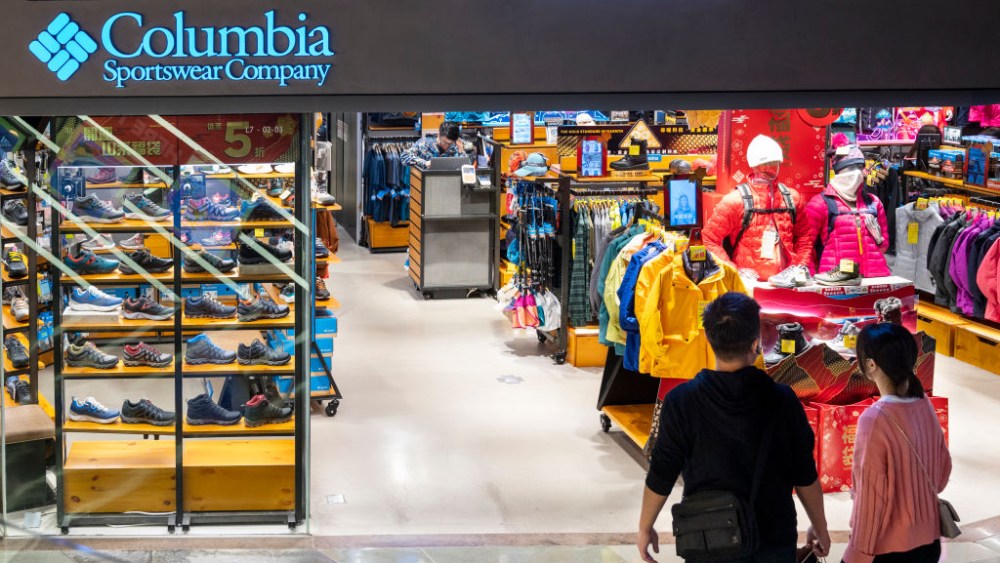
Columbia Sportswear still has too much inventory on its hands.
In a Nutshell: Columbia Sportswear chairman and CEO Tim Boyle told investors in a second quarter earnings conference call that “elevated inventory levels, particularly in footwear,” contributed to higher clearance and promotional activity in the quarter. Getting rid of excess stock has been a priority for several months now.
“We expect inventory to be down year-over-year exiting the third quarter. We remain on track to reduce year-end inventory by over $200 million compared to last year. Returning inventory to a healthy position is a vital step to improving our financial performance,” Boyle said.
You May Also Like
Related Stories

Boyle said the Sorel owner is taking a more “conservative approach to planning the balance of the year,” such as managing expenses and looking for growth opportunities.
The second quarter, the company’s lowest for sales volume, saw U.S. net sales decline as earlier shipments benefited first-quarter sales. However, Q2 sales outperformed the original forecast, thanks to early-arriving fall deliveries that “more than offset slower growth in our U.S. DTC (direct-to-consumer” business,” Boyle said.
“U.S. e-commerce net sales were down mid-single digit percent. The online environment has become more competitive and promotional as consumers seek out value in the marketplace,” Boyle said.
Columbia Sportswear got a boost from lower inbound freight costs. However, higher clearance and promotional activity as well as higher distributorship, which generally carries lower gross margins, didn’t help, he said. Much of the company’s spending on selling, general and administrative costs this year came from storing excess inventory off-site. Columbia is now distributing those goods to retailers, wholesale parters and distributors “earlier than last year,” Boyle said.
Innovation and differentiated cooling technologies and sun protection product remain essential to the Columbia brand. Omni-Shade Broad Spectrum was launched this past Spring, while for the Fall, the brand will build on the success of its Omni-Heat Infinity line through an expanded assortment.
In Investor Day presentation last year, the company said it’s aiming for $4.5 billion to $4.7 billion in sales in 2025. Net sales last year reached $3.46 billion.
Net Sales: Net sales for the quarter ended June 30 rose 7.4 percent to $620.9 million from $578.1 million.
The outdoor apparel and footwear company said the quarter saw growth in the Europe, Middle East and Africa and Latin America Asia Pacific regions, driven by earlier Fall 2023 shipment distributor shipments and increased China sales. Canada and the U.S. saw declines, driven by a lower portion of Spring 2023 orders shipped in the second quarter.
“We continue to anticipate that China will be one of our fastest-growing markets in 2023,” Boyle said.
For the quarter, Columbia sales rose 11 percent to $437.0 million, while Sorel gained 32 percent to $37.8 million. Sales for Prana fell 32 percent to $26.7 million and were down 19 percent for its Mountain Hardwear brand.
For the six months, net sales rose 7.6 percent to $1.44 billion from $1.34 billion.
Earnings: Net income rose 16.6 percent to $8.4 million, or 14 cents a diluted share, from $7.2 million, or 11 cents, a year ago.
The company guided third quarter diluted earnings per share (EPS) in the range of $1.60 to $1.70, versus $1.80 for the same year-ago 2022 quarter. It forecasted net sales at between $995 million and $1.0 billion, or up 4 percent to 6 percent from $955.1 million in the same 2022 quarter.
For full year 2023, the company expects net income between $272 million to $288 million, with diluted EPS between $4.40 to $4.65. The estimates are lower than prior estimates of net income between $322 million to $336 million, with diluted EPS in the range of $5.15 to $5.40, when the company posted first quarter results in April.
Boyle said on the call that he didn’t believe the reduction in guidance was a “function of our products being overpriced.”
For the six months, net income fell 26.3 percent to $54.6 million, or 88 cents a diluted share, from $74 million, or $1.16 a year ago.
CEO’s Take: “I’m confident we have the right strategies in place to unlock the significant growth opportunities we see across the business,” Boyle told investors. “We’re investing in our strategic priorities to accelerate profitable growth.”