
FLORENCE — Aggressive elements and bold colors empowered fall collections at Pitti W, with brands targeting expansion abroad as a weaker euro offered a slight reprieve from the enduring crisis.
Components of military fatigues, biker-babe gear and the wild outdoors influenced the array of handbags, coats and footwear at Pitti W, the women’s apparel trade fair that showcases capsule and pre-collections.
The fair hosted 74 international brands, down from 88 last season, at a pavilion on Via Valfonda, in a four-day run this month. Some vendors said few orders were made, noting that the show is more of a platform for networking than booking sales.
Related Articles
“Pitti W is good for making contacts and to figure out how collections are working, so you have time to fix it before Paris,” said Canadian-born designer Sara Roka, whose smoke and bamboo prints on silky shirts and skirts made for an intriguingly elegant collection.
You May Also Like
With her American clients responding more positively to the weaker euro against the dollar, Roka said she’s ready to invest more in promotion of the next spring collection; sales from her spring 2012 line rose 47 percent compared to her spring 2011 collection, she added.
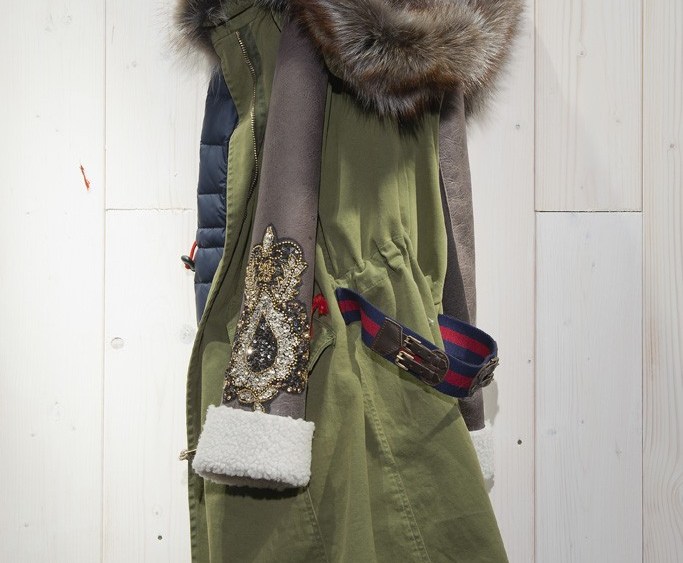
Project Foce Single Season, a line produced by Foce, conjured Revolutionary and Vietnam War officer coats and military fatigues of yore with its jackets. Embroidered navy wool sleeves and seal fur lining were sewn onto military green jackets.
“We hope the euro goes down further before we show in New York,” said Foce owner Roberto Cecchi. “The States is a place where we would like to grow.”
As of Friday, the euro was trading around $1.31. Earlier in the month, it had dipped below $1.27, after Fitch Ratings warned that the European Central Bank must act to prevent the collapse of the euro.
“I hope the weaker euro will help me in Japan. That will be a big advantage,” said Dutch designer Conny Groenewegen, whose sportswear collection was inspired by alchemy and mystery. Shiny gold, silver and copper yarns gave knits an oxidized look, while cotton and silk knits were combined with tight wool patterns that are washed to create a felting effect.
On the footwear and accessories front, Jeffrey Campbell’s shoe collection contained platforms with reptile skins and flats and loafers with bold silver beads and spikes. Kartell showcased its new fall collection, which included the ‘Wild Sofia’ capsule group, with boots and ankle boots trimmed with black fake fur.
Henry Beguelin showcased its rugged, durable group of boots and bags, the DNA Collection, made with naturally treated calf leather, some fastened with buckled straps and decorated with grommets.
Pitti W’s special guest, French accessories designer Olympia Le-Lan, hosted an exhibition of her collection and a party at Florence’s Museo Bellini. Accessories maker Gherardini, meanwhile, presented its elegant Pretiosa handmade bag at Florence’s Accademia delle Arti del Disegno.
Fashioned with embroidered calfskin, chiseled brass, the bag is largely based on a 15th century sketch by Leonardo da Vinci.
The Pretiosa will be produced in a limited series of 99 pieces — it sells for 3,000 euros, or $3,930.
Gherardini is owned by Braccialini Group, which also owns Francesco Biasia and Amazon Life. Braccialini marketing director Lorenzo Braccialini said Japan is the number-one market for the Gherardini brand. “After the earthquake in Japan, the weaker euro might help us boost sales there,” Braccialini said.
Braccialini sales in 2011 rose to about 73 million euros or $101.7 million, from 70 million euros ($93 million) in 2010. Dollar amounts are calculated at average exchange rates for the periods to which they refer.
In 2012, the group expects improved growth in China, where it has 11 Braccialini stores and three Gherardini stores. By 2015, the group’s bullish China expansion plan includes opening 40 Braccialini stores, 20 Gherardini stores and 10 Francesco Biasia stores.