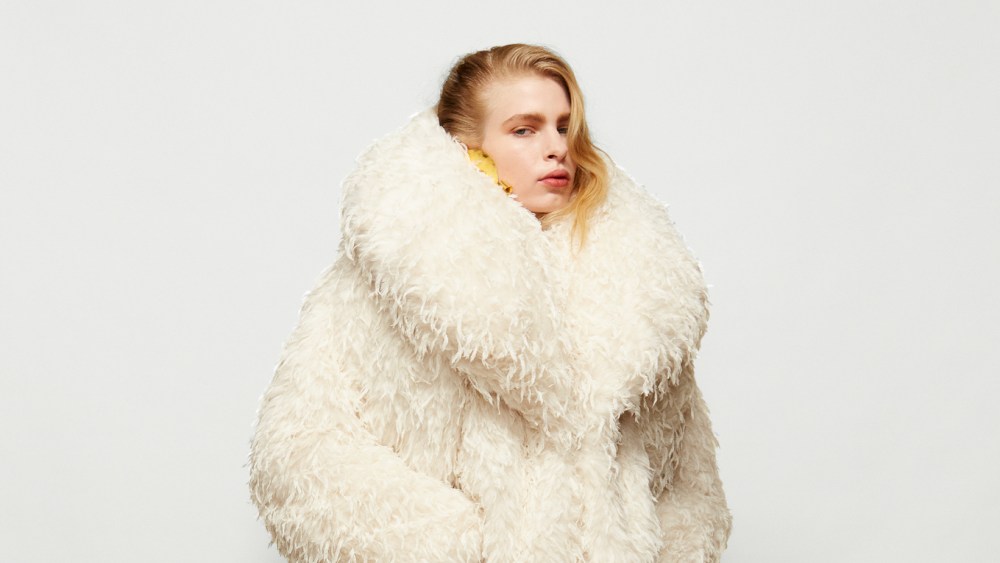
PARIS — Rochas fashion is being discontinued, as its owner Interparfums SA refocuses on its core business of prestige fragrances and cosmetics.
The company has owned the French fashion brand over the past decade.
“These years have been an intense and inspiring journey,” said Alessandro Vigilante, creative director of Rochas, in a statement released Wednesday. “I’m proud that together we have created a vision able to reach a global audience without losing authenticity or heart.
Related Articles
“Each collection carried a part of me, telling stories and inspiring others,” he continued. “My commitment to fashion remains unchanged: to connect with women, anticipate their desires and accompany them with clothes that embrace, protect and express identity.”
You May Also Like
“We are proud of the legacy we leave behind,” stated Philippe Bénacin, chief executive officer of Interparfums SA. “I would like to thank everyone who supported us throughout the years, and especially Alessandro Vigilante, who, over the past two years as creative director, has beautifully expressed the DNA of this century-old house — an emblem of bold femininity and elegance.”
The collection for fall 2025, presented in March, is to be Rochas’ last. For it, the designer, who had been tasked with the brand’s revamp, continued to build on his vision of eccentric femininity. He nodded to grand balls of yesteryear, especially those hosted by Hélène Rochas, the third wife of the founder and Vigilante’s multifaceted muse.
He started at the brand by contributing to its spring 2024 collection that had been initiated by the studio. Vigilante’s official first collection was unveiled for the fall 2024 season during Paris Fashion Week. He set out to forge a new identity while building on Rochas’ codes of elegance, audacity, femininity and sophistication, Vigilante said at the time.
He succeeded Charles de Vilmorin, who had a two-year tenure at Rochas.
Founded 100 years ago by Marcel Rochas, the house was also under the creative direction of Marco Zanni from 2008 to 2013 and Olivier Theyskens from 2002 to 2006, when the fashion line was momentarily shuttered.
Interparfums bought the Rochas fashion and fragrance activity from Procter & Gamble in 2015. It marked the first step into fashion for the Paris-based subsidiary of Interparfums Inc.
HIM Co SpA — High Italian Manufacturing, the company previously known as Onward Luxury Group — produced Rochas’ women’s ready-to-wear for two years before it was returned to Interparfums, where the fashion and beauty businesses were united, starting in 2023.
Rochas’ fragrance activity generates the lion’s share of the brand’s business. In the first half of 2025, the label’s perfumes generated 19.8 million euros in sales. Its strongest sellers include the classic Eau de Rochas and Mademoiselle Rochas. The brand recently launched a F1-themed scent, called Audace.
Rochas fashion has been shuttered numerous times in the past. Following the death in 1955 of its founder, a couturier known for his feminine silhouettes and for inventing a bustier, called the guêpière, the company dismantled its fashion operation, opting to concentrate on fragrance. It launched scents such as Madame Rochas, Monsieur Rochas, Eau de Rochas and the original Audace.
German cosmetics giant Wella purchased Rochas in the late 1980s and resurrected the fashion as an image machine. But Irish designer Peter O’Brien, upon whom the house called in 1989, failed to generate buzz.
Theyskens succeeded O’Brien in 2003. Despite critical acclaim, P&G, which inherited Rochas that year as part of its purchase of Wella, recognized fashion wasn’t a core competency and closed the-then money-losing Rochas fashion business in 2006.
At the time, a P&G spokeswoman said: “Running a fashion business in terms of the distribution chain requires specific skills. We had to make tough choices.”
Rochas subsequently reintroduced fashion and in 2015, at the time of Interparfums’ acquisition of the house, Alessandro Dell’Acqua was the brand’s creative director. He remained until 2019.
Historically, it has been complicated for companies with a beauty focus to successfully run fashion labels. L’Oréal, for instance, bought Lanvin in 1994 and sold it in 2001 after attempting to engineer a makeover miracle and with the stated aim to continue “refocusing on its core beauty business.”
Groupe Clarins at one point stopped manufacturing the Thierry Mugler fashion brand (which has since been revived) to focus on its hit fragrances. And today, L’Oréal owns and runs Mugler fashion and fragrance activities, after purchasing them from Groupe Clarins.
Interparfums’ stable of licensed fragrance brands also includes Lacoste, Montblanc, Moncler, Boucheron, Coach, Jimmy Choo, Karl Lagerfeld, Kate Spade and Van Cleef & Arpels. The company owns Lanvin’s perfume and cosmetics business, too.
Beauty companies are facing headwinds from numerous directions, including a slight slowdown in fragrance sales overall.
This month, Interparfums SA slightly adjusted its full-year guidance downward, from the approximate 910 million euros announced in July, which itself was on the lower end of its initial estimate given earlier in 2025.
“Despite a lack of visibility linked to an unstable international situation, an unfavorable euro/dollar exchange rate and a prudent commitment on the part of our partners, our 2025 sales are projected to be approximately 900 million euros,” said Bencin in a statement dated Sept. 9.
“This situation confirms our strategy, which has a proven track record, and the stability of our products for the fragrance market,” he continued. “Fiscal years 2026 and 2027, therefore, appear to be promising, thanks to the addition of the Off-White, Annick Goutal and Longchamp brands to the portfolio, and a program of major launches across the catalog. For these many reasons, I am very confident about our three-year strategy.”
The company’s sales in the first half of 2025 reached 446.9 million euros, representing a 5.8 percent on-year rise.
