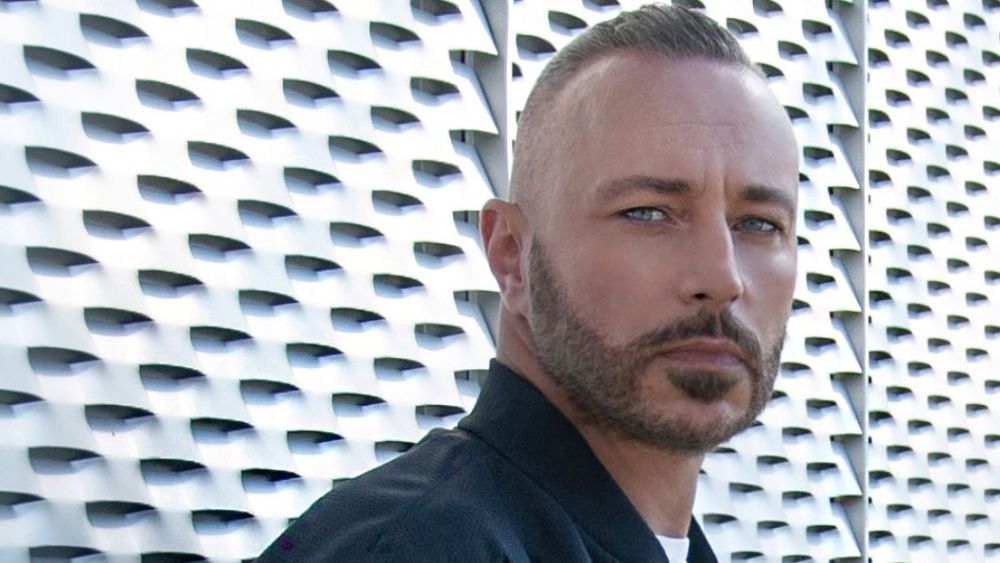
MILAN — If Massimo Cantini Parrini were to compete in an event at the Winter Olympics, he would likely fit best in speed skating.
Moving fast has been the main trait marking the latest project of the Italian costume designer, who is known for his work in theater, movies and TV series that earned him several local accolades and international recognition, including two Academy Award nominations.
To wit, Cantini Parrini has been tapped to oversee the costumes of the 2026 Milano Cortina Winter Olympics’ opening ceremony — but he received the call only last year.
You May Also Like
Related Articles
Preparations effectively started in August, with discussions around the inspiration and themes, as well as the development of initial sketches and prototypes taking a month before being green-lighted by the artistic leads involved in the ceremony and moving to the next phase.

In an interview with WWD a few days ahead of the big event on Friday, Cantini Parrini retraced the race against time and the many challenges that came with the project, without hiding some nervousness about its outcome and the reaction from the audience.
“I won’t read anything after the ceremony. I’ll just go silent for a week, out of fear of discovering that someone wasn’t satisfied. Even if the truth is that I’m my first critic and also never satisfied, so at least we will be in this together,” he quipped.
More seriously, he said he hopes that “fairness will prevail: I don’t believe in the sharp division between ‘beautiful’ and ‘ugly’, but more in ‘right’ or ‘wrong’. And if some viewers who are not experts in costume will still [understand my work and find it right], that will be my victory.”
Keeping with his candid approach, Cantini Parrini acknowledged he “didn’t have a lot of time like there usually is for this type of project,” recalling that the big chunk of the work started only in September. “And trust me, there are many, many costumes involved,” he said.
“It’s a little different from what I do when working with a director, in the sense that I usually have a script and develop characters that are faithful to what I read,” continued Cantini Parrini. “Here, there’s no script but a general idea that different creatives involved explain to you… It’s a choral effort, although I’m the one taking the decisions. I’d really have to share everything and be good in navigating these situations, also explaining to those who usually don’t work with costumes things on paper and the smallest details to convince them.”
The involvement of performers and dancers also marked a point of difference from his standard practice. “Costumes couldn’t impact their movement. So this project was more akin to a theatrical work rather than a cinematic one, but with completely off-the-scale numbers, as there will be hundreds of people for each segment of the show. And sometimes they are dressed all the same, while others have individual looks,” he teased.
Cantini Parrini oversaw the creation of more than 1,400 costumes and 182 individual designs, as he was asked to dress a cast of 1,340 performers hailing from more than 27 countries, as well as some of the celebrities expected to join the ceremony, like Italian actresses Sabrina Impacciatore and Matilda De Angelis.
Mariah Carey and Chinese pianist Lang Lang will be among the key performers on the night, alongside other local personalities such as Andrea Bocelli, Laura Pausini, Ghali, opera singer Cecilia Bartoli and actor Pierfrancesco Favino. The ceremony will also feature a tribute to the late designer and entrepreneur Giorgio Armani.
The event will take place at Milan’s iconic 80,000-seat San Siro stadium, in addition to the titular town of Cortina d’Ampezzo, and three other locations, in sync with the widespread format of this edition of the Games, which will be held at the ski resort locations of Predazzo, Bormio and Livigno, all scattered across northern Italy.
Developed under the direction of creative lead Marco Balich, the opening ceremony will be themed “Armonia.” Keeping details under wraps, Cantini Parrini said that he tried to interpret it in different ways, touching on the “Italian harmony, the one between the city and the mountains, and of course the message of peace that’s embedded in every Olympic Games.”
“’Armonia’ is the invisible balance that holds things together. It’s not perfection but proportion,” he said. “The costumes were born out of the desire to pay homage to the Italian history and keep faith to our traditions but with a look towards the future,” he said, summing up his input in three words: “shape, color and enhancing the body.” He also addressed practical challenges, like choosing wrinkle-free garments and curating details that viewers at the stadium might miss but that will be apparent on TV screens.
Examples of segments will include one titled “Bellezza,” paying tribute to Italian beauty and artistic heritage by nodding to classical art and sculptor Antonio Canova. It will feature dancers from the Accademia Teatro alla Scala, including principals Claudio Coviello and Antonella Albano.
Overall, Cantini Parrini’s work promises to be a journey through eras, with designs also reinterpreting ‘30s elegance with plenty of knitted garments; revisiting the upbeat, graphic aesthetic of the ‘60s; evoking ‘80s boldness with flashy colorblocking, and the 2000s with body-con metallic gears with a futuristic vibe.
Cantini Parrini said he didn’t directly reference his own personal and expansive archive, which comprises more than 6,000 clothes and about 30,000 accessories from 1630 up to the early 2000s — along with original sketches, photographs and magazines — all split between Florence and Rome. Yet years spent avidly collecting the pieces naturally left a mark in his approach.
Born in Florence, Cantini Parrini has collected historical garments since childhood, first from his grandparents’ house and then scouting pieces at markets and antiques stalls. His seamstress grandmother encouraged his passion and inspired his first foray into garment design.
Following his studies in his hometown at Istituto statale d’Arte, Polimoda and University of Florence, he joined the Tirelli costume house as an assistant, making his film debut with Oscar-winning costume designer Gabriella Pescucci.
Since the late ‘90s, he has worked on many projects, receiving Academy Award nominations for his work on Matteo Garrone’s 2019 film “Pinocchio” and Joe Wright’s 2021 movie “Cyrano.” The latter earned him also nominations for a BAFTA and the Costume Designers Guild awards, while other works on his résumé include Garrone’s movies “The Tale of Tales” and “Dogma”; the 2023 movie “Ferrari” by Michael Mann; “Maria,” the 2024 biopic of Maria Callas starring Angelina Jolie and directed by Pablo Larraín, and Wright’s TV miniseries “M” last year.
After the Olympics, Cantini Parrini will focus on the costumes for a new TV series by Italian director Gabriele Muccino that will center on the relationship between the late Maurizio Gucci and Patrizia Reggiani. It will be based on the 2022 book “Fine dei Giochi,” or “Game Over,” penned by the couple’s daughter Allegra Gucci.
Speed might once again be his biggest challenge, as he pointed out how the industry has changed over the years. “There’s less and less time. Technology in movie-making has moved on, but for costumes little has changed in terms of timing,” he said. “That impacts the work. I feel like in every artistic field, there’s no longer time for a preparation, no time to think.
“There’s also less visual culture… Today everything works just fine, eventually. And streaming platforms further contributed to flatten our work,” he continued. “I was lucky enough to have witnessed a different cinema and to work with the likes of [Italian screenwriter and director] Ettore Scola. There was a real thinking behind every single character, from head to toe. Everything was curated and you had to take all the time needed to make it perfect. That’s a lesson I still carry with me.”