
In the rough and tumble world of private label manufacturing, 99MPH, a juniors division of Lana Fashionwear Inc., is working harder to accommodate retailers.
“Demanding is not the word,” said Joseph J. Rosenberg, vice president of 99MPH, describing stores and the pressures they put on suppliers. Rosenberg’s message: retailers want faster, frequent deliveries, products with details and novelty and meatier margins.
For the next market period, which begins the first week of January, “There’s definitely been a lot of change,” Rosenberg said. “We’ve dropped our margins by 5 to 7 percent to be competitive, but we’ll make it up in volume. Higher-priced suppliers end up guaranteeing gross margins but we don’t do that.”
Related Articles
The Lana Fashionwear portfolio also includes the Kazu, LWI, Lana Fashion, Lana Winer and Live With Intensity divisions providing private label product to Dillard’s, Ann Taylor, Bon-Ton, Talbots and Ralph Lauren, among other firms. The company, privately owned by Joe Wong, does about $75 million in volume, according to industry sources.
You May Also Like
LFI has a corporate buying office in Hong Kong, owns factories in China and joint ventures in Guatemala, and, at its 134 West 37th Street headquarters in Manhattan, has a team of about 70 involved in fabrics, samples, sewing, patternmaking, design, sales and technical design. Patterns and samples are computer transmitted from New York direct to factories overseas.
The 99MPH division targets 12- to 24-year-olds, though about a quarter of its business is geared to 24- to 40-year-olds. Retail clients include Wet Seal, Dots, Rue21 and The Buckle, as well as smaller independent specialty stores. According to Rosenberg, 99MPH has been “retooled” with an expanded offering to meet the fast-turn requirements of retailers and fickle tastes of the junior customer. “Juniors want to get the newest thing and want it quick,” Rosenberg observed. “They’re either wearing something that’s classic or fashion. There’s nothing in between. They don’t want anything that looks missy or contemporary. They also want it at a price point, and they never buy the same thing twice.”
An expanded offering also enables 99MPH to tailor presentations in the showroom to different retailers, who typically turn juniors product every month or two. Rosenberg highlighted 99MPH’s bottoms business as blossoming to a total of about 60 key styles, particularly in denim which is “loaded up with distressment, abrasion, two-toning, rips and tears and cat whiskers — we have a huge denim line,” Rosenberg said. The denim retails from $29 to $39, though some styles are priced up to $49. Capris, short shorts, fitted ponte pants and skirts, including “Tokyo schoolgirl” short plaids, are also important.
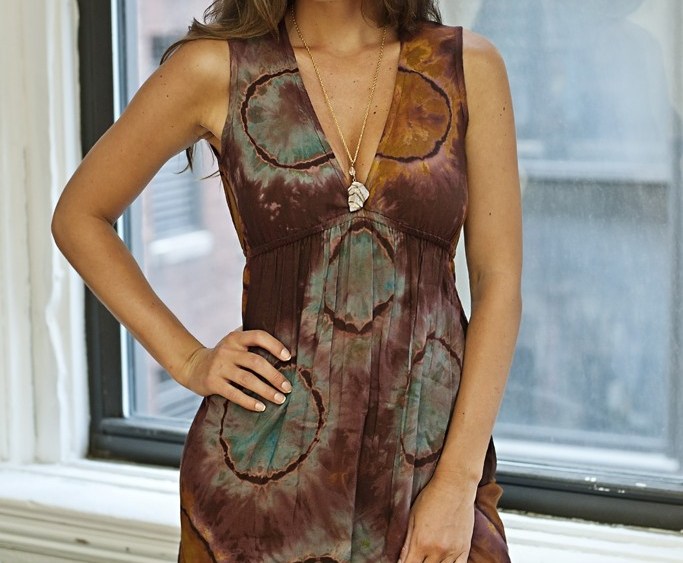
The selection of knit and woven tops has grown as well, to about 70 key styles retailing from $29.99 to $34.99. “Tops are going in two main directions — solids and with embroidery and texture,” Rosenberg observed. He also stressed that dresses have grown in variety as well, with about 35 styles including maxi and mini lengths, and items with border-scarf prints, embroidery, crochet, smocking and removable straps, among other looks.
Unlike other private label firms that take design direction from retailers, 99MPH takes “a soup-to-nuts approach” to sourcing, designing, manufacturing and presenting finished products that can be interpretations of runway or street looks. Retailers generally remove the 99MPH label and replace it with their own, though, according to Rosenberg, Rue21 and Dots tend to keep the label.
“Our customers are definitely looking for quick response and quick delivery,” Rosenberg said. “In juniors, anything cutting edge is doing very well. Body, fit, shape and detail are really important in juniors and trends are literally changing every month. There is tremendous design pressure and volume price points are very important.”