
HONG KONG — It isn’t enough for sourcing companies simply to rely on the core business anymore.
For Linmark, a major sourcing firm based here, that means shifting the business to be driven by product and development rather than price.
When the company added design and fashion to its sourcing expertise, quota price was less important and Linmark was able to maintain the focus in China, said Peter Solomon, chief executive officer. He said buyers were looking for more, such as range-building and assistance in direction.
To that end, Linmark has 41 designers, six in India and the rest based here.
If Linmark had not changed its model, it could have lost a lot of clients, Solomon said. The sourcing and supply-chain management firm reported a more than 200 percent jump in volume, to $288.3 million, for the year ended April 30. The increase was attributed to acquisitions.
Related Articles
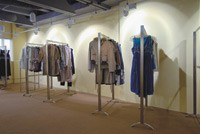
As part of its shift, the company is consolidating its office space here under one roof; it now has around 30,000 square feet of showroom space, about four times the amount it had before.
You May Also Like
The space resembles a department store more than a showroom, with trendy display racks and individual rooms for showcasing the company’s design and collection-building capabilities. There are individual areas where clients can show their goods that can be entered only using fingerprint technology.
This model gives customers what they want, Solomon said.
With the confusion surrounding quotas last year finally settled, businesses can better plan their futures, at least until 2009, when restraints are to be removed from China’s apparel and textile exports.
“China is still getting shares, but because of the existing quota in place — the categories announced in November — the shift hasn’t been as dramatic as expected because there are still restrictions,” said Peter Liu, chairman of the textile and apparel committee at the American Chamber of Commerce.
But even for sensitive categories, firms can still do Outward Processing Arrangements here and in Macau, which are special administrative districts of China, and have the bulk of the work done on the mainland, he added.
While there might have been a scramble for quota in the past, there seems to be plenty to go around now.
“For people who want to export, quota is available,” Liu said.
He explained that quota available for this year was based on the performance of 2005, but since the first half of that year had unrestricted trade, the performance base went up and, as a result, more quota is available.
He gave an example of cotton knit shirts (categories 338 and 339): In 2004, with quota in place, 2.8 million dozens of quota was available from China. In 2006, that number jumped to 20.8 million dozens and it will continue to increase through 2008, when 26.9 million dozens will be available.
“That’s why this agreement [in November] was celebrated … Everyone can claim victory,” he said. It “creates a stable environment.”
And while the agreement might mean that there’s been a shift to China, that doesn’t mean companies are giving up other countries.
Linmark upped its stake in Greater China to 56 percent of its sourcing portfolio from 45 percent. It also increased its business in the Indian subcontinent (Bangladesh, India, Pakistan, Sri Lanka) to 36 percent from 25 percent. Southeast Asia was the big loser, with a drop to 8 percent from 23 percent, and sourcing from Africa was shut down.
“We certainly have consolidated our sourcing base … into areas of the future,” Solomon said.
India will always be important because it has skilled workers and is closer to Europe, which gives it an edge over China, Liu said.
But China remains the front-runner for a number of reasons: labor productivity and a competitive supply chain, to name two. But the country is under pressure from rising worker wages, textile quotas and the strengthening of the yuan.
Those pressures might give other countries a window of competitiveness in the short term. However, countries that don’t have vertical manufacturing capabilities, such as the Philippines, Indonesia and Cambodia, will struggle because they need to ship in raw materials at a time when quick turnaround schedules are key, Solomon said.
Faster turnaround is easier when a company has 22 offices worldwide, as Linmark does. It allows the firm to support a much wider sourcing base, as well as move production rapidly among markets, he said. Technology also is key: Such movement wouldn’t be possible without video conferencing and e-mail capabilities, he added.
For some companies, Southeast Asia fits the bill.
Because China is an “extreme big-volume business,” it makes more sense for Italy’s Diadora to source from Southeast Asia, said Doug Sheridan, director of retail and licensing for Asia and South America, adding that this is because there’s greater flexibility with smaller volume runs.
Price points are also fairly steady among Diadora’s sourcing bases because factories are run by the same groups of people across the board and the company uses a lot of external fabrics, said Sheridan, who coordinates sourcing for licensees, which all have the right to source and manufacture Diadora goods.
Nevertheless, Diadora also has noticed a shift in sourcing.
Three years ago, China might have manufactured 70 to 75 percent of Diadora’s apparel, Sheridan said. Now, about 50 percent is done in China, and the rest in Indonesia and Vietnam.