
BERLIN — Exhibitors at the Bread & Butter and Premium shows held here this month said interest in denim is as strong as ever and played down talk of an imminent end to the denim boom.
Although their faith in the market was strong, vendors said constant innovation in material and treatment will be key to keeping the cycle going.
“People tell you that denim is cooling down, but as long as you offer something innovative you can still interest the customer,” said David Tring, European merchandising manager of VF Corp., the world’s largest jeansmaker and owner of the Wrangler and Lee brands. “It’s all about authenticity and tradition.”
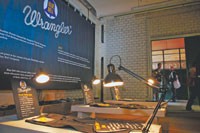
For Wrangler, this means offering reworked copies of their original Bluebell line, such as a limited 500-pair edition of a 1952 11MW jean by Japanese designer Junya Watanabe. The jeans retail for about $500 and were inspired by Wrangler’s vintage workwear, with throwback details like screwdriver pockets. The back of Wrangler’s rodeo rider jackets feature the brand’s Fifties advertising campaign, but this time in Japanese. Tring predicts that workwear-inspired denim will become increasingly important.
While Wrangler is going back to its roots, other manufacturers said focusing on the heritage of the brand helps it stand out in a market with an expanding number of players.
“There is going to be a cleaning up of the market,” said Eric Oberstein, German distributor for the Canadian brand 1921. “The good people and the traditional denim names will survive, while some of those who jumped on the jeans bandwagon will disappear over the next two to three seasons.”
For the Turkish manufacturer Mavi, getting back to its roots means including details such as a small blue-enameled metal “evil eye,” the traditional Mediterranean good luck talisman, on jean pockets.
“Such details are crucial to showing a company’s traditions,” said Serdar Mazmanoglu, Mavi’s managing director. “They show authenticity and help create an interest that goes beyond one season.”
Although a lot of these details contain distressed elements, there is consensus that jeans will start to get cleaner.
“Distressed, but not destroyed,” said Hasan Karakus, managing director of the label M-Blue. “The destroyed look will calm down a bit.”
Related Articles
You May Also Like
At Meltin’ Pot, jeans are given a repaired, customized look with bright silk patches, colorful stitching and splashes of paint. Augusto Romano, the company’s managing director, said this is popular because “customers are more self-aware. They are looking for jeans to be more personalized and customized with individual details.”
The 1921 line has gone to the furthest extreme in customizing jeans, with the top-end of its range, the TAKU Art Collection, retailing at $500. Once the customer has been fitted in the shop, the jean is sent from Canada to Japan, where 17-year-old street artist Takuto Mochizuki will individually stitch and paint each pair.
Manufacturers are also starting to be more creative with their use of materials. Reinhard Haase, managing director of Unifa, an agency that was displaying a number of brands at Premium, including Seven For All Mankind and Rock & Republic, believes that “denim cuts and denim details in non-denim materials will be very strong. Gabardine, poplin, cargo, twill, chino.”
He is also convinced that military materials, such as dark khaki, will come back, but not camouflage.
Although some manufacturers believe in a return to jeans of other colors, Haase is skeptical.
“Everybody is hoping for color and it is true that there will be a lot of white,” he said. “But if you offer jeans in 10 different colors, most people will only ever go for beige, khaki and white. Most people will never buy red or green.”
What is clear is that materials for next summer will be lighter. The regular 12-ounce to 13-ounce weight is shifting to a lighter 10-, 8- or even 7-1/2-ounce weight.
“It’s all about comfort and a more relaxed feel,” said Carlos Singh, marketing and communications manager for Firetrap. “The consumer still wants the denim look, but in a sexier and softer material.”
Firetrap is using plush cashmere denim and lightweight indigo-died cotton to enable a more sensual cut.
Softer fabrics are in keeping with a trend toward more feminine denim shapes, said Singh.
“There is a move away from masculine silhouettes,” he said. “So denim jackets can be more tailored and sexier than the traditional boxy cowboy style. Female denim is becoming a lot less manly. In the last few years women have worn more floaty skirts, so it’s natural that denim is moving that way as well and is starting to catch up.”
Firetrap’s summer collection includes wide cotton denim-look slacks, inspired by Thai fishermen, and indigo-died dresses that look and fade like denim, but are lighter and more comfortable.
Manufacturers also say that denim skirts with details such as studs and diamanté are doing well.
As for cut, women’s jeans appeared to be heading in separate directions. Although waists are going up slightly, the low-rise, skinny-fit, straight-leg will remain popular through summer 2005. At the same time, manufacturers are also opting for wide and baggy slouchy ‘boyfriend jeans,’ made more feminine through the use of soft materials and detailing.
“You never lose the idea that this is a woman’s jean,” said Raphael Sommer, Pepe’s sales manager for Switzerland.
Sommer said some women will go for both the narrow and wider fits.
“We don’t feel that denim is over,” said Sommer, especially for midprice brands such as Pepe. “With jeans, it always goes in waves. But they are a core product and demand for the five-pocket with a twist is increasing. Denim will never die.”