
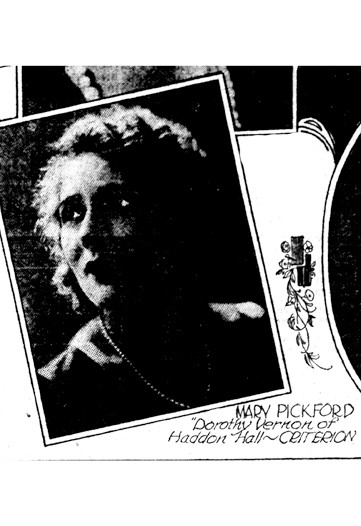
First Ladies Michelle Obama and Jackie Kennedy weren’t the first ones to face a firing squad for wearing European designers. Back in the early Twenties, actress Mary Pickford, aka America’s Sweetheart, was a constant target for her decidedly Continental tastes. Her biggest critic? Designer Harry Collins.
“If you portrayed French characters, or if a charming person like yourself was not distinctly the product of America, I would not bring to your attention the disappointment we feel that you should go to Paris to be dressed,” wrote Collins in a letter to the silent screen star, which was reprinted in WWD on Sept. 10, 1920. “I must take issue with you on behalf of creative dressmaking in America.”
Related Articles
You May Also Like
Pickford, who had just granted French designer Jeanne Lanvin a contract to make all her clothes, did not take the criticism to heart. The actress fired back that she had, in fact, worked with “the American modistes,” but found she had been treated unfairly. Among her complaints: Stateside designers charged her more and falsely promised her exclusives. “I think you will agree,” concluded Pickford, who was actually born in Canada, “that I am more than justified in going to Mme. Lanvin.”
But controversy continued — and WWD was there to chronicle every moment. Days later, actress Dorothy Gish went on record to deny she had signed a contract to be dressed exclusively by Lucien Lelong.
In another article that month, American designer Mme. Frances voiced her own opinion. “As far as Mary Pickford is concerned, America thinks of her always in ginghams and calicoes,” she sneered, “and what she wears has for this reason slight if any fashion significance.” And regarding the question of price — many actresses noted clothes were cheaper in Paris — Mme. Frances remarked, “Cinema stars are also much cheaper in France.”
Then, on Oct. 4, it was the Talmadge sisters’ turn to defend their shopping habits. Responding to a report that they were in contract with Lelong, Norma Talmadge noted everything was still under consideration. “There are many things to be said in favor of the famous Parisian fashions. The materials, embroideries and beads are exquisite, but the lines of the dresses and gowns are not the styles for American women,” she hedged.
By yearend, the scandal had circled back to Pickford — The New York Journal had published a story that quoted the actress as noting “that the New York women were the best-dressed women in the whole world — much better than the French women.”
In a letter from Pickford to Lanvin, which WWD acquired and printed on Dec. 22, the actress made clear exactly where she stood. “I have been much disturbed on the subject of this article, in which I was so unjustly accused,” she wrote. “I [had] replied that, comparatively, [New York women] were as well dressed as the French women, but that this was due to the fact that the rich among them were able to buy their clothes in Paris.”