
PARIS — While a number of fashion editors have metamorphosed into full-fledged fashion designers, including Vera Wang, Kate Spade, Jil Sander and Luella Bartley, the latest editor-designers aren’t giving up their day jobs.
Between dressing celebrities, consulting, styling fashion shows and photo shoots, a rising number of multitasking fashion editors on both sides of the pond are squeezing in the time to peddle their own collections, too.
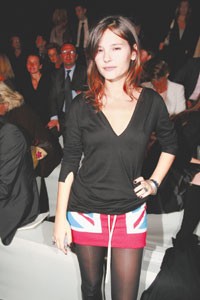
“There’s a vogue for blurring genres, with photographers branching out into illustration and fashion editors into design,” said 26-year-old Marion Hanania, a Paris-based freelance fashion editor-cum-designer who for two seasons has been designing a shoe line for French catalogue La Redoute. She also designs stage costumes for musician David-Ivar Herman Düne and plans to introduce a T-shirt line and further accessories this spring.
“Stylists are forever customizing clothes on shoots, so it’s natural that their curiosity stretches to wanting to experiment with their own creations,” said Hanania, who has worked with magazines such as French Elle and Le Monde.
Tamara Taichman, whose nascent canvas and leather bag line, dubbed Tila March, has already landed accounts at Colette in Paris and Bergdorf Goodman in New York, has also negotiated a balancing act. As a full-time fashion editor, working mainly for French Elle, and consultant to various fashion brands, her involvement with the bag line stops at the drawing board, leaving its business development to her partner, Nicolas Berdugo. “In no way do I view launching the collection as a new career — I love styling too much for that,” said Taichman, whose personal quest for a particular “classic” style of bag led to the birth of the line.
“I want the line to reflect my vision and personality, but it’s important not to confuse the two [areas of work],” she said, acknowledging that remaining firmly entrenched in her day job as a freelance fashion editor has also helped move business along. It was through her consulting jobs that Taichman met her manufacturers, for example. And having one of her bags spotted at a fashion show by Cedric Charbit, general merchandise manager at Printemps, led to one of her first orders.
Likewise, Isabel Dupré, style director at American Elle, is tugging on her stylist strings to fan business for her capsule cashmere collection, Du Pret Cashmere, launched in collaboration with fellow stylist Francesca Mills, also at Elle. “We’ve given gifts to Jessica Simpson, Beyoncé and Lindsay Lohan,” divulged Dupré. “It’s all a question of word of mouth.” What started out as “fun experiment” has turned out to be a major learning curve. “It’s amazing how much can be done by e-mail, but dealing with all the technical nitty-gritty such as delivery and distribution has been a real eye-opener,” said Dupré.
Related Articles
You May Also Like
While typically wary of investing in fledgling brands, retailers said a fashion editor’s goodwill potential can secure an order.
“My first question would be to know who’s backing them, as details such as delivering on time are essential,” said Sebastian Manes, women’s accessories buyer for Selfridges. Technicalities aside, however, if a line by a fashion editor looked likely to generate press and celebrity endorsements, it could win shelf precedence over an unknown newcomer, according to Manes.
“The fact that [fashion editors] have a clear overview of what’s going on in fashion also means they’re likely to be bang on trend,” he said.
Colette’s Sarah Lerfel agreed she would be more willing to view a collection by a known fashion editor, as their level of expertise and overall market vision grants them an automatic level of credibility. “It’s like a creative director starting to take photos,” she said. “It definitely opens doors.”
“Surely having to write about fashion [or style] constantly gives you an enviable insight into what women want now,” commented Averyl Oates, buying director for Harvey Nichols, London, citing Thakoon Panichgul as one fashion editor (a former Harper’s Bazaar staffer) who recently made a successful transition to the design world.
But for some, juggling the two arts can send out ambiguous signals. Laurence Heller, a former fashion editor at French Elle and DS magazine, preferred to let time lapse between careers before launching her new eponymous cashmere line. In an industry that’s sensitive to competition, she feels it’s compromising for stylists, who often play the role of confidante to designers, to have their own lines. “There are so many fashion editors with talent that I’m surprised more don’t go into design, but there’s no way they can manage both fields simultaneously,” said Heller, who’s been leafing through her black book, compiled over 20 years working as a fashion editor, to help launch her collection. Landing one of her flag-motif cashmere skirts on actress Virginie Ledoyen during the Paris shows in October was enough to ignite interest in the line.
Emily Minchella, jewelry and fashion editor at l’Officiel magazine, is also wary of juggling roles. As the creative eye behind rising French ready-to-wear brand Jay Ahr, which counts stars such as Kylie Minogue and Audrey Tatou among its clients, she’s adopted a silent partner approach. “I want to launch my own collection in the future, but I prefer to keep more of a consultant role while I’m still styling,” she said.
Working in men’s fashion has freed up the game for French fashion editor Thierry Colson, who launched his romantic women’s resortwear line two seasons ago. The collection is made in Bombay. “There’s no ambiguity when it comes to consulting for brands,” he said, adding that he sticks to a simple design formula to avoid too much congestion. “The idea is to retain a similar silhouette, changing fabrics and prints each season,” said Colson, whose floaty Antoinette dress was snapped up by director Sofia Coppola.
Distributed in high-end boutiques such as Matches in London and Maria Luisa in Paris, Colson received five times as many orders in his second season. “I think editors are more able to sense a gap in the market,” he said.
But sometimes success brings sacrifices. “If you believe enough in what you’re doing as a designer, there’s a time when you have to give up the day job,” said New York-based fashion-editor-turned-designer Lucy Sykes, who launched her women’s, baby’s and children’s line, Lucy Sykes New York, in 2005, followed by her Capsule Mummy collection and a bedding line for Nurseryworks. More recent projects include a shoe line for Stride Rite as well as a line for Best & Co. “I’ve never heard of anybody being a full-time designer and working for a magazine,” said Sykes, admitting that she still feels pangs for her former career. “Half of my heart is a fashion editor,” she said. And, labeling herself more a creative director than designer, she taps into her stylist instincts when working on collections.
“I don’t have a design background, but when it comes to the fitting I get it more right than the technical designers,” said Sykes.
“Styling is like a drug,” confirmed Victoria Bartlett, who, having launched her VPL rtw line in 2003, still styles occasional shoots for the likes of Italian Vogue. She compares it to having a split personality. “The thing about being a fashion editor is that you channel all of this creativity into your job and at the end of it, nothing really belongs to you,” said Bartlett. “And I needed something that was mine.”