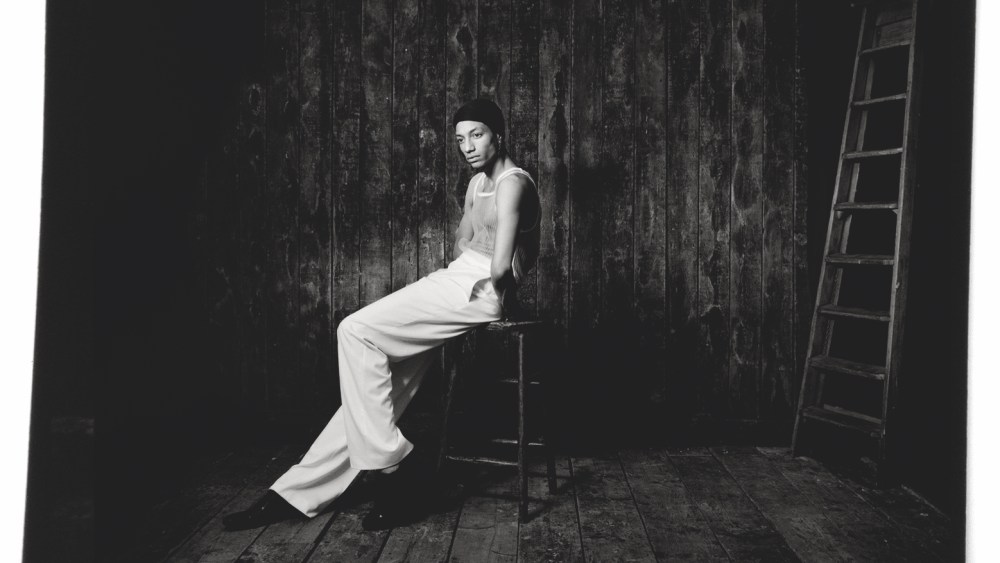
When choreographer MJ Harper takes to the stage Sunday night for his mixed media show “Arias for a New World,” he’ll be letting the costumes, designed by Kim Jones for Dior, do much of the talking.
The Berlin-based Harper, who was born in Jamaica and raised in Florida, is a familiar face in fashion, albeit behind the scenes.
You May Also Like
A close friend of Grace Wales Bonner and Stefano Pilati, he works as a movement coach for film and runway shows and said he’s fascinated by the relationship between fashion, dance and movement on stage.
Related Articles
One of his great inspirations is Pina Bausch, who worked with Yohji Yamamoto, while another is William Forsythe, who tapped Issey Miyake to create costumes for the Frankfurt Ballet.
Both Bausch and Forsythe “looked to the world of fashion to enhance character development and movement techniques on stage. They were able to look at choreography through the lens of fashion design,” says Harper, who’ll be performing “Arias” at Koko in Camden on Sunday, the end of a frenetic week that will have seen the Frieze and PAD art fairs, and the BFI London Film Festival, roll into town.

Harper acknowledges that working with Jones and Dior Men for a show based on his mother and “feminine energy” may seem left field, but that only made the project more interesting.
Harper says he worked closely with Jones and Katy England, the stylist on the project, to create costumes that addressed “what it means to be in a male body, or a female body, and the relevancy of both in the modern world. Bausch engaged in a similar conversation about gender, and it’s a beautiful opportunity for us to push that forward.”
It was a tall order, even for a pro like Jones, who has dressed many a performer for the stage, most recently the the K-pop quintet Tomorrow X Together (who are now Dior brand ambassadors) and BTS.
Harper says he wanted to use the ‘50s and ‘60s as a point of reference for the costumes. “I asked myself if Eartha Kitt and Pina Bausch were still alive, and they were both my age, and had iPhones, and if Eartha joined Pina Bausch’s dance company, what would their work — and the world — look like?”
He also wanted to explore the idea of clothing as armor during the era when Kitt and other Black musicians were performing. Harper says that, under direction from the record labels, women took etiquette lessons and wore formal dress “to help elevate themselves and be accepted by Blacks and white” people alike during performances.
“Clothing was a way of shielding them: if you’re a male in a suit, or a woman in a gorgeous cocktail dress, then all of a sudden, everyone’s focusing on your talent — not on all the baggage that comes with the constructs of race and gender,” says Harper, adding that he “tinkered and tailored” with Jones and England to get the looks just right.
The costumes also had to be flexible, and easy to wear as “movement is forever the gospel,” according to Harper. On top of that, he also wanted to conjure a cinematic look on stage.
“Arias,” which debuted in Berlin last year, blends dance, music and the spoken word. It features accompaniment from composer Antoni Komasa-Lazarkiewicz and the musician Thomas Moked Blum. The one-off London performance will be filmed by director Matt Lambert.
Harper says that his influences for the solo piece ranged from Bausch and Derek Jarman to the Talking Heads and jazz singer Sarah Vaughn.
He also drew on his own childhood going to Catholic school in Jamaica; emigrating to Florida with his mother, and attending Sunday worship at the church where his grandfather, a pastor, possessed the ability to speak in tongues.
There are so many dramatic themes, it’s no wonder that Harper also wanted to make his audience “feel like they were watching a movie. I wanted to create this classic shot of a heroine in a film noir, wearing a coat, and walking at night with only one street lamp on,” he says.
Jones and England came up with glamorous, gender-fluid looks including an elongated men’s shirt with ruching on one side and sleeves that tie at the back. The shirt only covers part of Harper’s body, and under it he’s wearing a jock strap.
“It’s a whole other story at the back,” he says with a smile.
An oversized, brown mannish coat is an homage to Bausch, who was photographed by Helmut Newton in the ‘80s wearing a similar style.
Harper says the coat is meant to reference armor protecting “a soft mollusk inside. I was quite intrigued by this idea of a very fragile creature who experienced the world of show business, and maybe got a bit busted up. The shirtdress is this delicate being, the coat is a shield, and when the coat starts to come off, there’s a whole other landscape in the back. It’s about skin.”
Jones says it was a “real honor” to work on the costumes, and describes Harper as “full of energy, and a constant joy. His soul is amazing, and I can’t wait to see him on stage.”
Going forward, Harper says he plans to evolve “Arias,” adding new themes and personas to the performance.
“In my mind, it’s really a piece for eight to 10 people, and I would love someday to have the opportunity to set this in an opera house,” says Harper, adding that he’d like to see a larger cast, other archetypes, and interesting performers, too.
That will no doubt require a whole new set of costumes — all with something big to say.