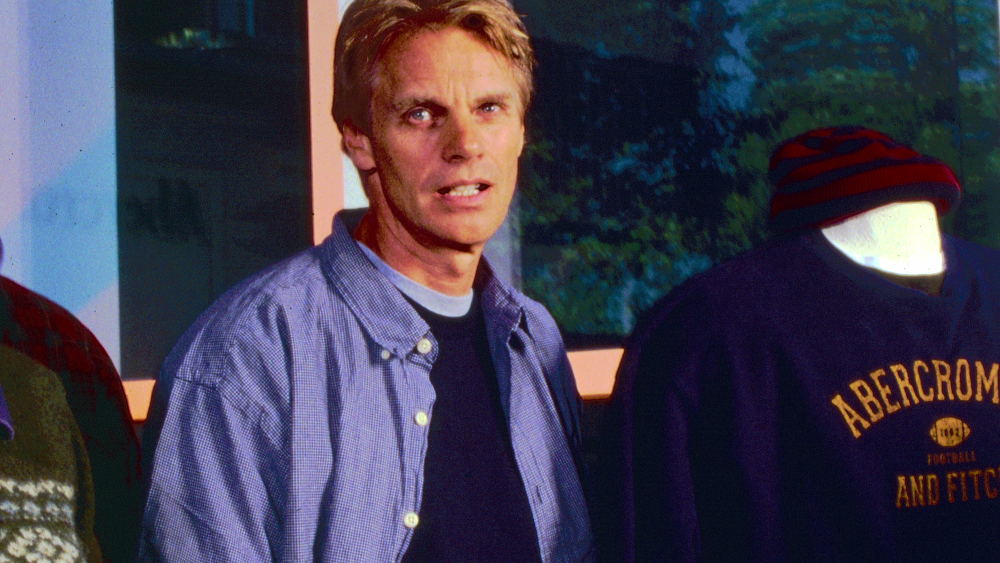
Like many teens growing up in the Y2K era, Abercrombie & Fitch loomed large for Alison Klayman. Although she wasn’t a customer of the mall brand, its cultural presence (boosted and immortalized by 1999 LFO song “Summer Girls”) was impossible to ignore.
“We all vaguely had some understanding that, oh yeah, Abercrombie is really white, or they only want hot people to work there,” says Klayman, who directed the documentary “White Hot” for Netflix.
“Even though we all kind of knew what it was at the time, it does feel shocking to see the story told and the harm that [Abercrombie] caused,” she adds. “And people were praised for it. They made money off of it. They were successful. They didn’t lose their jobs over it. And we all lived in a world where people shopped at the store.”
Related Articles
The filmmaker turned her lens toward Abercrombie in 2019, shortly after finishing her Steve Bannon documentary “The Brink.”
You May Also Like
“Very much not a sexy or youthful world,” she says of her previous film. “My cinematographer, Julia Liu, was joking with me, ‘So you’re continuing on the white supremacy storyline.’ And I do feel in so many facets, not just this story, the antecedents of where we are now are located in the ’90s and early 2000s,” she adds. “I think that’s part of why there are so many stories that are beginning to look at that time.”
“White Hot” starts off with Abercrombie’s history before former chief executive officer Mike Jeffries came onboard to revitalize the dusty brand in 1992, ultimately transforming it into a mall powerhouse through marketing and experiential store design. The brand became known for its focus on hiring store employees based on attractiveness, defined through a Euro-centric lens, as well as its preppy aesthetic and racy campaigns shot by Bruce Weber.
“The central narrative continued to surprise me as I got deeper into it,” says Klayman. “The story of how Abercrombie looked the way it did is a lot more intentional and top-down, and flagrantly discriminatory, than I might’ve expected.”
Klayman, who came of age during Abercrombie’s reign over teen culture, was interested in the opportunity to focus on the system in which the retailer thrived. Her team interviewed former brand models; employees of color who joined the class-action discrimination lawsuit against the retailer; the former editor of the Abercrombie quarterly journal; apparel designers, and a store recruiter. The highest-ranking former corporate employee they could get on camera was Todd Corley, the brand’s first chief diversity officer. The documentary also interviewed lawyers and journalists who covered the brand.

“The more you found out, the worse it was,” claims Klayman. “You could either look at it and be like, ‘who cares? It’s just some fashion brand.’ Or you can be like, ‘there’s real harm that was experienced by people.’ And it’s not minimal when it happens to you.”
The documentary looks at the impact of the brand’s campaign imagery shot by Weber. Several former models interviewed for the film share anecdotes about the photographer’s onset relationships; Weber has faced sexual-assault allegations and lawsuits in recent years, some of which were settled and some dropped.
“White Hot” is firmly rooted in the Jeffries era — he resigned in December 2014 after 11 straight quarters of negative comparable-store sales. As a result, the documentary doesn’t spend much screen time on the modern-day company. When the production reached out with a list of questions as they were finishing the film, Klayman notes that corporate was happy to oblige, but kept the focus on current leadership. “They didn’t give any details of the Mike era, although we asked,” she says.
Even before the film’s release, Klayman noted a strong reaction to its trailer and poster on social media. “It’s a large constituency of people who worked at Abercrombie or feel like they were influenced by Abercrombie. And it’s been really fun to watch people share their stories,” says Klayman. “Growing up at that time, there really was more of a hegemonic, dominant culture. And social media and the landscape of shopping today is just not like that now. It’s hard to imagine any one brand that could feel as dominant or oppressive on all kids.”
Abercrombie acknowledged the documentary with an Instagram post on March 31, and again on Tuesday, the film’s release date. The most recent post was signed by current CEO Fran Horowitz.
“We want to be clear that the recently released documentary is not reflective of who we are now. We own and validate that there were exclusionary and inappropriate actions under former leadership,” the post reads. “We’re focused on inclusivity — and continuing that transformation is our enduring promise to you, our community. Because without you, we wouldn’t be who we are now.”