
Who’s got the edge in the retail game? Kanbay Research Institute has come up with a list of the most competitive retailers in the U.S. via a complex set of parameters. The institute selected retailers from Standard & Poor’s database, and worked with a consumer panel to ensure brand awareness and customer satisfaction, among other factors. It then analyzed which companies were creating a successful barrier — or a “moat” (a term coined by business guru Warren Buffett) — against entry by competitors, thus ensuring their own growth. The fi nalists were ranked by a calculated return on invested capital over the past fi ve years. Said Gary Williams, president of the institute: “The purpose of this study is to break down individual retailers’ competitive advantages, and what each is doing in order to generate its own return on invested capital.” — Cecily Hall
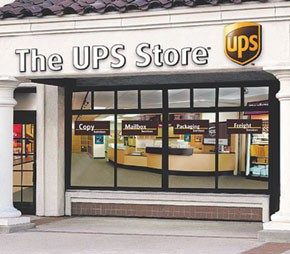
THE UPS STORE
Five-year average return on invested capital: 19.5 percent
The UPS Stores are retail shops franchised by Mail Boxes Etc., a subsidiary of Atlanta-based UPS. The stores provide shipping, mailbox and postal services to consumers and corporations. What makes this the toughest retail competitor? Three main strengths, according to Kanbay: competence of staff, reputation as a retail leader and strategic locations. “This combination is difficult for competitors to duplicate,” said the report. Each store is owned by an independent franchisee, yet its affiliation with the globally known UPS gives it an edge. Owners are required to attend The UPS Store University, where they learn how to run their stores and come to understand financials and marketing aspects of the business. “We see franchises in restaurants, but in terms of retailers, there are so few,” said Gary Williams of Kanbay. “This is a successful model for UPS.”
DOLLAR TREE
ROIC: 17.4 percent
Operating nearly 3,200 stores in 48 states, Dollar Tree is considered the equivalent of “five-and-dime” stores, offering a random (and discounted) variety of goods — from candy and food to beauty items and household products. Though the company is in the process of raising its price points on certain items, it is “committed to exceeding customer expectations of the range and quality of products that can be purchased for one dollar,” said the report. The retailer’s main competitive attributes include positioning stores within strip malls and near “big-box” retailers to attract their foot traffic, along with offering a wider selection of goods that are also of higher quality than its competitors.
Related Articles
You May Also Like
DOLLAR GENERAL
ROIC: 17.0 percent
As one of the leaders in the dollar store segment, Dollar General boasts more than 8,000 stores and $8.6 billion in sales (in fiscal 2005). The company remains competitive among its peers by aggressively expanding stores; consistently working with a smaller store format — “making shopping for basic necessities simple and hassle-free,” says its Web site — and concentrating its stores in underserved rural and urban neighborhoods. During fiscal year 2005 (ended Feb. 3, 2006), Dollar General opened 734 new stores. Thirty percent of the retailer’s merchandise is still priced at $1 or less.
WALGREENS
ROIC: 16.9 percent
The report noted Walgreens’ competitive advantage is in its attention to detail, along with strategic real estate placement, store design and operating effectiveness. The company prefers to build new stores rather than take over existing sites, in order to be more selective. “Customers love the convenience of Walgreens locations….More than a third of the U.S. population lives within 2 miles of a Walgreens store,” said the report. In addition, the company’s effectiveness in filling prescriptions surpasses its competitors. The company fills 265 prescriptions per store a day, compared with about 215 for CVS, the report highlighted. More than 1,500 locations are open 24 hours a day, as well.
KENNETH COLE
ROIC: 16.8 percent
“This company is more than just a brand, it’s a lifestyle choice,” said Williams of the manufacturer and retailer of footwear, apparel and accessories. The company’s products cover several price points and brand tiers, which exposes it to a wider number of competitors. However, the report found that, in addition to its retail stores, Kenneth Cole has located its merchandise in “shops-within-a-shop” (inside of department stores), which “elevates the brand.” The institute’s report also pointed out that Kenneth Cole staves off competitors via clever advertising and the quality, style and usefulness of its products, along with customers’ shopping experiences. “Consumers are buying into who Kenneth Cole is and what he stands for,” said Williams.
PETCO
ROIC: 13.9 percent
It surely helps heighten brand awareness when a company has a baseball stadium named after it in San Diego. But two important reasons this national specialty pet chain ranks highly among competitive retailers include frequent product discounts and heavy promotions. Customers are well taken care of here if they participate in the Petco P.A.L.S. program, which is a loyalty program that offers frequent additional promotions and perks to members. To remain competitive, Petco enables pet owners to purchase all their products on the company’s Web site, which offers free shipping on orders of $60 or more.
KOHL’S
ROIC: 13.3 percent
Department store retailer Kohl’s Corp. last week said its January same-store sales increased 8.7 percent, driven by strong demand for cold-weather merchandise and by redemptions of gift cards. Store and merchandise expansion have been priorities for the Menomonee Falls, Wis.-based company: Last year, Kohl’s opened 85 stores, and last spring, the chain expanded its portfolio of exclusive lines by introducing its Tony Hawk and Chaps collections. The retailer, which operates more than 800 stores in the U.S., also has signed a deal for an exclusive collection by designer Vera Wang.
TARGET
ROIC: 12.1 percent
Target Corp.’s biggest competitor may be Wal-Mart, but because of its wide variety of merchandise, the Minneapolis-based retailer also has Costco and Sam’s Club consistently nipping at its heels. “Target has remained laser-focused in its goal of providing its guests with unique and trendy and attractive merchandise at affordable prices,” noted the report. The institute gave accolades to key factors, such as strong private label lines (which include Xhilaration junior apparel and food brands Market Pantry and Choxie); partnerships with popular designers, such as Liz Lange, Isaac Mizrahi, Mossimo and, this season, Proenza Schouler, and an overall satisfying shopping experience. “Target has developed a world-class approach to merchandise management,” said the institute.
MEN’S WEARHOUSE
ROIC: 10.5 percent
“I had the opportunity to meet with George Zimmer [founder and chief executive officer], which is when he told me about Suits U,” said Williams. “The company puts every single sales representative through this program to educate employees on the values of the company and to train them in how to sell in a ‘neighborly’ way.” The program is just one of the aspects that gives Men’s Wearhouse its competitive edge — a variety of brands and lower prices are two other key factors. The institute stated, “The key to Men’s Wearhouse is its ability to consistently offer fair prices on name-brand clothing and combine them with exceptional customer service and service offerings. This balance allows the company to break away from traditional competition.”
PETSMART
ROIC: 10.3 percent
In 2005, this pet-supply retailer changed the appearance of its name by capitalizing the “S” to signify a symbolic change in its business structure. “They’ve gone from a ‘mart’ business to a ‘smart’ business,” noted Williams. “Instead of just selling pet supplies, this retailer is rallying around the pet parent.” Store offerings also include help with vet services, adoption services, pet education courses and doggy day care, among other initiatives. The report noted the company has witnessed significant growth as of late: Fiscal 2005 revenues increased almost 12 percent to $3.8 billion from the prior year.