
For Saks Global, the agenda is huge and challenging.
It’s a matter of winning back the trust of brand partners, catching up on unpaid bills, sharper curation of the assortments, and continuing to integrate Saks Fifth Avenue and Neiman Marcus while further reducing costs and achieving synergies. There’s a long way to go.
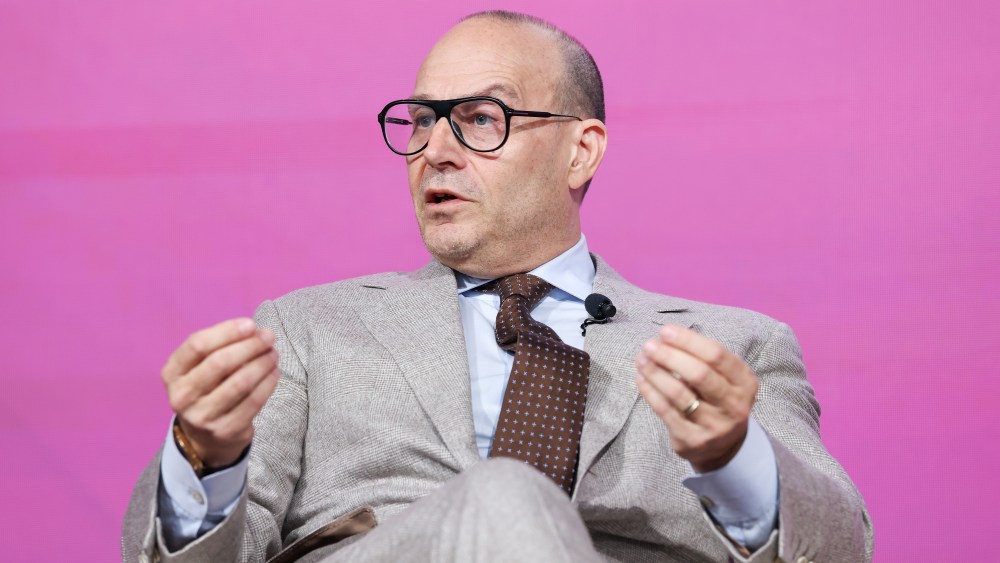
“When we brought these two companies together, the goal was to put something forward to help grow our business and our brand partners along with us, and clearly we are have not delivered on that promise or commitment yet,” acknowledged Marc Metrick, chief executive officer of Saks Global, during his conversation with James Fallon, chief content officer of the Fairchild Media Group, at the WWD Apparel and Retail CEO Summit.
Related Articles
“It’s early days, but we are very committed to getting that trust back and we understand the challenges we’re presenting to the market,” Metrick added. “That was not our intention. And the biggest priority we have as a business right now is getting this on track and bringing our partners back with us. We own this. We’re going to do that, and it comes with a certain level of proving promises made, promises kept.”
You May Also Like
Metrick also acknowledged that sales at Saks Global, which purchased the Neiman Marcus Group in December 2024 for $2.7 billion, could be better. The second-quarter top line “was a bit softer than we thought it would be, and certainly a bit softer than we wanted it to be, and that was wholly related to a lack of appropriate inventory flow, which, again, is self-inflicted,” said Metrick. Revenues at Saks Global for the quarter ended Aug. 2 fell 11.1 percent to $1.6 billion from $1.8 billion a year earlier. Gross merchandise value totaled $2 billion, down slightly from $2.1 billion in the year-ago quarter. And the net loss was $288 million compared with $271 million a year earlier, taking the-then separate Saks Fifth Avenue and Neiman Marcus Group businesses together. In addition to Neiman Marcus and Saks Fifth Avenue, the company also operates Bergdorf Goodman, Saks Off 5th and Last Call.
From the outside, the picture at Saks Global isn’t pretty — underperforming sales, inventory issues, and increased debt from the purchase of NMG. But Metrick, a Saks Fifth Avenue veteran who went through the Saks training program 30 years ago, made the case for having optimism about the future.
“When you think about the numbers, that’s sort of the tough part. But what I think a lot of people are not seeing is that there are a lot of the positives happening,” he said. “Our businesses are coming together. We’re hitting tremendous milestones. The synergies that we’re trying to capture are well ahead of schedule. We’re going to put almost $300 million of run rate synergies into the business for 2026 and actually $200 million of synergies have already been realized, or will be realized this year.…So lots of positive momentum, and the big part now is just winning back our partners.”
Metrick said the flow of receipts “began to normalize as we ended September and into October. You’re starting to see the business actually really come together. Think about our concession business, where we don’t own the inventory,” and where the inventory is flowing into the stores. “That business was up double digits in the second quarter. So the luxury consumer is there. We know we haven’t lost our mojo. We can sell product. We can market product. We’ve got great stores. We’ve got traffic coming in.”
Metrick said recent research by the company shows almost 60 percent of its shoppers indicated they’re going to spend more in the next three months than they did in the prior three months. “They’re really signaling a much more positive outlook on their own personal finances, as well as their feelings about the economy,” the CEO said.
“There’s so much intelligence that we have on our customer today. Think about where personalization is going, what AI is going to enable from the standpoint of high touch.” For example, at saks.com, every visitor who logs in has a personalized homepage, Metrick noted. Add to that the possibilities of bringing that level of personalization to the Neiman’s and Bergdorf’s websites through “one harmonized consumer data platform that tells us exactly what you’re doing, not just at Saks but also at Bergdorf’s or Neiman’s. We can be that much more personalized.”
Regarding other plans for Saks Global, “There’s an opportunity to really get back into the curation business,” Metrick said. “Curation is where the customer today wants to be.” Other retailers, he suggested, with focused, curated assortments, those that know what they stand for and have a point of view, are winning. “We have to do that now. We have bigger boxes, but we have so much information across portfolios. So making the stores more exciting — not exciting with golf simulators or frozen yogurt — but exciting with product and fashion,” is the goal. “The customer wants choice, but they don’t want to be overwhelmed by it.”
Metrick said the company conducted a lot of research to get a clearer understanding of the Saks and Neiman’s brands and their customers. He said there is only a 12 percent overlap between customers though he thought it would be like 40 percent. “Knowing that there’s only 12 percent overlap gives us the ability to really push and pull in the right places.”
He said the Saks customer is “a fashion devotee, of the moment,” seeking more edge in fashion, whereas the Neiman’s customer is a “luxury sophisticate and polished.” The Bergdorf’s customer is “the cultural connoisseur. They know what they want, and they want what’s very different, unique, and they’re incredibly confident in how they shop.”
Metrick said the company finished the first phase of its retail management system integration of Saks and Neiman’s, which was disruptive in the vendor community, but temporarily, and enables sharing of merchandise information between the companies, leading to better sales and service to customers. “You can imagine now how powerful that could be,” Metrick said. “Ninety-nine percent of what a luxury consumer wants, our network is going to have it. And what this combination did was de-risk having to miss something. We can cover it all now, across the 13 million square feet, across our 69 (Saks and Neiman’s) stores, 70 with Bergdorf’s, and really win together with our partners.”
He also cited the new Saks Fifth Avenue and Neiman Marcus Seller Success Track program elevating incentives for stylists and selling associates. It started in November and is expected to be fully rolled out to all selling associates in 2026. The program is designed to motivate associates to sell more merchandise, provide tools to improve their selling skills, identify clearer career paths for workers as they achieve certain goals, and make customers feel they’re getting better service and more personal attention.
“Our top sellers at Neiman’s and Saks actually can now cross sell into the other business, depending on what level they are and how they’re moving up the chain. The whole point of this is to build the brand businesses and build the customer experience, to give them everything they want.”
Asked about the possibility of selling a minority interest in Bergdorf Goodman, Metrick replied, “There’s always been a conscious plan to de-lever the business and to monetize non-core assets or minority interests. We’re partners with Authentic [Brands Group]. We’re partners with Amazon. There are lots of people who have minority shares in the business already. So this would just be [selling] a minority, non-controlling interest in Bergdorf’s, which wouldn’t change a thing in our commitment to Bergdorf Goodman, and what it means to the Saks Global ecosystem, how it fits in. It is the crown jewel of what we are and who we are.”
In April 2025, Saks launched a storefront on Amazon’s Luxury Stores platform. According to Metrick, Saks is selling $4,500 dresses on Amazon, among other items, and the average Saks order value on Amazon is the same as the average order value on saks.com. “Nothing is sold on sale. It’s a full-price model,” Metrick said. “Twenty percent of the customers that shop Saks on Amazon are back within 30 days. Just think about the new customers, the aperture that we’re opening up through Amazon. It’s unbelievable. Only 30 percent of the demand we’re generating on Amazon is from Saks customers. The early signals are very strong.” The challenge is to get more brand partners “to understand and appreciate” the Saks experience on Amazon and “how we can make it very unique and differentiated from the rest of the Amazon experience.”
Summing up the progress made by Saks Global since its NMG acquisition, Metrick said, “We’re going to evolve forever, but we’re largely through a lot of the key milestones.” He cited the merchandising system conversion, bringing Neiman Marcus and Bergdorf Goodman onto the Salesforce Agentforce platform for AI-enabled support for customer service. Consolidation of the buying and marketing teams into one for both Saks and Neiman’s. “A lot of the lift is through, and a lot of the milestones have been met,” Metrick said. “But we’re always going to be iterating. We’re always going to be trying to make ourselves better, and that’s what we owe our partners.”