
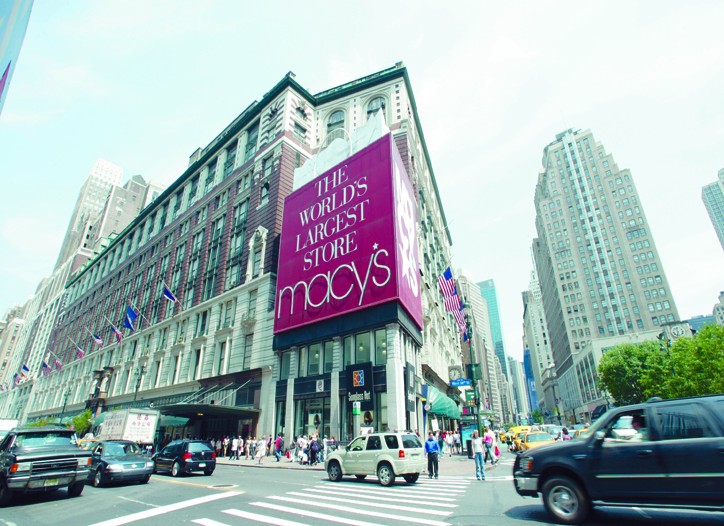
Change at the omni-minded Macy’s Inc. is speeding up and the company said it would shutter 35 to 40 underperforming stores early next year as it course corrects for a digital future.
This is the second round of store closures the company has revealed this year; Macy’s shuttered 14 of its namesake doors beginning in January.
Macy’s is built on a foundation of bricks and mortar, but the store base is being reimagined to serve digital age shoppers. The company is also getting back into at least one business it abandoned in years past to drive traffic through a deal to test license Best Buy electronics departments in 10 doors this holiday.
Terry Lundgren, Macy’s chairman and chief executive officer, said: “Physical stores remain absolutely vital to our omnichannel strategy, which provides local touchpoints and tailored merchandise assortments for shoppers in nearly every major market. As new shopping centers are opened, however, many customers change their shopping habits and often the sales volume of a store gets divided among the new and nearby, existing centers.”
Related Articles
Lundgren noted that each year the company prunes some of its weakest doors to concentrate on its best locations. Macy’s operates 770 stores under its namesake banner and said the stores set to be shuttered represent about 1 percent of the total company’s sales, which last year topped $28 billion.
You May Also Like
Over the past five years or so, Macy’s has closed 52 stores while opening another 12. The firm is also opening six new Macy’s Backstage doors this fall as it bids for growth in the offprice category.
At Macy’s and across retail, stores are having to pull double and even triple duty as retailers seek to knit together their online and offline operations, following their customers into cyberspace.
“All Macy’s stores today can fulfill merchandise orders direct to consumers’ homes, serve as convenient locations for customer pick up of merchandise bought online, and are the origination point for same-day delivery in 17 local markets,” Lundgren said. “While making the decision to close stores is difficult, we know it is necessary for us to remain competitive as customer shopping patterns continue to change.”
Clearly Macy’s is working hard to keep up with that change.
The 10 licensed Best Buy shops will each occupy about 300 square feet and open in early November. The space will be staffed by Best Buy employees and feature Samsung smartphones, tablets and smartwatches, as well as audio devices including Bluetooth speakers and headphones and accessories including cases, chargers and other peripherals from Samsung and other brands.
“Our customers have expressed interest in electronics for self-purchase and gift-giving, and this collaboration with Best Buy reinforces Macy’s as a shopping destination throughout the year for the products that are most in demand,” said Macy’s president Jeff Gennette. “We will test and learn, along with Best Buy, through the holidays and into 2016 before deciding on next steps.”
Decades ago, Macy’s did sell electronics, but that was before the advent of mobile and digital devices, like iPhones and iPads, as well as high-definition televisions. Macy’s dropped electronics because it wasn’t profitable enough and there was a noticeable lack of service and expertise on the selling floors.
Licensed arrangements are nothing new to Macy’s. The retailer already operates licensed Sunglass Hut, Finish Line and Lids shops in its stores, and once experimented with J&R Music World with a shop inside the Herald Square flagship.
The decision to test Best Buy shops is not surprising given that Lundgren has told WWD that the company is open to broadening the scope of its offerings, including categories where Macy’s does not have extensive expertise, to generate more traffic on its selling floors. Macy’s is working hard to attract more Millennials.
“It’s OK to admit that we aren’t the best in all categories, engage someone who is and bring them under our umbrella,” Lundgren said last year at the Global Retailing Conference at the Loews Ventana Canyon.