
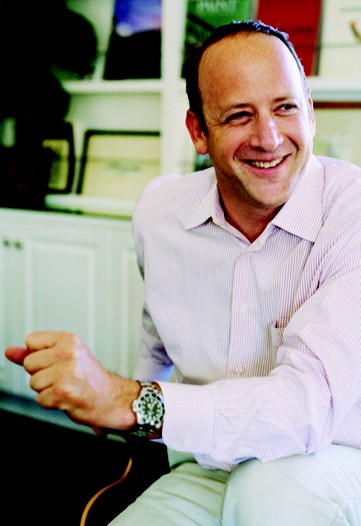
Los Angeles developer Jim Rosenfield sees a retail niche and is determined not to let the recession derail his efforts to cultivate it.
Rosenfield wants to grow the outdoor-village style concept of his Brentwood Country Mart in west Los Angeles. His strategy is to keep shopping venues small, local and different.
During the last year, Rosenfield and partners have acquired a pair of shopping properties in Northern California’s Marin County and in Montecito, along the state’s central coast. In addition to those acquisitions and the Brentwood mart — a long-term lease he bought in 2003 in a deal valued at about $30 million — Rosenfield co-owns the Trancas Country Mart in Malibu, Calif., and is seeking to revive the 20-acre property on the Pacific Coast Highway.
Related Articles
The common thread: Rosenfield’s ventures all have independent boutiques, open spaces and public courtyards, elements he describes as “conducive to human interaction.”
You May Also Like
“It’s a way to abandon your car, connect with locals and your community, have boutique shops and amazing restaurants, all alternatives to chains — things you can find at every single mall in America,” said Rosenfield, president of J.S. Rosenfield & Co., which also manages the properties.
A quirky collection of red barn-style buildings, the Brentwood mart had a vacancy rate of more than 40 percent when Rosenfield acquired it. He has since restored the property, luring small, high-end boutique tenants and local and overseas brands, such as James Perse, Calypso and Marie Mason Apothecary.
Rosenfield and his partners have a lot planned in the next year, including an overhaul of the Marin County shopping center, called Larkspur Landing, which was purchased for an estimated $65 million in January. With 175,000 square feet of leasable space, the center is far larger than Rosenfield’s other properties, which are in the 30,000-square-foot range.
For the Marin and Montecito centers, he’s targeted local chef-driven restaurants, small gift shops and lifestyle stores. It’s a strategy intended to lure locals.
The Marin center’s former owner, Inland Western Retail Real Estate Trust, purchased the 16-acre development, once a rock quarry, in early 2004 for $59 million. Though the center is among just a handful of retail developments in Marin County, it has struggled to pull in traffic and has veered to office or medical use rather than pure retail.
“It really was an aging design and needed a big upgrade,” Rosenfield said. “The property itself is prime real estate in Marin. This was just a rare opportunity for a market like that.”
Marin County is ranked by Forbes magazine as being among the most expensive zip codes, and residents within a 1-mile radius of the center have average household incomes of $129,800.
The redesign includes the installation of a children’s playground and picnic tables, public gardens, a fire pit and duck pond, new signage, paint and landscaping. Rosenfield also is opening a Marin History Gallery in the center.
Rosenfield and his partners are selective about tenants, and seek specific brands for each property. For example, Brentwood is home to Monocle’s only U.S. shop. But the strategy isn’t foolproof. Brentwood has seen the closures of City Bakery and other tenants in the past year.
“We don’t want just anyone, though it’s even tough just being fully rented, and it’s a challenge to find tenants right now,” he said.
The project that’s gotten the best response from retailers, Rosenfield said, is the Montecito center, known as Coast Village Shopping Center, which will be renamed.
Rosenfield and partners paid $20 million almost three years ago for the Trancas property. After Malibu residents objected, plans to add 37,000 square feet to the shopping center were scaled back to 25,000 square feet — a green version of the Brentwood Country Mart concept, with construction that will incorporate solar panels and tanks to reclaim rainwater.
The Malibu Planning Commission unanimously approved the project Aug. 4. It awaits final action by the city council.
Rosenfield said he has no immediate plans to grow beyond the four properties.
“It’s very easy to overexpand from a business side, and the person who overacquires also goes bankrupt,” he said.