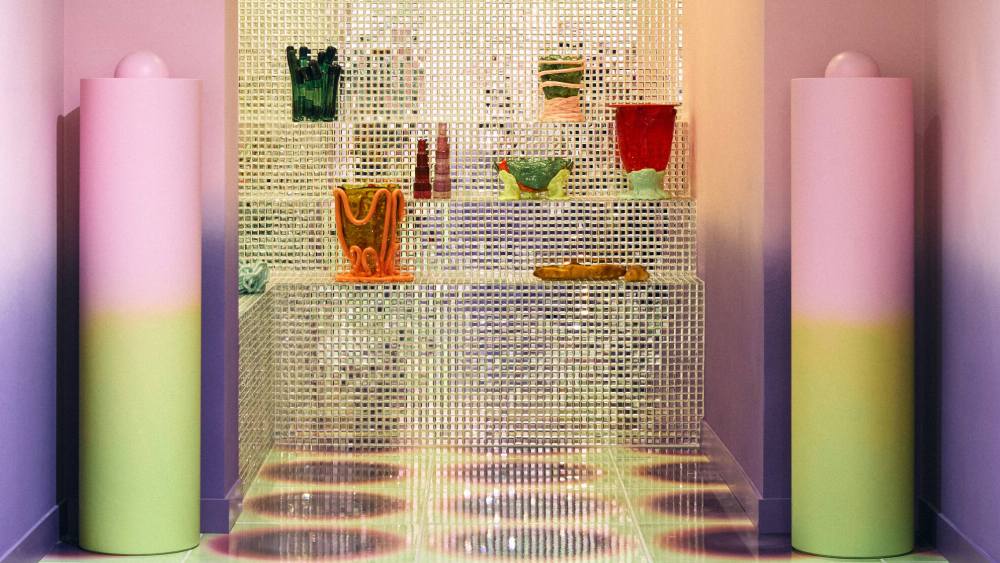
LONDON — Koibird is taking flight and leaving e-commerce behind to focus exclusively on sales and experiences at the luxury concept shop in central London.
Belma Gaudio, the founder and creative director of Koibird, said e-commerce hasn’t been working for her business, and doesn’t fit the culture, which is why she’s putting her money behind the physical store at 62 Marylebone Lane.
“I think the boom in e-commerce has tired the customer out. It’s led to over-consumption, put pressure on brands to produce, and on retailers to have new products all the time. Some of these retailers don’t even have products in for two months before they go on sale. Our consumer is exhausted. She’s tired of product,” said Gaudio in an interview.
You May Also Like
Related Articles
Gaudio opened the colorful, eclectic Koibird nearly eight years ago and the indie retailer carries a host of independent fashion and accessories labels ranging from Rodarte, The Elder Statesman and Tombolo to Cult Gaia, Completedworks and Ancient Greek Sandals.
It also carries books, candles and other homeware from brands such as Edie Parker, Lola James Harper and Fish Design by Gaetano Pesce.

Since it opened in 2018, Koibird’s interiors have regularly changed with the seasons.
At one point it was bubble gum pink from floor to ceiling, with fake sand dunes and a beachwear edit; at another point it turned blue and red with fuzzy furniture and an alpine theme. In 2021, the interiors were transformed into an Eastern European living room with floor-to-ceiling florals and clothing by the Polish designer Magda Butrym, Georgian native Materiel, and others.
Gaudio said the fashion e-commerce race wasn’t one she ever wanted to compete in. Marketing budgets are too high, and the customers she was attracting online were often comparing prices across sites, and looking for a bargain.
“They were sale customers, and we were moving so far away from what we set out to be as a business. We were about offering immersive experiences, storytelling, curation, and the art of discovery,” said Gaudio. “Shopping online is super-convenient, but it’s not our business,” she said.
“Our store is about magic. It’s about stepping into a beautifully curated space, experiencing the brands, having that in-person experience, with the team, learning about our designers, and their stories. You can’t do that online, no matter how much money we’ve spent with an editorial blog, direct mail and customer letters, you just cannot replicate that online,” she said.
Gaudio said Koibird’s website will become a brand platform and will no longer function as a store as of Monday.
Going forward, the focus will be on the physical store, in-store collaborations and the new wellness café Koi 11, where the menu includes matcha protein shakes, herbal teas and nutritious snacks made without refined sugar.
Koibird will also be putting the focus on collaborations. The current one is with Ebony Russell, the Australian ceramic artist known for piping porcelain in intricate layers to construct elaborate, freestanding forms.
The store is staging a selling exhibition of 24 unique pieces, which are displayed inside and in the windows. As part of the collaboration with Russell, Koibird is also offering drinks and food with Hebe Konditori, the cake and dessert specialist founded by Sarah Hardy.
Although Koibird is one small store in London, the decision to pivot to physical retail and in-store experiences stores is part of a wider trend in mass, contemporary and luxury.
Earlier this month Inditex, one of the largest clothing companies in the world, said it is striving to improve the in-store experience for clients, and has also begun rolling out its Zacaffè concept designed by Art Recherche Industrie.
Other mass market companies are making similar moves, upgrading store interiors and levels of service, and looking to offer special experiences that cannot be replicated online.
Several retailers and luxury brands never made the great leap to e-commerce. Primark has been resolute in selling in physical stores only (although it offers a click-and-collect service) while Chanel only sells some merchandise, such as fragrance, online.