
LOS ANGELES — The 11-week-old movie and television writers’ strike is taking a major bite out of fashion retailing here.
The ripple effects of the walkout are reverberating throughout the economy — from fashion stylists to limo drivers to prop suppliers — and experts said the retail sector is among the hardest hit.
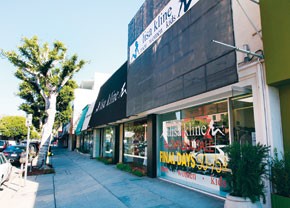
“The second that it happened, we felt an impact for sure,” said boutique owner Lisa Kline, who plans to cut staff at her well-known namesake shops, where a Botkier Bella clutch bag costs $460 and an Autumn Cashmere V-neck sweater sells for $250. “I’m only going to be keeping my top sellers.”
Fraser Ross, owner of the Kitson boutiques, trimmed the seasonal sales staff and, unlike previous years, did not extend temporary workers’ employment through January.
Related Articles
“We used to get a huge gift business, especially over the holidays, from the studios and it’s gone,” Ross said. “It’s L.A.’s own recession. There’s no end in sight. We are getting résumés from people who are TV show cast members and I hired people over the holidays who were out-of-work casting agents.”
You May Also Like
Los Angeles is a company town and the product is entertainment, so the impact of the walkout by some 10,500 members of the Writers Guild of America is more severe here, where movie and television production is centered, than in New York.
Layoffs at studios; talent and management agencies, and a wide range of entertainment-linked business, along with salary cuts, scrapped deals and canceled events such as the Golden Globes gala, are on the growing list of strike-related fallout.
The timing of the walkout is particularly critical because it is coupled with nationwide economic woes such as the housing slowdown, tight credit, high fuel costs and a volatile stock market that experts say could mean a recession.
The stalemate between the writers and movie studios and television networks over sharing revenues from technology-based items such as DVD sales and online downloads shows no immediate signs of ending. The impasse places the most important night in show business, next month’s Academy Awards and its high-profile red carpet, in peril.
The Los Angeles Economic Development Corp. estimated that the direct and indirect impact of wages lost is already $1.5 billion. That figure might be even higher because with so many independent contractors in film and television production, there isn’t a lot of data available.
High-profile management firms such as Brillstein Entertainment and talent agencies UTA and ICM have tightened their belts by cutting the salaries of agents by as much as 20 to 30 percent.
Retailers said they are trimming inventory and planning conservative budgets to cope with the gloomy strike scenario.
Malls such as Taubman Centers Inc.’s Beverly Center and Westfield Century City — both of which service entertainment-related businesses such as talent agencies — are feeling the pressure.
“I can definitely say that our studio services have been affected….All the high-end designer shops have seen a significant hit on the number of stylists coming in,” said Beverly Center marketing director Hilary Carr.
Referring to studio wardrobe departments and stylists, she added, “That great piece of business that we do is gone. I don’t think the rest of the world understands how big this is for us. It’s really a domino effect and our whole city is affected.”
Even some high-end merchants at Costa Mesa’s South Coast Plaza in Costa Mesa, Calif., which is 50 miles south of the Hollywood studios, are concerned.
“There has been some level of impact for stores that do business with Hollywood celebrities,” said spokeswoman Deborah Gunn Downing. “I would say it’s minimal right now — certainly not at the level that we are hearing about up in L.A. — but if [the strike] continues, we will definitely see more.”
Los Angeles’ high-end department stores and lunch hot spots where Hollywood deals are routinely struck are quieter.
Traffic at Barneys New York in Beverly Hills has slowed, said spokeswoman Dawn Brown.
The store is also home to Barney Greengrass, an offshoot of the New York eatery and caterer famed for its Nova Scotia Salmon and sturgeon scrambled with eggs and onions. Tables are now easier to come by at this venue for power brokers.
“Anybody with clients in the entertainment business is seeing an impact because no deals are being made right now,” Brown said. “Reservations for Greengrass have definitely gone down. But we are still full. It’s not like we’re NBC or anything like that.”
Rodeo Drive’s high-end boutiques don’t appear to have escaped, either, though Jack Kyser, chief economist for the Los Angeles Economic Development Corp., said it could take some months for larger luxury retailers to be squeezed.
“The strike will probably have an effect at least for the entire first half of the year, even if it’s resolved soon,” said Tom Blumenthal, owner of Geary’s Beverly Hills, a luxury gift store, and president of the Rodeo Drive Committee, a merchants’ group.
“The loss of the Golden Globes has been devastating for the city of Beverly Hills, because it’s held here at the [Beverly] Hilton,” he said. “It’s not hard to get a seat at a great restaurant these days, that’s for sure.”
The slide “in sales is emblematic of everything,” said Mark Young, a professor of entertainment business at the University of Southern California’s Marshall School of Business. “This is going to be very ugly, and the real impact is going to be felt a year or two from now” because bringing deal-making and projects back to full speed could take significant time when the strike ends.
“People have really underestimated what the ripple effect is going to be,” Young said.
The scaled-back Golden Globes last weekend — the usually high-rated and lucrative show was reduced to a news conference announcing the winners — provided a look into the immediate future, should there be no settlement.
In addition to the cancellation of most parties and swag suites sponsored by major fashion and accessories companies, stores on shopping meccas from Robertson Boulevard to Melrose Avenue that usually teem with buyers making pre-awards purchases appeared to have light traffic.
Scuttling the Globes cost the local economy about $80 million, and if the Oscars aren’t held for the first time in the awards’ 80-year history, the losses could be another $130 million, Kyser said.
“It’s hitting everything: People are not eating out as much, people aren’t giving gift baskets, stylists aren’t buying as much apparel,” he added.
“A lot of stores started their sales early and that put the pressure on us to move ours up, as well,” said Jeannie Lee, the owner of the Satine boutique on Third Street in Los Angeles, which sells Thakoon dresses starting at $1,700.
Lee moved up her holiday sale by one week and reduced inventory to cope with the immediate effects of the walkout, which has halted almost all television production and reduced moviemaking to a trickle. “It’s never a good sign when you start a sale early,” she said.
Stylist Cristina Ehrlich, who, with her partner, Estee Stanley, dresses Penélope Cruz, Rebecca Romijn, Jessica Biel, Nicole Richie and Mandy Moore, among others, said the awards season outlook is cloudy, at best.
Cruz, their star client, was to accompany her boyfriend, “No Country for Old Men” star Javier Bardem, on the awards show circuit and appear as a presenter at several shows.
“Now, it looks like none of that may happen,” Ehrlich said. “So we are just waiting to see.”
Other stylists said those with agreements to dress an actress for the entire awards season won’t be getting their fees if their clients don’t attend the shows.
“I know several stylists who are stressed about money right now,” said stylist and C Magazine style director George Kotsiopoulos. “It’s getting really bad.”
Party planner Gavin Keilly, whose GBK Productions hosts a number of awards season events, including a celebrity swag suite for the Golden Globes, said, “I’m not naïve. I already had some cancellations this year from some of my vendors who are my best clients….They are nervous.”
Those who are feeling the impact can see parallels to the 22-week writers’ strike of 1988, which resulted in an estimated direct wage-loss total of $500 million and saw 10,000 jobs slashed in the first month alone. The industry was much smaller then — about 80,000 people, compared with an estimated 160,000 now.
“With the credit crunch, housing slump, WGA strike and then all that rain [this month] — we need a break,” Kline said.