
LOS ANGELES — Nordstrom Inc. is taking a narrower focus with a play on local markets, in a bid for long-term growth across all facets of its business.
Investments over the past few years in digital, the supply chain and acquisitions of companies such as Trunk Club and HauteLook have set the stage for where the retailer’s management team now sees the business headed, points that have helped insulate it from the rugged retail landscape today, copresident Erik Nordstrom said during his presentation at the company’s investor day held here Tuesday.
“The macro environment is changing,” Erik said. “There are forces that seem to be accelerating that put a lot of challenges to the sector. For us, we’re in a different place.”
Related Articles
The company’s 122 full-line stores and 239 Nordstrom Rack stores are cashflow positive, with no plans to close dozens over the next several years akin to some competitors, Erik confirmed. Nordstrom, on average, has been shuttering roughly two doors annually over the past few years as leases come due.
You May Also Like
The retailer’s focus is on fashion and an assortment the executive called “cross-brand discovery.”
“A modern customer does not settle on one brand and go 24/7 on that one brand,” he said. “I don’t believe that we’re going to be here five years from now and wearing one of five brands. Part of fashion is newness.”
To that end, the company’s product strategy focuses on four buckets that make up what it’s calling its roster of strategic brands: preferred brands, such as Topshop and Madewell; designers in the vein of Valentino and Gucci; emerging brands with lines such as Reformation and Great, and its own Nordstrom brands.
That group of strategic brands accounted for 31 percent of full-price sales in 2015, with the percentage growing to 40 percent in 2017. By 2020, that group of labels is expected to account for half of overall full-price sales.
The other major play is localization, where the company is initially focusing efforts on its largest market, Los Angeles, where Nordstrom generates more than $1 billion in sales.
The first-ever Nordstrom Local on Melrose Place will be joined by two additional Locals this year, in downtown Los Angeles and Brentwood, Calif., which were revealed Monday.
“While it’s [in the] early days, we’re measuring this very closely,” said Ken Worzel, chief digital officer and president of nordstrom.com, of the Local store. “It has already resulted in a very big increase with our customers.”
Worzel added that those learnings will then be tailored to experiences that will eventually be brought to New York, another major market for the retailer.
That’s part of a game plan focused on hyperlocal service offerings — ranging from style boards backed by machine-learning technology to personal styling and local pick up — that are now being aggregated via an app that’s been beta tested over the past roughly five months with a group of about 800 customers in L.A.
Those service offerings are expected to roll out to all customers in the Los Angeles market later this year. Integration of the inventory from the future fulfillment center here and stores eventually will be added to that bundle of services to allow for customer access to a broader assortment offering.
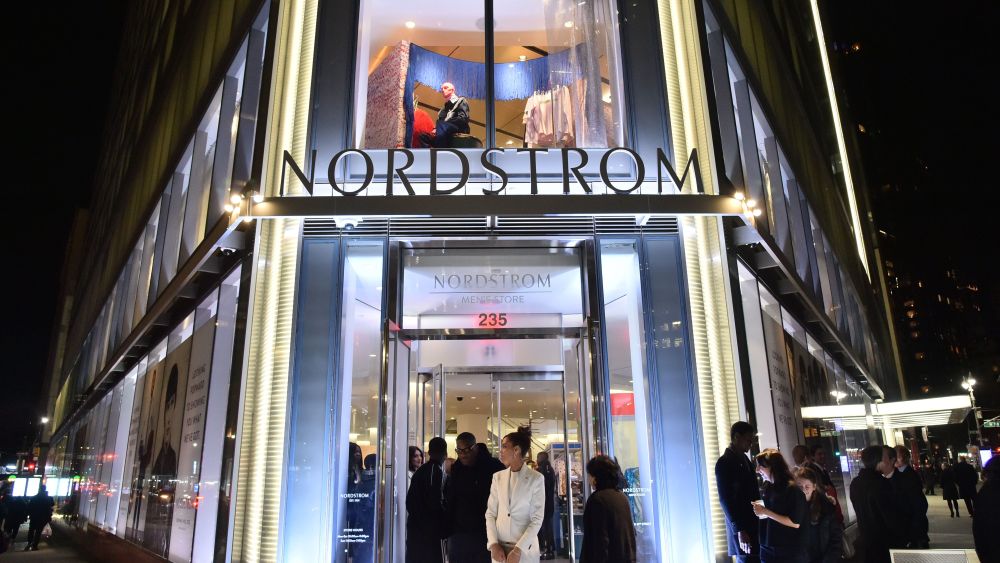
Next year the focus will continue to be on L.A. before moving on in 2020 to focus on New York. Manhattan is where Nordstrom is set to open its women’s tower near Columbus Circle in 2019, which will join the men’s store that bowed in that neighborhood earlier this year. The New York market is eventually expected to grow to more than $700 million in full-price sales, Worzel said.
Nordstrom’s off-price channel, the largest source of new customers for the company, lost a bit of its footing in the recently ended quarter after outperforming competitors in 20 of the last 21 quarters. The decline was largely due to misses in the women’s apparel buys that dragged the numbers down, copresident Blake Nordstrom explained before confirming to investors the company’s correction.
“We don’t view this as something out of our control,” he said. “The ball’s in our court. We need to execute better.”
The company earlier in the day had updated investors on its outlook through 2022, which indicated Nordstrom’s focus on execution.
“This is not an outline for survival,” copresident Pete Nordstrom said as he wrapped the day. “We don’t want to be in that reaction business. We want to get in front of it….What we really have here is a blueprint for success.”
The company said it expects net sales of $15.2 billion to $15.4 billion for fiscal year 2018, with same-store sales expected to grow 0.5 percent to 1.5 percent. Earnings before interest, taxes, depreciation and amortization for the same 12-month period are expected to be in the range of $895 million to $940 million.
The outlook through 2022 appears to seize on the current year’s growth with net sales projected to rise 3 percent to 4 percent on average per year on an annualized basis between 2017 and 2022.
“We believe that Nordstrom is defining the future of retail,” Pete said. “Our ambition is to be the best fashion retailer in a digital world and we have plans to get there.”