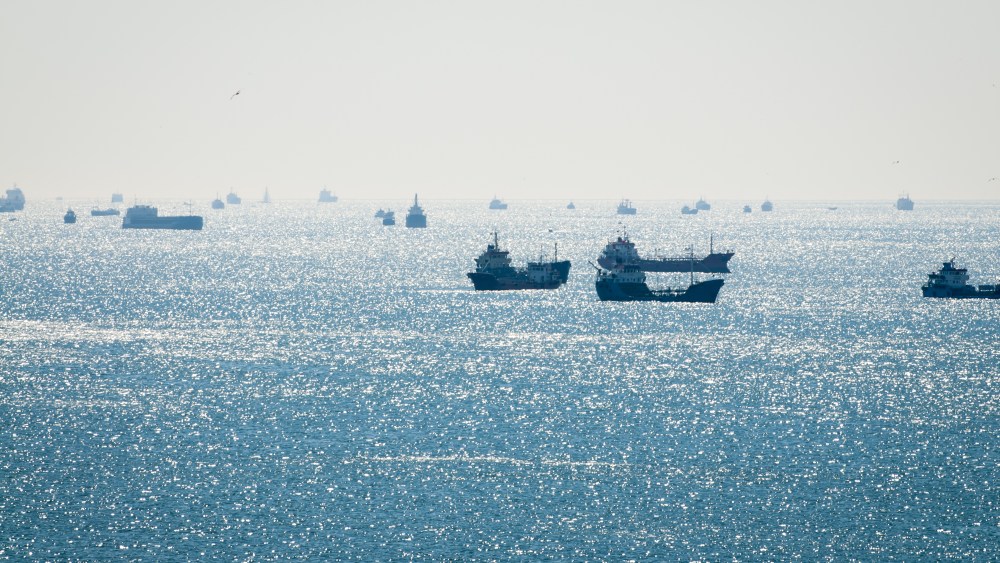
As the number of container ships waiting outside of the ports of Los Angeles and Long Beach reaches 100, the impact on the holiday shopping season includes out-of-stocks and delayed online orders as well as empty shelves. Some of the larger retailers are working on alternatives, but analysts don’t see it helping until well after Black Friday.
Michael Haswell, vice president of partnerships at Narvar, expects merchants to see an uptick in returns as well as a stretching out of the holiday shopping season. Here, Haswell discusses the full impact of “containergeddon.”
WWD: What is “containergeddon” and how is it challenging retailers and brands?
Michael Haswell: Containergeddon is the logical outcome of factory closures in Asia during the height of the pandemic. As those factories came back online and increased production to make up for lost time, it created a logjam of container ships at U.S. ports, particularly in Los Angeles and Long Beach. The downstream impact on retailers and brands is that product won’t make it on shelves in time for Black Friday — some estimate as much as 25 percent of the products currently stuck on container ships won’t make it in time.
Related Articles
WWD: What are some of the strategies companies can deploy in the face of these disruptions?
You May Also Like
M.H.: For those retailers that can’t charter their own container ships, as Walmart, Target and The Home Depot have done, the focus ought to be on proactive communication and thoughtful merchandising of available assortment.
Our research indicates that 98 percent of consumers feel better about a retailer that notifies them immediately of potential delivery delays, so proactive communication will be critical. And we expect retailers to encourage consumers to trade up, down and across into products that are the “next best thing” to the unavailable product; presenting consumers with options will be critical.

WWD: How are the e-comm fulfillment and the last mile being impacted?
M.H.: Containergeddon impacts both e-commerce and store inventory, although omnichannel retailers can hedge against e-commerce constraints by shipping available inventory from store; Sephora, in fact, just announced same-day delivery of online orders. And unlike last year’s “shipageddon,” where a dramatic increase in e-commerce spending threatened to outstrip the last-mile capacity of carriers, this year’s constraints are in the first mile — getting products from the manufacturer to the retailer by container ship, rail, etc.
So, it could actually have a positive impact on last-mile delivery, by smoothing demand for carrier capacity over an extended holiday shopping season.
WWD: And what is the impact on returns?
M.H.: As consumers trade into the “next best thing” to what they originally wanted due to limited inventory, we could see increased returns and exchanges as a result of these supply chain disruptions. A clearly communicated return policy is already an industry best practice, so we expect more retailers to surface their return policies as part of the shopping journey.
We also expect some degree of empathy and leniency from retailers this holiday, such as extended return windows.
WWD: Are there any other solutions or strategies that merchants and brands need to consider?
M.H.: Retailers should lean into their returns experience and sustainability initiatives. First, retailers should invest in their returns experience as much as they have in their shopping experience. Our research shows that 96 percent of consumers who are satisfied with a retailer’s return process will purchase again from that retailer.
Second, retailers should embrace sustainability initiatives for products that are no longer eligible for return, such as re-commerce and upcycling programs. Worn Wear from Patagonia and SecondHand from Levi’s are great examples of brands living their values and extending the life of their products.
Although it should be offered judiciously, implementing a “keep-the-item” policy to provide a refund without requiring that the product be returned can also reduce the strain on the mail-stream and the environment. Our research shows that this works best with repeat customers, who feel trusted and relieved that they save time and effort — as well as the environment.