
How does a basics brand remain fresh?
For the past few years, Alternative, a sustainable men’s and women’s brand known for its cozy T-shirts, has been on a quest to answer this question and looked to fashion forward product as a solution. But now the company, which celebrates its 20th anniversary this year, is getting back to its roots.
It has closed down its Los Angeles design studio and will centralize all of its operations to its headquarters in Atlanta. The brand has also brought on a new design director, Megan Huntz, to lead its more focused vision for product and brought back Paige Cannon Fuller as vice president of marketing. Fuller had previously worked with the brand for 10 years.
Related Articles
“We started spending too much of our time and effort in the fashion arena, but customers continued to buy more of our basics,” said Evan Toporek, Alternative’s chief executive officer, who added that 60 to 70 percent of the brand’s development efforts were creating only 15 percent of its sales. “This big move is focused on owning the basics market.”
You May Also Like
That’s no easy feat as it’s a crowded market that’s become even more congested with established brands hopping on the ath-leisure bandwagon and newer brands such as AYR and Everlane carving out a niche for themselves. Alternative, which will maintain showrooms in New York City and Los Angeles, sits on the contemporary end of this market alongside brands including Scoop and James Perse. How does it stand out? According to Toporek, customers look to Alternative for its quality and non-fast fashion ethos.
The move also marks Alternative’s commitment to supporting Atlanta’s creative community and although Toporek, a Georgia Tech alum, was initially nervous about sourcing fashion talent from the city, he was pleasantly surprised by the overwhelming amount of design résumés he received after posting job ads.
Huntz, who is originally from Atlanta, replaces Orondava Mumford, who joined the Alternative team from Levi’s in 2013. Huntz told WWD that fashion will still play a role in the line, but each piece will be more purposeful.
“I think it’s just important to look at the assortment as a consolidated offering and not just a collection of fashion basics,” said Huntz, who previously held positions at Lazzari and Max Mara before starting her own contemporary clothing line in Barcelona. “It’s important that the pieces speak directly to our customer and provide them with solutions that fit their lifestyle.”
Move, the women’s active line Alternative introduced in 2014, will still be a part of the collection. Huntz said she will also continue to reference the brand’s textile background — Alternative designs its own fabrics — and keep innovating within that space.
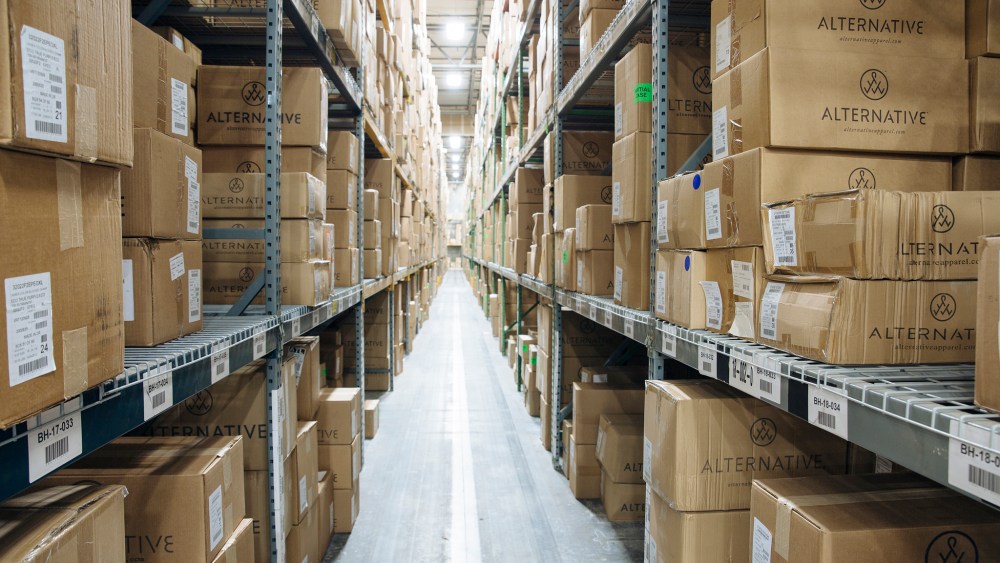
In addition to consolidating the apparel collection and the staff — according to Toporek, Alternative’s headcount dropped by around 30 — the brand is also focused on speeding up its supply chain and moving more production to domestic sources. Alternative distributes everything from its Atlanta warehouse, which recently expanded to 150,000 square feet, and retailers are now able to choose same-day shipping on a larger number of items and get a real time view of Alternative’s inventory.
“We decided to invest more in being a service company in addition to offering great products,” said Toporek.
On the bricks-and-mortar front, Alternative currently has stores in New York, Los Angeles, Venice and San Francisco. Toporek told WWD that retail openings aren’t a key priority for the brand, which recently relaunched its e-commerce site.
Toporek declined to offer any growth or sales numbers, but said he’s already seeing positive results from the new assortment. He cited a 50 percent increase from last year in business written at the Project trade show in Las Vegas this past August. When asked if he would shift the product again when the consumer’s mood changes, Toporek said no.
“For us, basics will always be the core strategy,” said Toporek. “We’ve tried to be something that we weren’t and I don’t think you can succeed that way.”