As the Gulf solidifies its position as the world’s biggest growth corridor for luxury, Majid Al Futtaim is placing a $1.36 billion bet on the future of experiential retail. The transformation of Mall of the Emirates, which celebrates its 20th anniversary this year, signals a bold reinvestment into brick-and-mortar retail and a formula for how shopping destinations are adapting to meet the demands of increasingly sophisticated consumers.
The expansion comes at a pivotal moment for the iconic mall, which welcomed more than 50 million visitors in 2024, with tourist contributions now accounting for 25 to 26 percent of traffic.
Related Articles
The sweeping vision will expand the mall’s footprint with 100 new stores while introducing game-changing amenities: Seven Wellness Club, a first-of-its-kind, 25,000-square-foot wellness center focused on longevity and fitness; the New Covent Garden cultural hub featuring a 600-seat theater developed in partnership with Dubai Performing Arts Academy and London’s Pineapple Dance Studios, and a dynamic indoor-outdoor precinct anchored by the mall’s first outdoor F&B courtyard, transforming into a lush green oasis during cooler months.
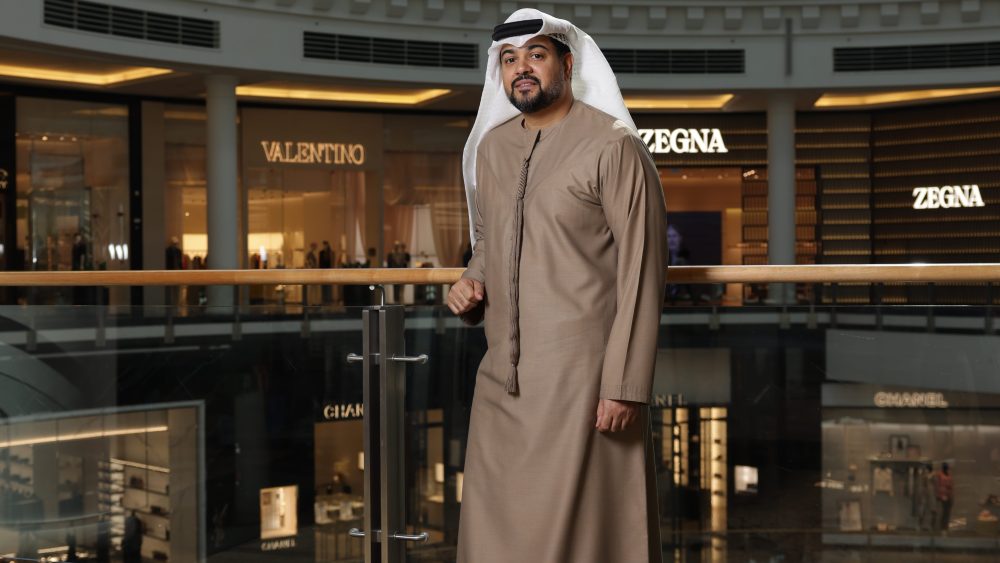
In an interview with WWD, Khalifa Bin Braik, chief executive officer of Majid Al Futtaim Asset Management, discusses the strategic thinking behind the transformation as well as the company’s ambitious plans and where the future of retail lies.
You May Also Like
WWD: What’s driving this billion-dollar investment in Mall of the Emirates?
Khalifa Bin Braik: We’re letting go of the ordinary and building the extraordinary to stay relevant for consumers today and attract the consumers of tomorrow. What we’ve proven is that the mall is not just a place to shop or transact — it’s an ecosystem that offers visitors a multitude of experiences around luxury shopping. The transformation will increase our luxury footprint significantly. We’ve already increased luxury GLA by 20 percent in recent years, and this expansion will allow for 100 new stores, elevated VIC services, and more customer engagement through pop-ups and exclusive events.
WWD: Wellness is a major component of this expansion. Tell us about Seven Wellness Club.
K.B.B.: Wellness has become a big trend, and we’re responding to that. Seven Wellness Club is a first-of-its-kind, 25,000-square-foot wellness center within the Kempinski Mall of the Emirates, offering premium fitness, spa, recovery experiences, and a focus on longevity and nutrition. It’s about recognizing that today’s luxury consumer is looking for holistic experiences that support their lifestyle beyond just shopping.

WWD: You’re also introducing the New Covent Garden cultural hub. How does culture fit into the retail equation?
K.B.B.: The New Covent Garden, developed in partnership with Dubai Performing Arts Academy and London’s Pineapple Dance Studios, will feature a 600-seat theater and rehearsal spaces. It establishes the mall as a destination for arts and performance, opening later this year. We’re creating a platform that allows our brand tenants and consumers to meaningfully connect through culture, entertainment, and shared experiences.
WWD: The indoor-outdoor precinct is another key feature. Can you share more about those plans?
K.B.B.: We’re introducing the mall’s first outdoor F&B courtyard, slated to debut in early 2027. It will transform into a lush green oasis during cooler months, bringing a dynamic mix of fast-casual dining and interactive entertainment. It’s about blurring the lines between indoor and outdoor, creating spaces that respond to Dubai’s climate while offering something completely new to our visitors.
WWD: Innovation is at the heart of your longevity as a mall operator. Can you share examples of how you apply that core principle across your business?
K.B.B.: We believe that innovation isn’t just about what’s new, it’s about what’s meaningful. And Mall of the Emirates continues to set the standard for what a modern, sustainable, and experience-driven retail destination can be. We’ve integrated solar panels across the roof and parking to reduce our carbon footprint, and we’ve implemented advanced systems to optimize water and energy use throughout the mall. These efforts are part of a broader strategy to lead the region in green retail development.
Another prime example in terms of experience is the recent launch of a first-of-its-kind IMAX with theater pods at VOX Cinemas. This innovative IMAX experience with immersive technology, luxurious seating, and enhanced visual and sound quality redefines the way audiences enjoy films. It’s about continuing to surprise and delight in ways that reflect how people live now.
Ultimately, the innovation I’m most proud of is our ability to stay true to the founder’s vision while evolving with the times. We’re not just building malls — we’re building moments, memories and meaningful connections across generations, driven by purpose, powered by people, and guided by the same bold spirit that started it all.
WWD: What advice do you have for retailers and operators struggling with driving traffic to physical stores?
K.B.B.: The traditional shopping experience is not working anymore. You know, the “build it and people are going to come” is no longer the way to do things, especially in our part of the world. Consumers or customers are looking for lifestyle destinations, that entire mixed use of lifestyle destination, that’s not only a place where one would want to shop, but where they connect with friends, see the latest movie, seek a wellness treatment, go for dinner. All that in one ecosystem, that’s they key. In my humble view, the industry needs to not dictate the trends, but truly and deeply understand what consumers want, their expectations, behaviors and ultimately, their desires.
WWD: With the Gulf becoming the biggest growth corridor for luxury globally, how is Majid Al Futtaim positioning itself?
K.B.B.: The transformation reinforces our position as a pioneer in the region’s retail and leisure landscape. For luxury brands already in the mall —one of the world’s highest-performing retail destinations — the expansion promises more opportunities to connect with an affluent consumer base. We’re creating platforms that allow brands to enter the market with confidence, whether that’s through Mall of the Emirates’ expanded luxury offering or through flagship opportunities at our new destinations like Ghaf Woods. This is our vote of confidence in the future of physical retail and the Gulf’s continued growth as a luxury powerhouse.
WWD: Majid Al Futtaim operates across the broader region, including Egypt. How is Mall of Egypt performing?
K.B.B.: Mall of Egypt has been a tremendous success since we opened it in 2017. It was our first expansion beyond the GCC, and it quickly became one of North Africa’s largest shopping destinations. The Egyptian market has shown incredible appetite for world-class retail experiences, and Mall of Egypt has become a blueprint for how we bring international luxury brands to emerging markets. The response from both consumers and brand partners has validated our strategy of expanding beyond Dubai while maintaining the same standards of excellence.
WWD: What about Saudi Arabia? The Kingdom is investing heavily in retail and entertainment infrastructure.
K.B.B.: Saudi Arabia represents one of the most exciting opportunities in the region. The Kingdom’s Vision 2030 initiatives are transforming the retail landscape, and we’re seeing unprecedented consumer spending power and appetite for premium experiences. The Saudi market is evolving rapidly —consumers are sophisticated, well-traveled, and demanding the same caliber of retail and entertainment offerings they experience globally. We’re continuously evaluating opportunities that align with our commitment to creating great moments and the fundamentals there are compelling. Saudi Arabia will undoubtedly play a significant role in the future of luxury retail in the Gulf.
WWD: What makes this region different from other emerging luxury markets?
K.B.B.: What really sets the GCC apart from other emerging luxury markets is its resilience and confidence. Even when global conditions fluctuate, consumer sentiment here remains strong. People continue to spend, and the appetite for luxury experiences doesn’t fade. And most importantly, physical retail remains exceptionally relevant. The region is also attracting a growing number of high-net-worth individuals. We’re seeing around a 20 percent year-on-year increase in HNWIs relocating to the GCC, drawn by the quality of life, safety, and favorable tax environment. And unlike many other emerging markets, governments here are deliberately building the foundations for long-term growth through ambitious strategies like Saudi Vision 2030 and We the UAE 2031. That level of commitment creates stability and confidence for global luxury brands to invest and expand.