
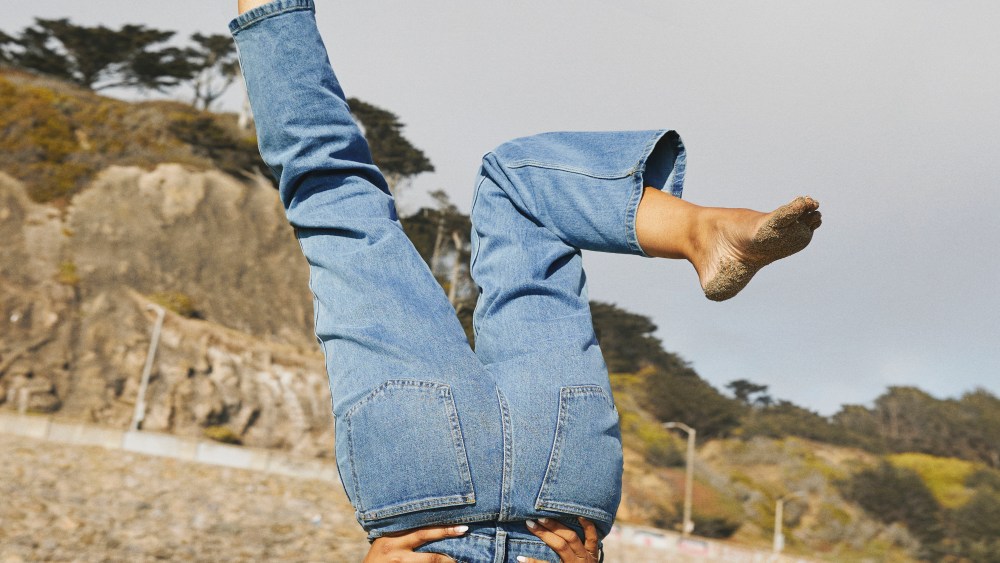
Researchers at market intelligence platform provider Edited have declared the resurgence of denim in its most recent Denim Market & Product Trends Report. The company said denim is now “offsetting a sweatpants-fueled 2020” and noted that combined with a global market value expected to reach $26 billion by 2026, “denim is back and bigger than ever.”
“After an entire year of dominant loungewear products, denim’s having its moment again with events, offices and schools reopening back up,” the authors of the report said. “A defining trend over the past few months, jeans have officially usurped sweatpants, with the latter experiencing higher discounts and lower investments. However, comfort will continue to dictate future denim trends as relaxed, slouchy silhouettes flood the runway and socials.”
Related Articles
Denim is now garnering 17 percent of sell-throughs in the U.S. and the U.K. women’s bottoms market, which compares to 12 percent for sweatpants. “A defining trend over the past few months, jeans have officially usurped sweatpants, with the latter experiencing higher discounts and lower investments,” Edited said in the report. “However, comfort will continue to dictate future denim trends as relaxed, slouchy silhouettes flood the runway and socials.”
You May Also Like
The report also found that while the skinny jean continue to be a consumer staple, “it’s falling out of favor with younger consumers. Instead, straight silhouettes have emerged as the new go-to, attached to 20 percent of recent sellouts.”
There’s also demand for more sustainable denim, and Edited said retailers “have been making strides to prioritize recycled responsible and regenerated denim,” noting that market-wide, “39 percent of denim assortments have had a sustainable transformation, up from 16 percent in 2019.”
But the increase in more sustainable offerings is not ubiquitous across the market. “The size-inclusive market is an area where sustainability in denim is lagging,” Edited stated in the report. “Only 9 percent of plus-size jeans currently available use alternatives to conventional cotton and 3 percent of styles are described as ‘recycled.'”
The firm said retailers and brands need to innovate “with plant-based dyes and resource-saving alternatives. This can also justify higher price points, in line with inflation on jeans.”