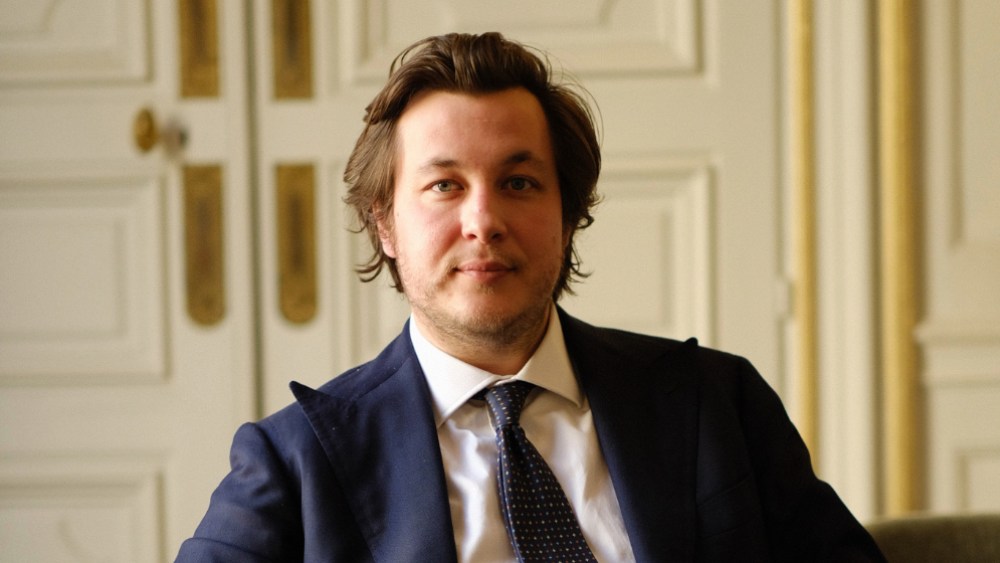
PARIS — At a time of unprecedented creative upheaval at European fashion houses, it can feel like designers are the ultimate expendable commodity, with some tenures lasting as little as one season.
There’s never been a greater need for a good lawyer.
Hedi Slimane, Chemena Kamali, Luke and Lucie Meier, Yang Li, Serge Ruffieux and Camille Micelli all have the same man on speed-dial: Léon Del Forno, a partner at leading Paris law firm Temime.
You May Also Like
Related Articles
Though he specializes in criminal law, Del Forno first appeared on the industry’s radar nine years ago when he represented Slimane in his drawn-out lawsuit against his former employer Kering following the designer’s departure from Saint Laurent.
It helped to forge his belief that for a happy fashion marriage, nothing beats a good prenup.
Despite the uncertainty roiling the luxury sector, Del Forno advises designers not to be shy when it comes to negotiating a pay package. “I think designers are right to be demanding,” he said. “At the end of the day, it’s their performance that’s being judged.”
While he describes his job as playing the “bad cop” in contract negotiations, the 36-year-old attorney appears to wield the proverbial iron fist in a velvet glove. Affable and exceedingly polite, he works out of a large art-filled office overlooking the Tuileries gardens in Paris, and is the soul of discretion.
In an exclusive interview with WWD, Del Forno explained how the legal landscape is shifting, with shorter and more complex contracts becoming the norm, and shared some tips for designers on how to come out on top when negotiating for a new job.
The conversation has been edited and condensed.
WWD: Given the current creative churn, has fashion design become a high-risk occupation?
Leon Del Forno: Yes, considering there are fewer examples of creative directors with long tenures, and brands and groups now have fewer scruples about changing creative directors.
Fewer artistic directors now have full-time employment contracts, so freelancing is the norm.
Either brands replace them quickly because it’s not working out, or they anticipate public fatigue, a bit like in politics.
You sometimes see panic reactions.
Sometimes the owners are listed groups so there are stakeholders. You have to reassure markets and investors, and changing the artistic director is a way to show you’re doing something.
Paradoxically, it shows that artistic directors matter because if they didn’t, there would be no reason to replace them.
This whole game of designer musical chairs means that designers are really at the center of the conversation.

WWD: Is it fair to place that much responsibility on the shoulders of artistic directors?
L.D.F.: The media, in particular, often focuses on artistic directors at the expense of management. In a way, it’s the price of fame, because artistic directors are in the spotlight. And when it works out, they often get the lion’s share of the credit.
The reality is that neither one nor the other is responsible.
From a legal standpoint, it’s a really fascinating exercise because you need an osmosis between three parties: the owners, the managers and the designer.
That’s why you have to lay the bases for a fair balance of power where things are clearly spelled out and each person’s set of responsibilities is precisely defined.
I’m in favor of designers, insofar as possible, having a holistic 360-degree approach, and taking an interest in the business side.
That can lead to friction and that’s why governance is absolutely key in contracts, with principles of cooperation and agreement, and depending on the area of expertise, what I call a final cut.
Bad governance can ruin a project. You can have money, resources, good ideas and the right people, but if the responsibilities are not clearly defined, it can all end in tears. So it’s important to take the time to negotiate these contracts, which are increasingly complex, dense, thorough and far-sighted.
WWD: Have contract negotiations become more complicated in the last 10 years?
L.D.F.: Yes, contracts have become more sophisticated, more complex.
I’m also seeing that when times are tough, contract negotiations are more difficult.
The potential scope is infinite. Right now we’re talking about contracts that are several dozen pages long. Maybe one day, they’ll be 200 or 300 pages long because there are so many aspects to take into account.
WWD: Is that why some designer handovers take such a long time?
L.D.F.: Contracts are sticky in the sense that you often have a notice period in addition to a non-compete clause, meaning that moving between jobs takes time, doubly so when the person you’re replacing also has a long notice period. Several times I’ve negotiated contracts [that] only came into effect more than a year later.
In the last 10 years I’ve witnessed a slight shortening of contracts and increasingly, they come with unilateral termination clauses that can be invoked by either party. Often you will see a midterm exit right, where you establish a contract for three or four years but you determine that after two years, either side can decide to end the contract. We’re also seeing shorter non-compete clauses of six or nine months, rather than 12. And we’re also seeing that those non-compete clauses are not necessarily enforced.
WWD: What’s your advice for young designers?
L.D.F.: The most talented designers, certainly the successful ones I’ve had the privilege of representing, are people who are involved way beyond the purely creative aspect of the job.
So my first piece of advice to young designers is to have that thirst to understand the business as a whole.
For people fresh out of school, my advice as a lawyer is, don’t be scared to seek counsel but above all, don’t be scared to ask for things.
If you’re already looking at a contract, the company is not talking to a bunch of other people. It means that either you’ve already been chosen, or you’re close to clinching the job, so you should not be afraid to set your terms because it shows you’re serious. It inspires respect.
That doesn’t mean you’ll get everything you want, but you’re well-positioned.
The advantage of having a lawyer is that they know what to watch out for.
But above all it means you don’t have to do everything yourself. It’s the basic good cop, bad cop principle: it means someone else can go to bat on your behalf.
There are lots of potential grounds for disagreement and it’s best to plan in advance how they will be handled.
It’s like a prenup. Often at the beginning of a relationship, it’s the honeymoon period. You think everything will be perfect.
Just because you’re madly in love doesn’t mean that one day, in five, 10, 15 years, you won’t start fighting over something and it’s best to agree how to handle that ahead of time because that will be the wrong time to figure it out.
WWD: Is there any upside for designers to the current instability?
L.D.F.: I think short contracts are better for designers.
If they’re talented and they believe in themselves, a short contract will give them more leverage.
Sometimes young designers, when they’re starting out, think [a longer contract] is great because it gives them visibility over how much they’ll be earning over the next five years. But even from a financial perspective, it freezes their pay package for the duration of the contract, without possibility of revision.
Sometimes it doesn’t work out and it’s not really your fault, but you’re the one shouldering the blame.
Don’t hesitate to pull the plug if it’s not working and move on.
WWD: What is the impact of social networks? Rumor-mongering is rife, with anyone and everyone weighing in on contract negotiations that are supposed to be confidential. Do you take legal action?
L.D.F.: For it to be punishable under French law, you have to prove that spreading false information either infringes a person’s privacy or that it denigrates or defames them; in other words, that it damages their honor or their reputation. It’s not always easy to characterize, and designers rarely want to engage in open conflict. However, these things are monitored and depending on who it is and how it’s done, there can be a response.
Some blogs have made it their bread-and-butter. Fortunately, they are seen for what they are, so they don’t have a ton of credibility.
Clients or houses are more worried about the fact that some blogs or social media accounts can appear to be manipulated by competitors or by malicious individuals to either spread false information or leave negative comments.
The positive aspect [of social media] for designers is that it gives them a platform of their own. It provides them an opportunity to express themselves, own their story and community, and set the record straight.
You rarely see scores being settled, but I think for everyone involved, knowing that they can speak out and there are tens or hundreds of thousands, or perhaps millions, of people following them, keeps everyone — journalists, houses and competitors — at a respectful distance.
WWD: Have all these precautions reduced the likelihood of lawsuits?
L.D.F.: Experience shows that even the best laid plans can go awry.
Lawsuits are not over, but they’ve been fairly rare in the last 10 years and I don’t think that will change going forward.
In general, this industry is not very fond of litigation. It’s an environment of repeat players. Artistic directors are generally looking for their next job, so suing their previous employer is not always good for them and doesn’t allow them to focus on their next project. The same is true for houses. It’s an image-based industry so they would rather come across as patrons of creativity and freedom of expression than be bogged down in lawsuits.
That’s another reason why it’s important to anticipate things and make sure contracts are not ambiguous and contain clear provisions to avoid conflicts, especially at the end of the contract when the honeymoon is over and there can be bad blood.