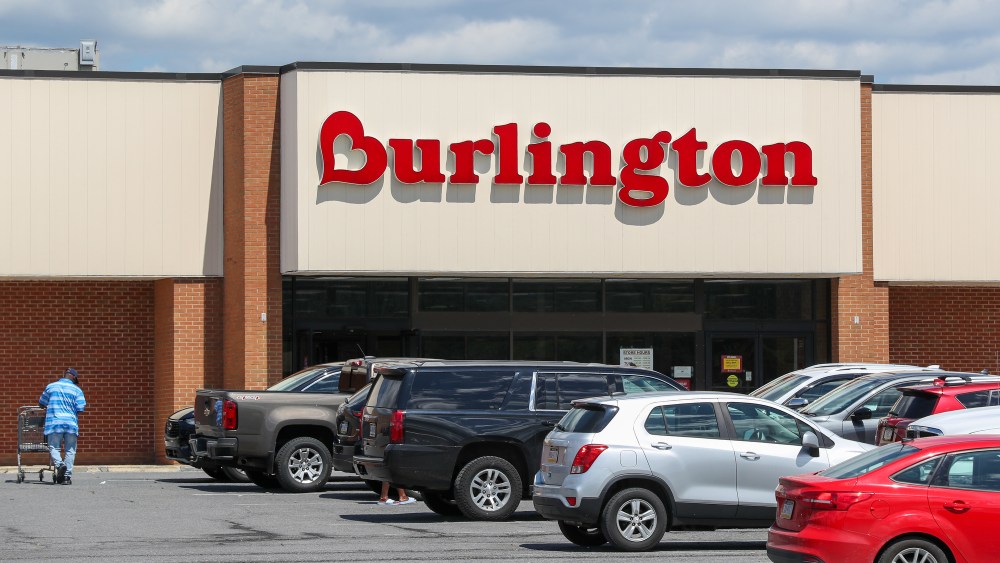
Monroe Milstein, a pioneer in off-price retailing as the cofounder of Burlington Coat Factory died Friday in Bal Harbour, Fla., where he lived.
The former chairman, chief executive officer and president of Burlington Coat, which now operates as Burlington Stores, was 98.
Milstein’s career began in 1946 when he joined his father’s wholesale business, Amherst Fashions, launched in 1924. The business sold coats and suits to specialty and department stores in New England and the Midwest.
Related Articles
To earn some extra money, the younger Milstein sold merchandise on Saturdays at a discount from their showroom in the garment center. It did well, so in 1972, to get into retailing in a bigger way, Milstein along with his wife, Henrietta, bought their first property, a clothing factory in Burlington, N.J., where the company is still headquartered. It became their first store.
You May Also Like
In 1982, Milstein discontinued the wholesaling business he inherited to focus on off-price retailing. He took the company public in 1983, when the business had only 32 stores, giving it the wherewithal to proceed with an aggressive retail expansion. In 2006, the company was purchased by Bain Capital for $2.06 billion and the Milstein family sold its shares for $1.3 billion. Monroe left the business, though two of his sons, Andrew and Stephen continued in executive positions for a while. In 2013, the company went public again.
As the years passed, Burlington’s offerings expanded from just outerwear into sportswear, accessories, footwear, home products, beauty and other categories. It was Milstein’s wife who not only encouraged her husband to purchase the Burlington property, but kickstarted Burlington’s evolution into a multicategory retailer, initially by launching a childrenswear department. She died in 2001.
It took some time for shoppers to catch onto the fact that Burlington no longer sold just coats, but eventually they did as Burlington’s ads became more image-oriented than price-based, with tag lines such as, “We’re more than great coats.” The off-pricer doubled down on the effort by changing its name to Burlington Stores in 2009.
While several other off-pricers have disappeared in the last couple of decades — Loehmann’s, Daffy’s and Filene’s Basement among others — Burlington was able to survive and thrive through much of its history by steadily rolling out stores, building volume and vendor clout, and through the hands-on, savvy dealmaking approach of Milstein who had a rare ability for knowing the right price for the right merchandise. As the story goes, when Milstein signed a lease for a store in Pine Brook, N.J., on the site of a former furniture store, he needed the walls knocked down and received an estimate from a demolition company that he thought was too high. Instead, he approached a crew that happened to be outside working on the highway on a hot summer day, and they agreed to knock down the walls for the price of two cases of beer.
His son Andrew, who became a senior executive in the company, once explained to WWD how hands on his father had been. “Whenever my dad goes away on vacation, he always shops our stores,” Andrew said. “He talks to the people in the stores, and if they are out of something, the buyer knows about it in minutes. It keeps them on their toes.”

Milstein was able to overcome the pressures that department stores put on vendors to not sell off-price to Burlington with his Seventh Avenue street smarts, wholesale background, and by getting many outerwear vendors to consider Burlington as crucial to their business. He formed a coalition in 1988 to encourage the government to enforce antitrust laws preventing anticompetitive practices involving retailers fixing prices to hurt their off-price rivals. Milstein also served as president of the board of trustees of the Nassau Library System.
“We began as manufacturers, so we know how the vendors operate,” Milstein told WWD in the interview with his son. “My training as a wholesaler lies in the way to get the best reorder numbers. Most outlets would take things they could not sell elsewhere, whether it was because they came in late or they were damaged, or made wrong. We wanted to get the best, and we found that did much better.”
Aside from securing merchandise that vendors couldn’t sell through full-price retailers, Milstein had manufacturers produce merchandise directly for his off-price chain, which the company continues to do. Burlington would give manufacturers big orders in what would normally be downtime at their factories. He also maintained an open-door vendor policy where every Tuesday vendors could show their wares to a buyer and quickly move merchandise not sold to full-price retailers.
Ultimately, Burlington became the third-largest off-price chain in the country, behind volume leader TJX Cos. (operator of the T.J. Maxx and Marshalls) and Ross Stores. Burlington has a reputation of appealing to a lower income demographic than its competitors. Currently, Burlington has approximately 1,100 off-price stores nationwide, generating $10.6 billion in volume over the last 12 months.
Milstein graduated from New York University with a bachelor of science degree in business administration. Milstein was also once president of the board of trustees of the Nassau Library System.
“No matter what people say about the garment center, it really is a wonderful industry,” Milstein told WWD. “I think it is a unique industry. There aren’t too many industries anymore that have people running family-owned operations, real entrepreneurs.”