
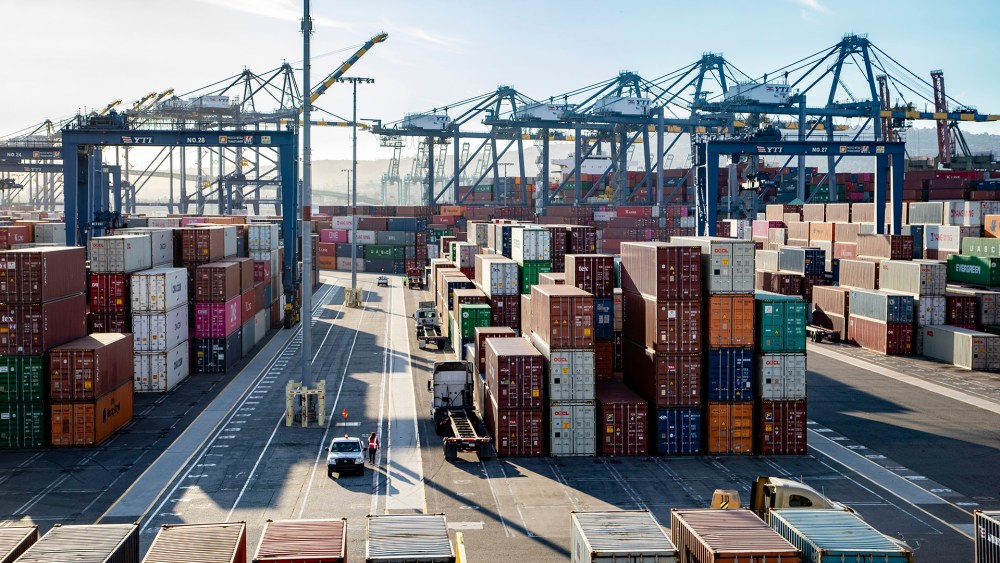
Normally, August and September are some of the busiest months at the major California ports for bringing in cargo for the holiday season.
But for the second month in a row, import cargo volumes at the ports of Los Angeles, Long Beach and Oakland saw sizable drops from last year.
“Last month we announced that August cargo slowed down following 25 months of record-breaking port volume. And in September, we saw our second month of double-digit declines nearly across the board,” said Gene Seroka, the executive director of the Port of Los Angeles, in his monthly port report released on Wednesday.
Related Articles
Total cargo container volume in September at the port, the largest in the U.S., fell 21 percent from the same month last year. Imports were down by 26.6 percent.
You May Also Like
The Port of Long Beach, located next door to the Port of Los Angeles, saw its cargo container volume off by 0.9 percent in September over last year, with imports dipping 7.4 percent.
“Consumers and retailers are concerned about inflation, leading to warehouses filled with inventory and fewer product orders from Asia,” said Port of Long Beach executive director Mario Cordero.
At the Port of Oakland, cargo container traffic was down 8 percent in August over the same month last year, with imports off by 10.2 percent, according to the most recent statistics. September volumes will be reported later this month.
The decline in imports reflects a few things — retailers worried about West Coast port logjams brought their holiday goods in early, consumers have started to pull back on purchases and shippers are diverting more cargo to East Coast and Gulf ports because of a West Coast longshore workers contract that expired July 1 and is still being negotiated.
“A great deal of holiday season goods already arrived. Traditionally, September was always a high-volume month for end-of-the-year products. Our peak season months this year were June and July,” Seroka said.
“The second major factor contributing to the declines here and along the West Coast is the concern over the dockworkers’ labor contract negotiations,” he explained. “Shippers are routing more cargo through the East and Gulf coasts. That is likely to continue until the West Coast labor contract is in place, and that can’t happen soon enough.”
The contract between 22,000 dockworkers at 29 West Coast ports and the Pacific Maritime Association, which represents 70 companies and terminal operators that employ them, is still being negotiated. With no contract extension, there is always the threat of a work slowdown or workers’ strike.
If that wasn’t worry enough, a labor contract with 115,000 railroad workers across the country has been negotiated, but only six of the 12 railroad unions have ratified it.
The Brotherhood of Maintenance of Way Employees Division, which builds and maintains the railroads’ infrastructure, voted against the proposed contract. Now the union is giving rail companies until Nov. 19 to renegotiate, setting up again the possibility of a rail strike.
The decline in cargo container volumes has a silver lining. Importers are having an easier time getting their goods off the docks and into warehouses. At the Port of Los Angeles, the average dwell time for a cargo container being collected by a truck was 3.1 days, down from 8.37 days last November. Cargo containers waiting to be loaded onto a train were idling for 7.3 days, down from 11.8 days in June 2021.