
U.S. retail stocks stood out with solid gains today as broad economic fears and worries over a sharp sell off in Japan sent the broader market lower.
The S&P 500 Retailing Industry Group gained 0.5 percent to 1,072.63 as the Dow Jones Industrial Average slipped 0.1 percent to 16,014.38.
Among the fashion industry gainers were Delta Apparel Inc., up 14.6 percent to $13.87 after reporting solid quarterly earnings; Avon Products Inc., 3.6 percent to $3.43; Coty Inc., 2.7 percent to $27.41, and TJX Cos. Inc., 2.5 percent to $69.65.
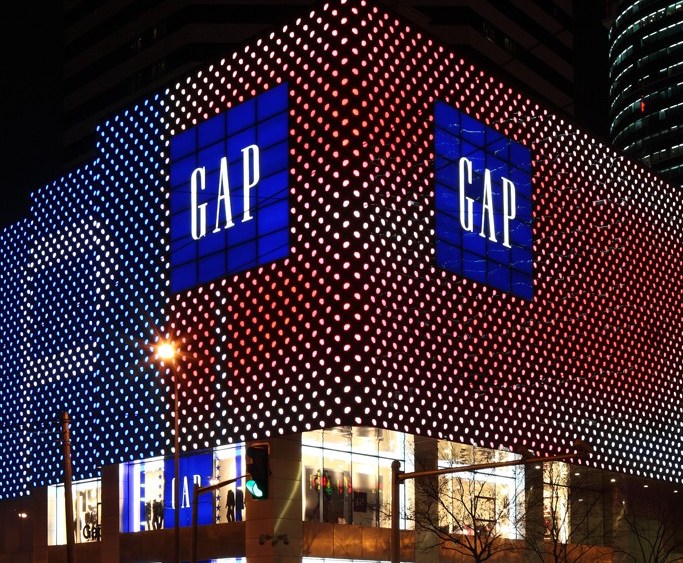
That strength was far from universal, though. Sears Holdings Corp. stock tanked 8.9 percent to $15.25 after the company said it would accelerate its store closing program and Gap Inc. fell 3 percent to $23.27 after steep sales declines.
Related Articles
Analysts are increasingly worrying over a recession.
You May Also Like
Cowen and Co.’s Oliver Chen issued a note to clients today titled, “Are We Going Into a Recession? If So, Consider These Retail Stocks.”
He was noncommittal on the R-word, noting, “We hope we’re not entering a recession.” But if an economic contraction comes, he suggested that, “stocks that appeal to the low-end consumer and have minimal global exposure appear well-suited to weather an economic downturn.”
The same is not true higher up the price scale.
“We note stock price movements of luxury stocks that appeal to the high-end consumer, significant exposure to apparel, and/or have greater international revenue exposure tend to underperform the S&P 500 the most during periods of economic slowdown,” he said.
There were plenty of luxury names taking a hit in Europe, where markets were in full retreat. The decliners included Tod’s SpA, off 5.4 percent to 66.15 euros, or $74.71; Brunello Cucinelli, 5.4 percent to 13.60 euros, or $15.36; Hermès International, 3.2 percent to 297.95 euros, or $336.51, and LVMH Moët Hennessy Louis Vuitton, 2.6 percent to 147.75 euros, or $166.87.
Investors have been on edge for weeks, trying to calculate the importance of the rock bottom oil market, skittish consumers and fears of a recession.
The equation become all the more complicated today after the Nikkei 225 fell 5.4 percent in Tokyo, with traders worrying over negative yields in the benchmark 10-year Japanese government bond. That, in effect, has investors paying to loan money to the government.