
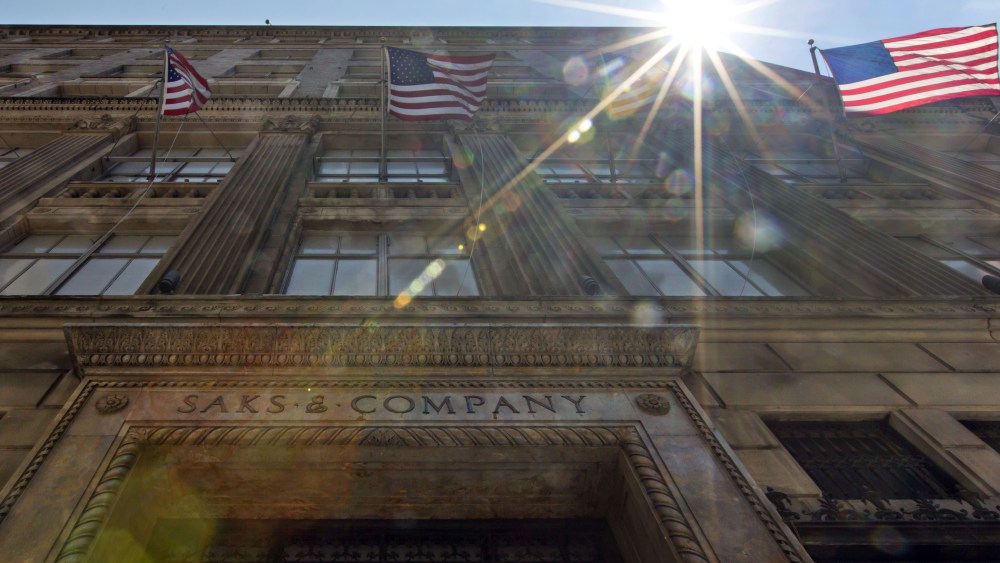
Moody’s Investors Service cut Hudson’s Bay Co.’s credit rating, noting the company is already carrying a “significant debt burden” and is, well, a department store.
The debt watchdog cut its corporate family rating on Hudson’s Bay to “B2” from “B1” with a negative outlook.
The company, parent to Saks Fifth Avenue, Lord & Taylor and many other banners, has total obligations of more than 4.1 billion Canadian dollars.
Last week, the company laid out a “transformation” plan that included 2,000 layoffs, new leadership at the department store divisions and annual savings of 350 million Canadian dollars.
Although Hudson’s Bay’s Richard Baker has considered buying Macy’s Inc. as well as Neiman Marcus Group this year, the company already has a hefty debt load. The firm’s ratio of adjusted debt to earnings before interest, taxes, depreciation and amortization stands at about 10-times. Moody’s said it could cut its rating on the credit further if leverage stays about 10-times for “an extended period” due to further erosion in sales and EBITDA and if “good liquidity is not maintained.”
Related Articles
“Despite a healthy consumer, Hudson’s Bay has struggled to deliver operating performance in line with its larger well-capitalized competitors” says Moody’s analyst Christina Boni. “Hudson’s Bay is taking necessary steps with its transformation plan to empower its operations at the banner level to meet the needs of its customers while streamlining and establishing shared services for the entire organization.”
You May Also Like
The downgrade also reflected Moody’s view that “the continued secular shift in the U.S. of apparel demand to alternative channels such as off-price and e-commerce is increasing the risk profile of the department store space. Changing U.S. consumer spending patterns are forcing operators to become more efficient and build the technological capabilities required to meet these demands.”
Moody’s said it is unlikely that Hudson’s Bay will reduce its debt load significantly over the next couple years without asset sales, cost reductions and “significant curtailment of capital expenditures.”
More from WWD: