
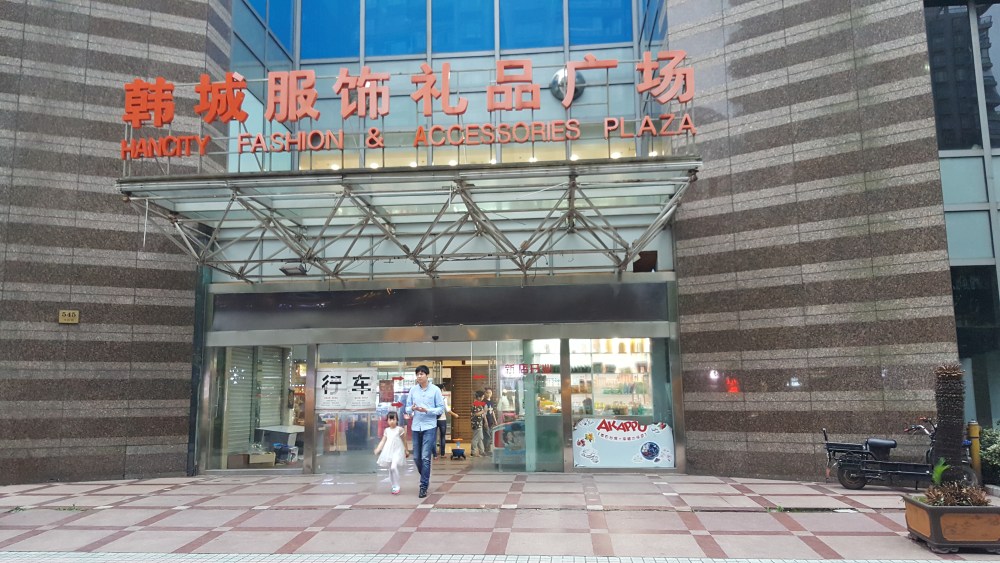
SHANGHAI — An institution of counterfeit goods in China’s most international city is slated to close at the end of the month.
Known as Taobao City, Han City, or colloquially as “580,” after its street address at 580 Nanjing West Road, the market has long been a center for counterfeit handbags, sunglasses, clothing, shoes and pretty much everything else.
Though no official reason has been given for its closure, signs displayed at the market say that the building will be refurbished and the stalls of fake products will be replaced with genuine branded ones when the mall reopens in a few months.
“If you put local officials in a room and asked the reasons for the market’s closure, some would say, ‘We are doing this as part of an image upgrade and to improve the retail environment’; others would say: ‘This open trade in fakes is embarrassing to Shanghai as well as China as a whole,’” said Joe Simone, director of SIPS, an intellectual-property boutique consulting firm based in Hong Kong and focused on the China market.
Related Articles
The fake market’s location, on one of Shanghai’s premier shopping streets, has become increasingly incongruous, as Nanjing West Road is otherwise populated with malls stocking authentic versions of the knockoff designer goods being sold within 580.
You May Also Like
The market’s visible location made it an obvious target for closure, particularly given the renewed scrutiny of the counterfeit industry domestically in recent months.
In May, China’s State Council, the country’s chief administrative authority, which is chaired by Premier Li Keqiang and includes the heads of each governmental department and agency, issued a policy paper titled “Highlights of a National Crackdown on IP Infringement, Counterfeit and Shoddy Goods.” The paper stressed the need to punish infringement and counterfeiting crimes that impact on China’s innovation and development, as well as impeding the interests of consumers.
According to Chinese government statistics, more than 1.1 million piracy cases had been handled since the country’s new leadership took over in 2013, with 59,000 cases prosecuted and 78,000 violators sentenced.
Periodic crackdowns of counterfeit goods in China have been launched for more than 20 years, making many companies and foreign governments understandably skeptical about how serious this latest targeted effort might be.
This time, however, there is another major contributor to the move to eradicate fake products in China’s marketplace – consumer desire. In recent years, it has been unusual to see Chinese customers in Shanghai’s fake markets at all. The people buying up armloads of fake luxury goods are generally Western tourists visiting the city.
One major reason for this is the fact that many Chinese consumers buy almost everything – including their counterfeit goods – online. An analysis of Taobao sales in April from consumer intelligence company Bomoda found that 15,000 fake Rolex watches were sold on China’s most popular consumer-to-consumer platform in that month alone.
However, in spite of significant demand for counterfeit products (especially online) there is reason to believe this demand is fading somewhat. A 2015 study of consumers in 15 Chinese cities by RedTech Advisors found that 91 percent of the respondents cited product authenticity as a top concern. A year earlier, 78 percent of those surveyed had indicated product authenticity was key.
The closure of the Nanjing West Road fake market doesn’t mean the industry is a thing of the past by any means – even in its bricks-and-mortar incarnation there are still two major fake markets remaining in Shanghai, one in the eastern suburb of Pudong, and the other in the western suburb of Hongqiao.
Benjamin Cavender, a senior analyst at China Market Research Group, said that though crackdowns on counterfeit goods have been stepped up recently, vendors at the fake market in Pudong, whom he spoke with just weeks ago, were not worried about an impending shutdown.
“I think the fake market on Nanjing West Road remained very popular with foreign tourists but definitely was not as much of a draw for locals,” he said.
“I think the closing was more part of a bid to redevelop that space as the building in which the market was housed was prime real estate and I think the owners likely felt they could generate better returns from doing something else with the space,” added Cavender.