
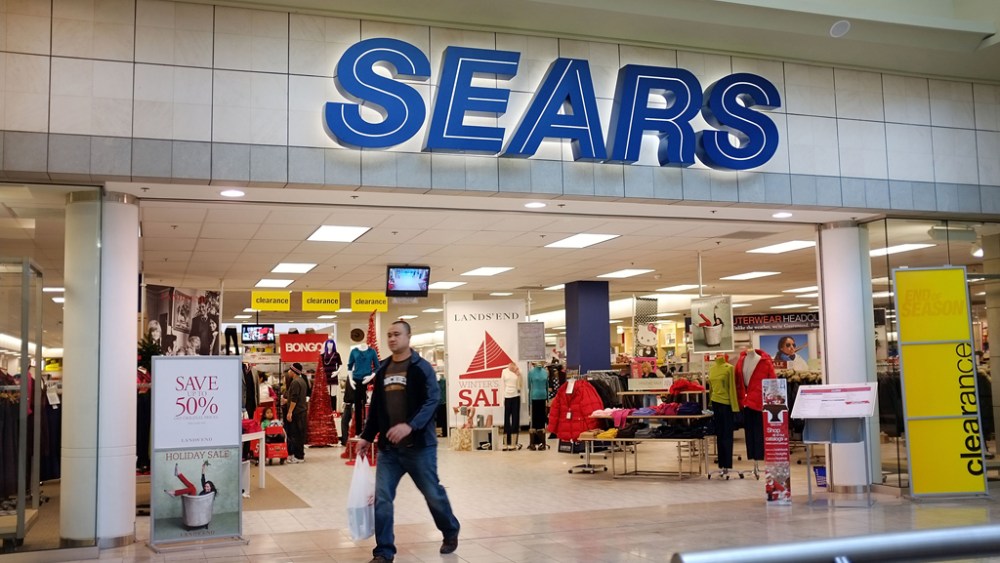
Wall Street’s keeping a close eye on Edward S. Lampert’s efforts to keep Sears Holding Corp. funded.
The company, which Lampert heads as chief executive officer, is accelerating its effort to close 50 stores and eyeing its real estate portfolio during the first half of this year, which could result in additional asset sales and closures.
The quickening pace of store closures at Sears comes amid weak same-store sales results for the fourth quarter and full year. The retailer’s total comparable-store sales fell 7.1 percent for the quarter and 9.2 percent for the full year.
Debt watchdog Fitch Ratings noted that Sears’ liquidity was worsening and that the company would need $2.5 billion to fund operations this year.
Related Articles
“Fitch expects comps to remain in the negative mid-single digit range in 2016 and 2017, with top-line declining potentially in the high single-digit range as Sears continues to close stores,” the rating agency said. “As a result, Fitch expects 2016 EBITDA to be in the negative $800 million to $1 billion range, even assuming cost reductions as targeted of $550 million to $650 million.”
You May Also Like
Sears’ year-end liquidity of about $550 million was roughly $1.4 billion worse than Fitch anticipated after the retailer raised $3.1 billion through asset sales in the first nine months of the last year.
Fitch noted that: “Sears still owns and could monetize approximately 269 unencumbered Kmart discount and Sears full-line mall stores (this excludes 125 Sears full-line mall stores in a bankruptcy-remote vehicle and 27 specialty stores). If the unencumbered real estate was valued at a similar price per square foot as the 235 properties sold under the Seritage transaction, Fitch estimates Sears could generate an additional $2.6 billion in proceeds.”
Shares of the company closed down 8.9 percent on Nasdaq trading to $15.25.
For its part, Sears noted: “We entered the holiday selling season with key product offerings and promotions intended to build engagement with our members and provide them with the best experience possible. The holiday selling season proved to be challenging, with historically warm weather and intense competition pressuring margins and driving comparable-store sales declines, particularly in our apparel and related softlines businesses.”
The company vowed to double-up on efforts to lure shoppers in with its “Shop Your Way” membership program as well as focus on its apparel business.
“The operating performance of our apparel business has a substantial impact on our overall profitability, and, in 2016 and future periods, we intend to improve the performance of our apparel business through changes to our sourcing, product assortment, space allocation, pricing and inventory management practices,” the company said.
Sears said the sale of 266 units to the spun off Seritage business helped it reduced its debt load by $1 billion compared to the year-end period of 2014. Sears said it will be targeting “at least $300 million of other asset sales during the first half of fiscal year 2016. We have a significant asset base, including a variety of businesses and a vast real estate portfolio.” The company also noted that it will review its credit facility, and will focus on “bolstering” its liquidity.
Market conditions are expected to determine the scope of the sales and closures. And as previously disclosed, the company said it is “considering options for our Sears Auto Center business, which could include the sale of the business in whole or in part,” the retailer said.
For the fourth quarter of 2015, the company said it expects to report year-over-year cost reductions of between $135 million and $155 million with full-year savings coming in at $765 million and $790 million. Efforts to cut costs this year will cut expenses by an estimated $550 million to $650 million. Still, the company has ongoing lease obligations to manage.
“While we do have lease obligations associated with the sale-leaseback transaction with Seritage, we expect the nature of the leases will lead to substantially reduced lease expense over the next few years,” the company said. “We expect that our rent obligations will decrease significantly as space in these stores is recaptured as permitted under the terms of the leases.”
The company also said it is testing its goodwill and “indefinite-lived intangible assets” and that the value of the “Sears” name could be impaired.
“As a result of continued declines in revenue experienced in the fourth quarter, and based on the preliminary results of our annual trade name impairment review, which includes the impact of store closures, the company anticipates an estimated impairment related to the Sears trade name of between $150 million and $200 million,” the retailer said. “The non-cash accounting charge will not impact the company’s liquidity, cash flows or compliance with debt covenants.”
Stock analysts have also been keeping a wary eye on Sears for some time.
Greg Melich, equity analyst at Evercore ISI, said in a research note to clients that Sears Holdings is “not a viable retailer” in its current form and that a “liquidity event is a matter of when not if.”